



Fluids are an integral part of the lubrication, cooling, braking and windshield washer systems. Because fluids gradually become depleted and/or contaminated during normal vehicle operation, they must be replaced periodically. Refer to the Lubricants and Fluids Section in the Specifications before adding fluid to any of these components.
Whenever checking the fluid level, the vehicle must be on a level surface.
Engine oil
Before you start working
Make sure your vehicle is on level ground.
Check the oil level before starting the engine, or at least 5 minutes after turning off the engine.
The right oil
Modern engines place high demands on oil. Therefore, it is very important to use the right grade of oil.
Precautions
If you have to add oil frequently, you need to check for leaks. Place a piece of clean paper under the car and check for oil stains in the morning. If there are no leaks, the engine may be burning oil.
Always maintain the level between the upper and lower marks on the dipstick. If the level is too low, serious engine damage may occur. If the engine oil is overfilled, the seal may fail.
Examination
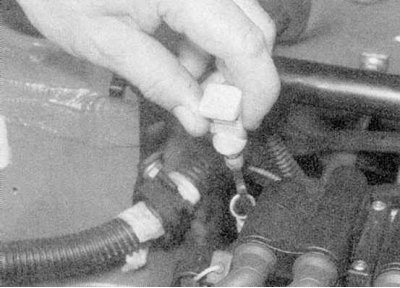
1. The dipstick is located on the right rear of the engine on E7J and K7M petrol engines and on the front of the engine on 2.0L petrol and diesel engines. Remove the dipstick (refer to the accompanying illustration).
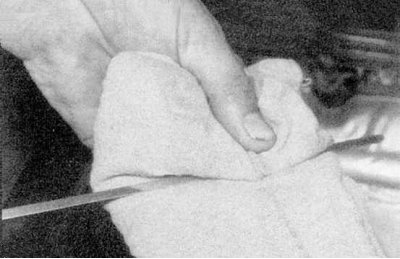
2. Using a clean rag or paper towel, wipe all the oil off the dipstick. Insert the clean dipstick into the tube as far as it will go, then pull it out again (refer to the accompanying illustration).
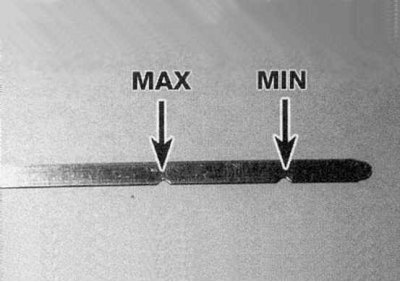
3. The oil level on the end of the dipstick should be between the upper mark "MAX" and the lower mark ("MIN") (refer to the accompanying illustration).
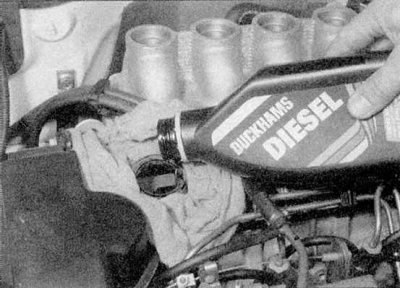
4. Oil is poured through the filler neck. Unscrew the cap and bring the oil level to the norm; use a funnel to avoid spills. Add oil slowly, do not overfill (refer to the accompanying illustration).
Coolant
Warning! Do not attempt to remove the expansion tank pressure cap if the engine is still hot, you may get scalded. Do not leave containers with coolant open, as it is poisonous.
Precautions
Regular topping up of coolant should not be necessary. If frequent topping up is required, there is probably a leak. Check the radiator, all hoses and connector surfaces, and correct as necessary.
It is important that the antifreeze in the cooling system is filled all year round, not just for the winter. Do not add clean water, as this will reduce the concentration of antifreeze.
Examination
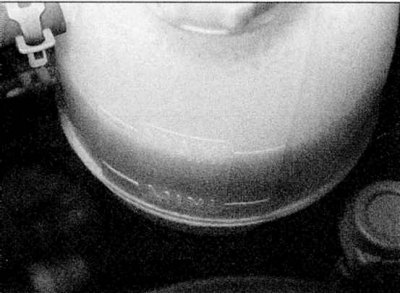
1. The coolant level changes with engine temperature. When the engine is cold, the coolant level should be between the "MIN" and "MAX" marks (refer to the accompanying illustration).
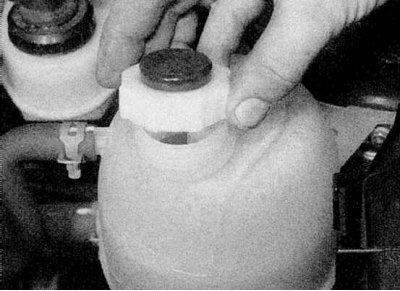
2. If it is necessary to top up, wait until the engine has cooled down. Slowly unscrew the expansion tank cap, releasing the pressure in the cooling system, remove it (refer to the accompanying illustration).
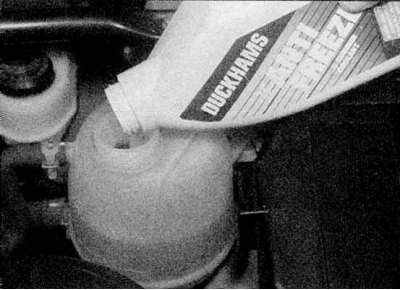
3. Add a mixture of water and antifreeze to the expansion tank until the coolant level is between the marks. Install the cap and tighten it securely (refer to the accompanying illustration).
Power steering fluid
Before you start working
Park the car on a level surface.
Set the front wheels straight ahead.
Check the fluid level with the engine off.
Caution: The need for frequent refilling indicates a leak that must be repaired immediately.
Examination
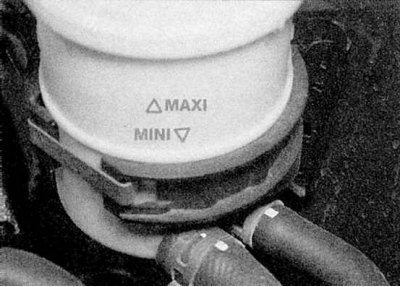
1. The power steering hydraulic system reservoir is located on the right side of the radiator. Check the fluid level with the engine off. The "MAX" and "MIN" marks are on the side of the reservoir (refer to the accompanying illustration).
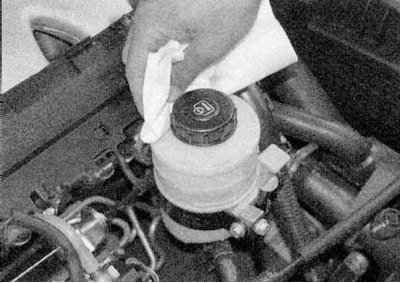
2. The fluid level should be between the "MIN" and "MAX" marks. If refilling is necessary, wipe the area around the cap to prevent dirt from getting into the reservoir (refer to the accompanying illustration).
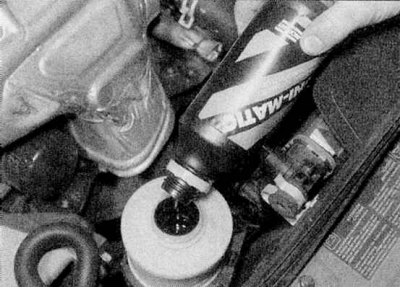
3. Add fluid to the "MAX" mark using the fluid type specified in the Specifications (do not overfill), then install and tighten the filler cap (refer to the accompanying illustration).
Brake fluid
Warning: Brake fluid can be harmful to your eyes and painted surfaces, so use extreme caution when handling.
Warning! Do not use fluid that has been open for some time, as it will absorb moisture from the air, causing a loss of braking efficiency. If frequent refilling is required, this indicates a leak in the system that must be identified and repaired immediately.
Warning! If a leak is suspected, the vehicle must not be driven until the brake system has been checked. Never take risks when the brakes are faulty.
Examination
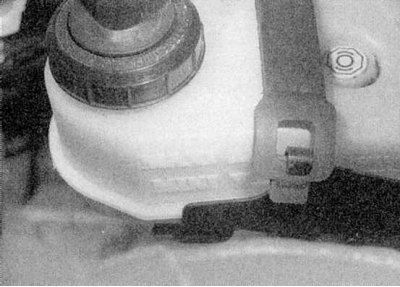
1. The "MAX" and "MIN" marks are located on the side of the reservoir, which is located in the rear left corner of the engine compartment. The fluid level should be between the two marks (refer to the accompanying illustration).
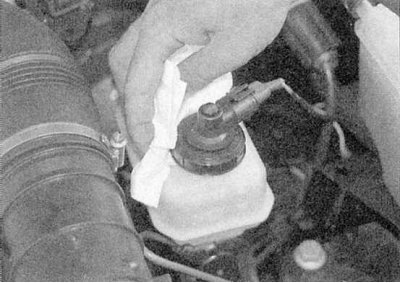
2. If refilling is necessary, wipe the area around the filler cap with a clean rag and disconnect the wires from the fluid level sensor. Inspect the reservoir - if the fluid is dirty, it must be replaced (refer to Chapter Brake system) (refer to the accompanying illustration).
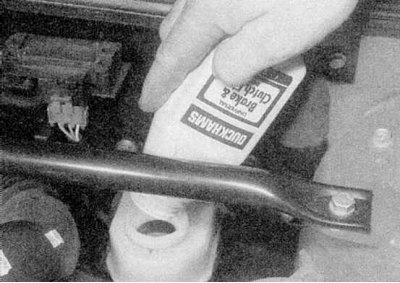
3. Carefully add the liquid, being careful not to spill it. Use only the specified liquid, mixing different types of liquids will cause damage to the system. After refilling, replace the cap, wipe up any spilled liquid (refer to the accompanying illustration).
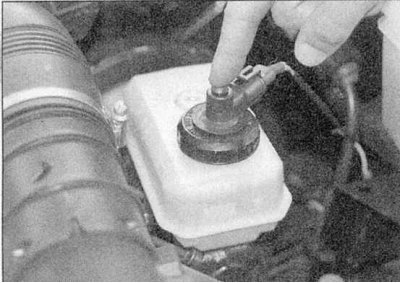
4. When checking the fluid level, you can check the operation of the low fluid warning light. Turn on the ignition and have an assistant press the test button on the top of the brake fluid reservoir cap. When the button is pressed, the warning light should come on - if it does not, the switch, wiring or lamp is faulty (refer to the accompanying illustration).
Washer fluid
Windshield washer fluid additives not only contain cleaning additives, they also prevent the washer system from freezing. Do not add plain water, as the washer fluid will become too dilute and freeze in cold weather. Do not use antifreeze in the washer system, as it can damage the paint.
Examination
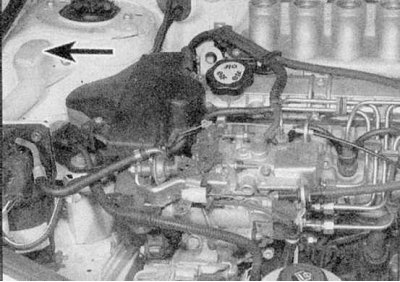
1. The windshield/tailgate/headlamp washer fluid reservoir is located on the right side of the engine compartment. If refilling is necessary, open the cap (refer to the accompanying illustration).
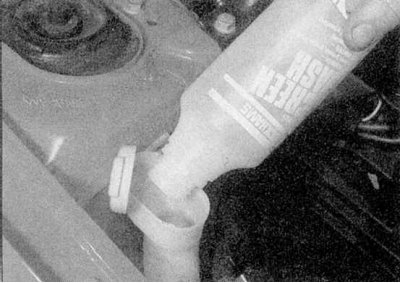
2. Add windshield washer fluid diluted in the quantities recommended on the bottle (refer to the accompanying illustration).