Attention! Your vehicle has a microprocessor ignition system (IPSZ) high energy. A voltage of approximately 40,000 V is supplied to the high-voltage wires, and although it is not life-threatening at a low current strength, a possible electric shock when checking the ignition system can lead to serious consequences. Therefore, if you take on a high-voltage wire with the ignition on, use a thick rubber glove or, in extreme cases, pliers with insulated handles.
1. Open the hood.
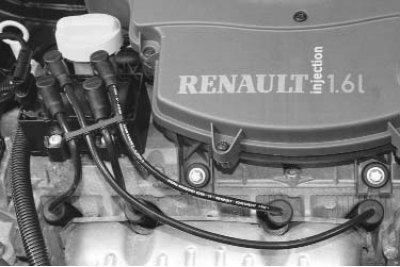
2. Check up a condition of wires of system of ignition. The insulation of high voltage wires must not be damaged, and wire lugs must not be oxidized. Replace damaged wires with new ones.
Note. The most simple and at the same time effective test of high-voltage wires in the dark. Park the car in a dark place, start the engine and open the hood. Check the high voltage wires. If the insulation of the wires is broken, you will see a characteristic blue-violet spark («northern lights»). In this case, high-voltage wires must be replaced.
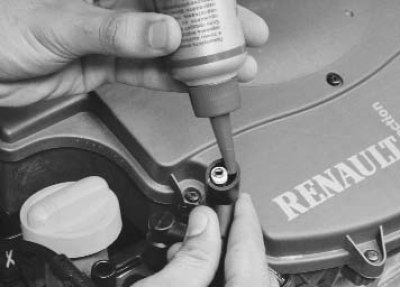
3. Lubricate with grease the tips of the high-voltage wires connected to the ignition module...
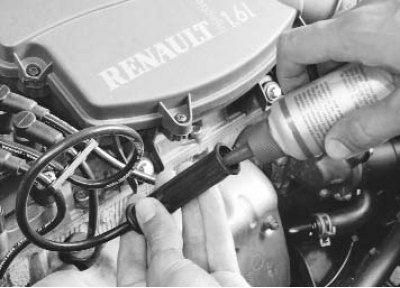
4....and spark plugs. Factory recommends FLUORINE GREASE (number 82 00 168 855 according to the Renault catalog), but technical vaseline can also be used.