


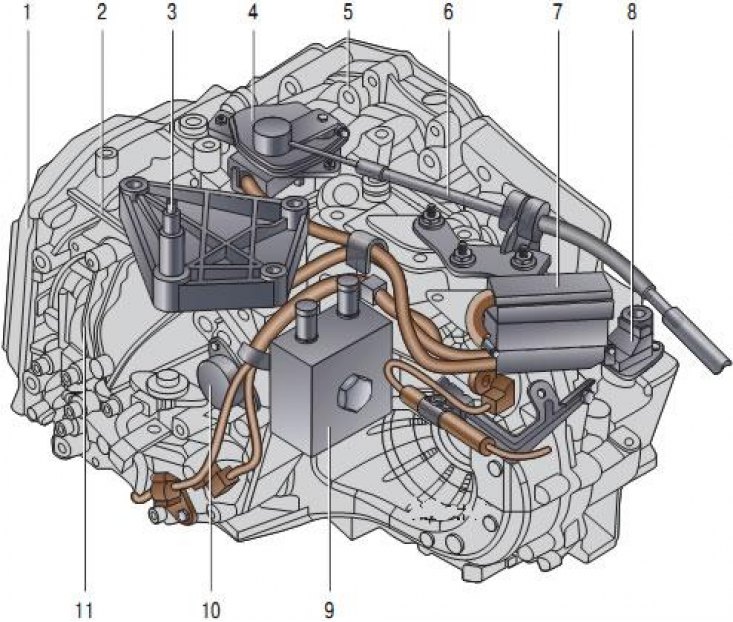
Automatic transmission: 1 - valve block cover; 2 - planetary gear housing; 3 - left support bracket of the power unit suspension; 4 - Combined multifunctional mode selection switch; 5 - hydraulic transformer housing; 6 - gearbox control cable; 7 - electronic control unit; 8 - speed sensor; 9 - working fluid heat exchanger; 10 - valve for controlling liquid flow through the heat exchanger; 11 - planetary gear rear cover
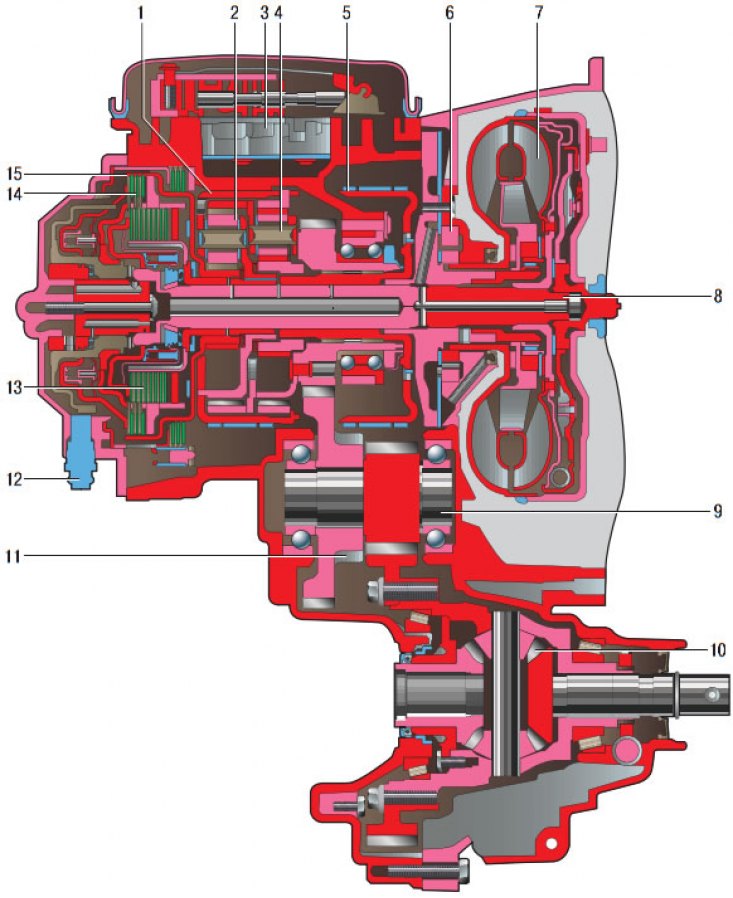
Automatic transmission device: 1 - brake F2; 2-1st stage planetary gear; 3 - hydraulic distributor; 4-2 stage planetary gear; 5 - brake F3; 6 - oil pump; 7 - torque converter; 8 - turbine wheel shaft; 9 - main gear pinion; 10 - differential; 11 - parking ratchet; 12 - turbine shaft speed sensor; 13 - clutch E1; 14 - clutch E2; 15 - brake F1
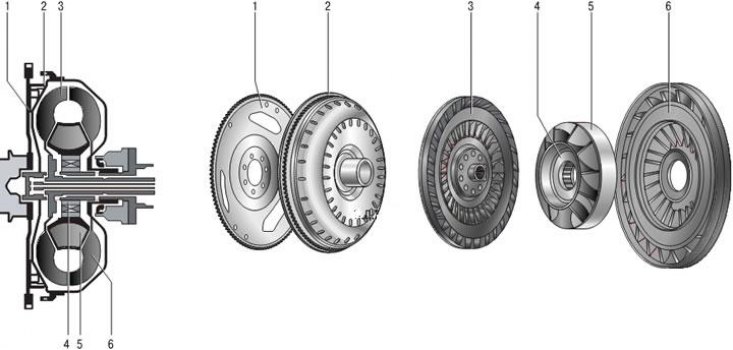
Torque converter: 1 - leading disk; 2 - hydraulic transformer housing; 3 - turbine; 4 - overrunning clutch; 5 - reactor; 6 - pump wheel
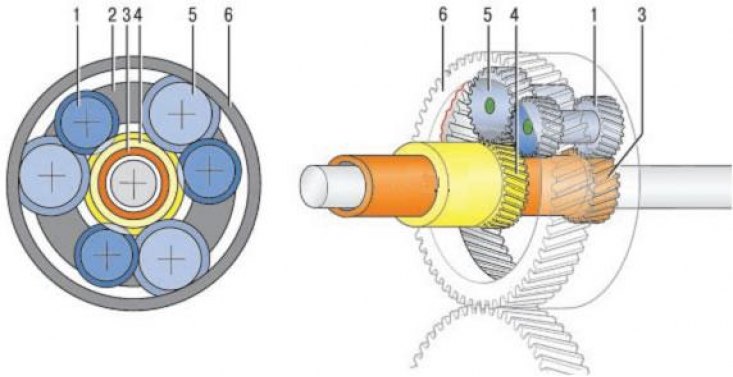
Ravigne planetary gearbox: 1 - long satellite; 2 - driver; 3 - small sun gear; 4 - large sun gear; 5 - short satellite; 6 - ring gear
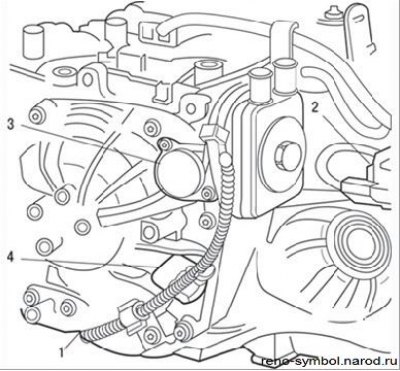
Figure 4.34. Location of sensors in an automatic transmission: 1 – pressure sensor; 2 – output speed sensor; 3 – electromagnetic valve for controlling the flow of cooling liquid; 4 – input speed sensor
The vehicle is equipped with a four-speed automatic transmission model DP0 with electrical control. The main gear and differential are built into the gearbox. The design of the gearbox includes a torque converter, planetary mechanisms, clutches and brakes with hydraulic control. The gearbox is controlled by commands from the engine ECU through electrically controlled valves. The following sensors are installed in the box: input speed sensor, output speed sensor, electromagnetic valve for controlling liquid cooling and pressure sensor (Figure 4.34).
The torque converter ensures the transmission of power from the engine to the gearbox through fluid, which allows for smooth starting and gear shifting. In addition, the torque converter ensures torque changes during acceleration. The DPO automatic transmission has two locking systems: Shift Lock (switching lock) and Lock Up (torque converter lockup).
The shift lock prevents the selector from moving without simultaneously pressing the brake pedal. The torque converter lock allows the engine and gearbox to be connected directly. The lock is controlled by the automatic transmission control unit. When replacing the control unit, it is necessary to match it with the throttle position sensor. Matching is carried out using a diagnostic tester at a service station.
Automatic transmission gear ratios:
- 1st gear - 2.7
- 2nd gear - 1.5
- 3rd gear - 1.0
- 4th gear - 0.7
The Lock Up system or torque converter lock allows a direct connection between the automatic transmission and the engine. This is achieved by means of a "mini-friction clutch" located inside the torque converter. The Lock Up system is controlled by the transmission ECU.
You can find the original at this link: www.RenaultBook.ru
The planetary part of the gearbox provides four forward gears and one reverse gear. The gear ratio of the gearbox depends on which of the planetary links are stopped, or connected to each other, or free to rotate. The links are stopped and connected using brakes and clutches, which are activated by a hydraulic control unit. A hydraulic pump inside the box provides fluid pressure to control the clutches and brakes.
The signals from various sensors and switches installed in the gearbox, throttle body and selector mechanism are sent to the ECU, where they are processed to decide on the required gear selection at that moment. The ECU controls the electromagnetic valves that open or close channels inside the hydraulic control unit, engaging or disengaging the various clutches and brakes of the corresponding planetary gear sets, selecting the required gear in each case depending on the speed and engine load. The driver can override the information from the ECU computer by moving the gear selector lever and selecting a gear regardless of engine speed.
The Shift Lock system prevents the selector lever from being moved without simultaneously pressing the brake pedal.
The fluid in the gearbox is cooled by passing through a cooler mounted on top of the gearbox. The engine cooling system fluid also passes through the cooler.
Due to the complexity of the design, any repair and maintenance work on the gearbox must be performed by a specialist. The information provided in the following subsections contains only general provisions and some maintenance operations that the owner can perform himself.
The weight of the automatic transmission is 70 kg.
It is preferable to tow a car with an automatic transmission using a tow truck, fully submerged or with the front wheels raised.
If this method of movement is not possible, then towing should be carried out at a speed of no more than 50 km/h (selector in position "N") and over a distance of no more than 50 km.
The towed trailer must have its own braking system and a gross weight of no more than 1300 kg.