



Always reinstall the body protection heat shields. Observe the recommended tightening torques for threaded connections. Wear protective clothing and goggles when performing repair work.
The car body is welded, all-metal, load-bearing structure. The bottom, sides and roof are welded together. The hood, trunk lid (tailgate), the doors and front wings are secured with threaded connections and can be easily replaced.
The body is a three- or five-door hatchback; for some markets, a station wagon model is produced.
To enhance the load-bearing capacity of the body, a subframe is used to mount the power unit, suspension and steering mechanism.
The front fenders of all models are made of polymer, which can withstand a frontal impact without visible damage at speeds up to 16 km/h.
All new cars have effective protection of the body and bottom from corrosion. Various technologies are used for this, such as galvanizing, zinc phosphating and priming. An anti-gravel coating is applied to the front part of the hood. Wax compositions are used to treat box-shaped and hidden cavities.
The body structure contains many plastic elements – bumpers, wheel mudguards, radiator grille, etc.
The gaps between the body parts must be the same along the entire length. When installing new removable elements, it is very important to comply with the gaps and tolerances established by Renault, since otherwise the installed elements may jam or the noise level in the body may increase sharply. In addition, the aesthetic standards imposed on the car are violated.
Body gaps
Shown on the example of Renault Clio
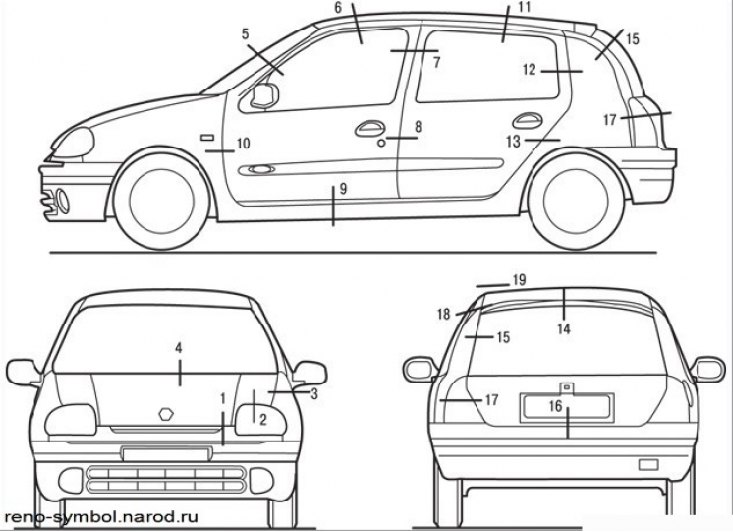
Figure 9.1. Control zones for gaps between the body and removable body elements
Figure 9.1 shows the areas of the vehicle for which controlled gaps are established between the body and its removable elements, and Figures 9.2a and 9.2b provide the gap values.
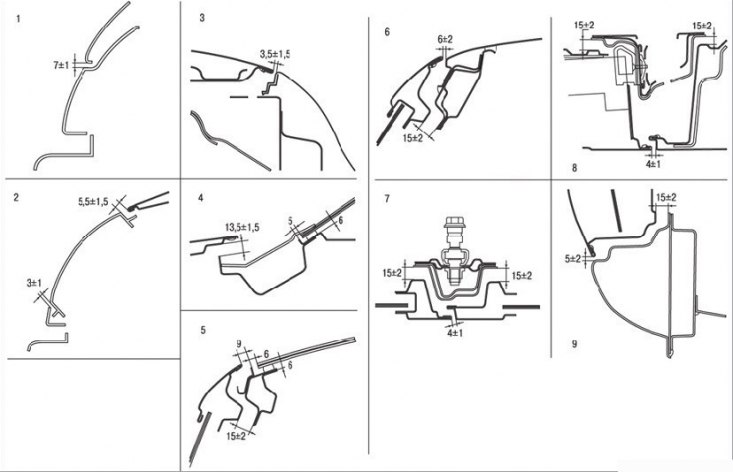
Figure 9.2a. Gaps in the joints of the body and removable elements
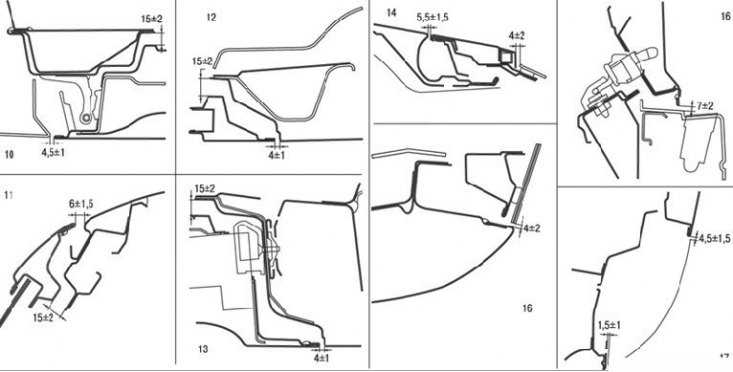
Figure 9.2b. Gaps in the joints of the body and removable elements
Body dimensions
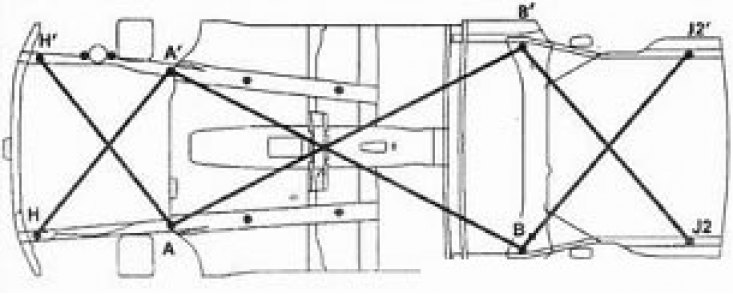
Collision Consequence Verification Reference Points
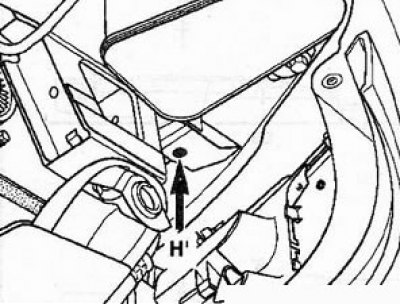
Point H: Front end of the front spar.
Point A: Rear support of the front subframe.
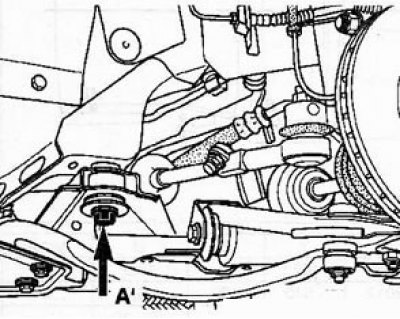
(Right).
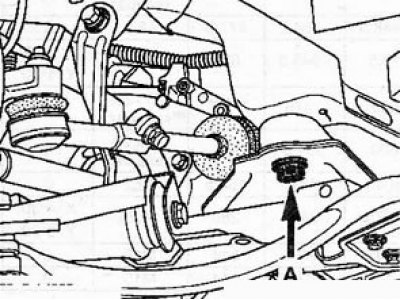
(Left).
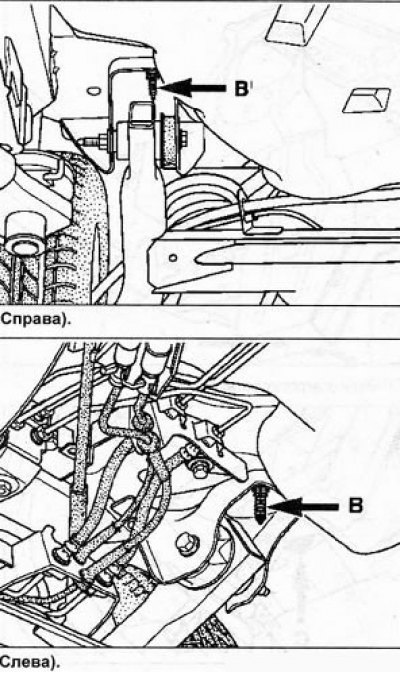
Point B: Front end of the rear axle beam.
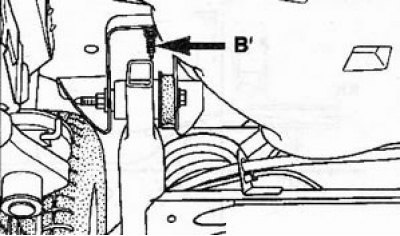
(Right).
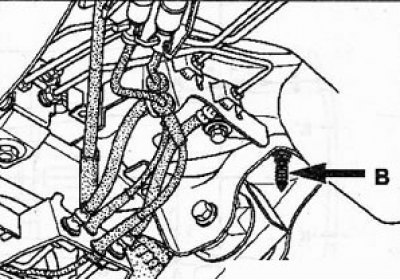
(Left).
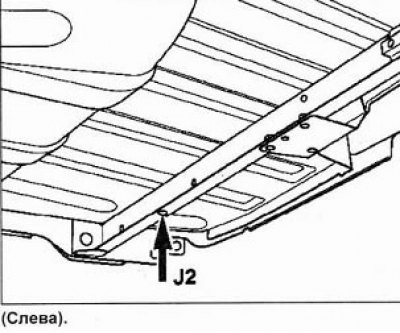
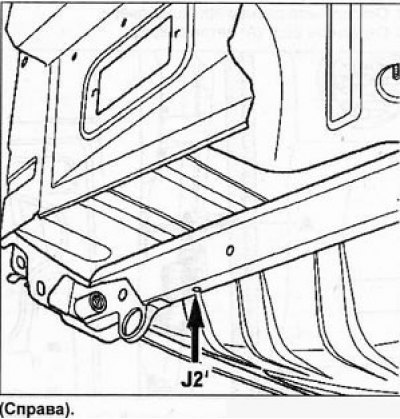
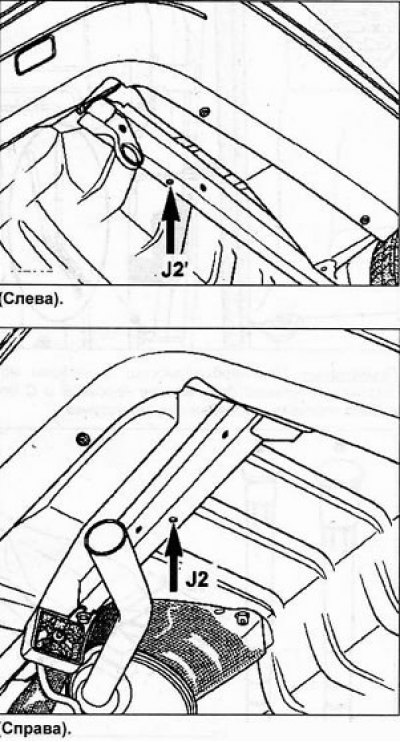
Point J2: Rear end of rear spar.
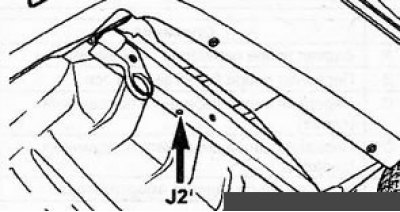
(Right).
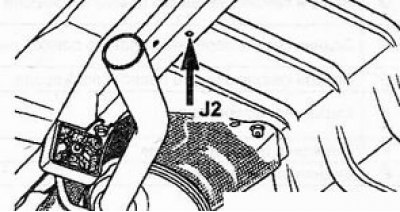
(Left).
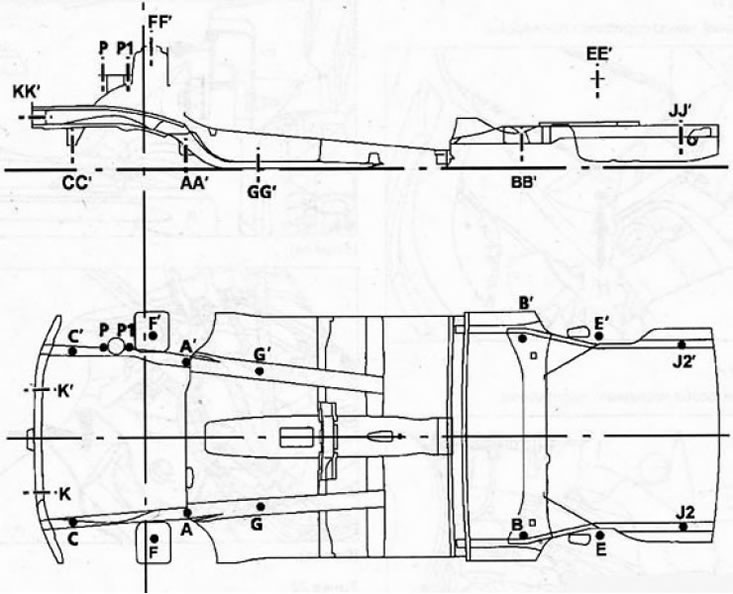
| Description | X | Y | Z | 0 | corner | |
| A | Front subframe rear support | 205 | -402,5 | 71 | 18,5 | 0 |
| IN | Front support of the rear axle beam | 2012 | -530 | 129 | 16,2 | 0 |
| WITH | Front subframe front support (left) | -418 | -447 | 130 | 10 x 10 square | 0 |
| WITH' | Front subframe front support (right) | -418 | 465 | 130 | 10 x 10 square | 0 |
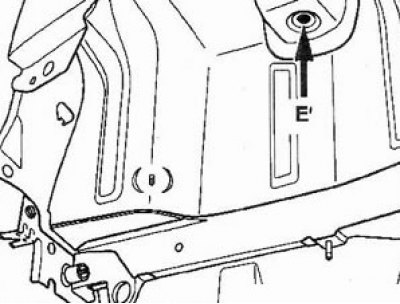
| E | Upper support of the rear shock absorber | 2448,5 | -534,5 | 477,5 | 18,2 | 0 |
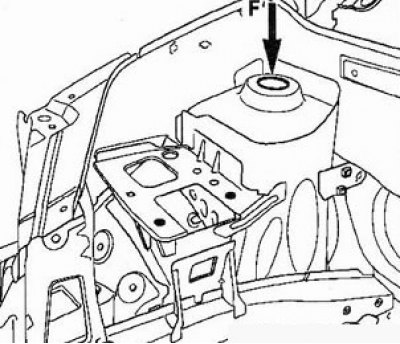
| F | Front shock absorber upper mount | 18,5 | -545,5 | 657 | 48 | X: 3°02' Y: 1°00' |
| G | Rear section of the front left side member | 600 | -375 | -3,7 | 20 x 20 square | 0 |
| G' | Rear section of the front right side member | 600 | 351,5 | -5 | 20x20 square | 0 |
| J2' | Rear section of the rear right side member | 3040 | 481 | 162,5 | 10,2 | 0 |
| TO | Front cross member | -575 | 315 | 280 | 14,25 | X: 4°30' Y: 5°00' |
| R | Front engine mount | -247 | 483,5 | 514 | M10 | 0 |
| R' | Rear engine mount | -113 | 483,5 | 514 | M10 | 0 |
Subframe dimensions
Anchor points
A - rear support of the front subframe
The main support point is at the front.
1. The power unit is removed.
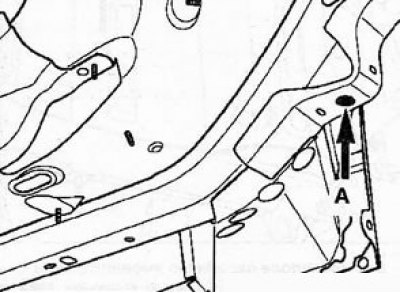
The measuring tool is installed in the center of the hole.
Note: The hole on the left is round, the hole on the right is oval.
2. The power unit is installed.
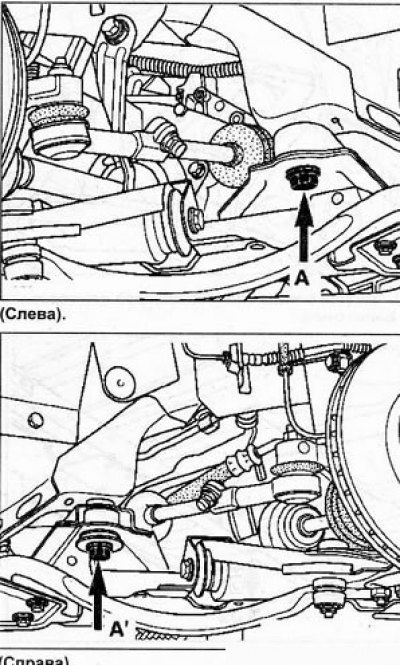
Note: The fasteners on the left and right are not symmetrical.
The support on the left is mounted on a rubber pad.
B - Front support of the rear axle beam
The main support point is at the back.
1. The beam is removed.
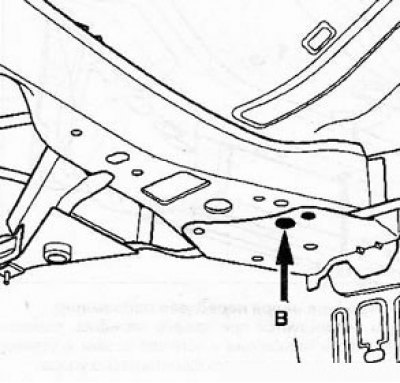
2. The beam is installed.
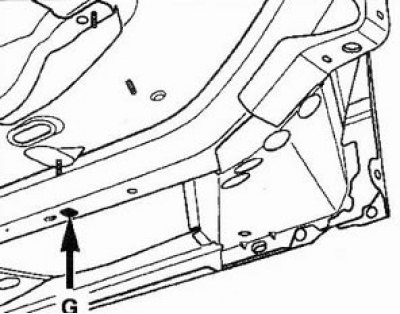
G - Rear section of the front left side member
This point is used for reference when replacing the rear part of the side member and as a reference point when taking measurements when points A and B are damaged.
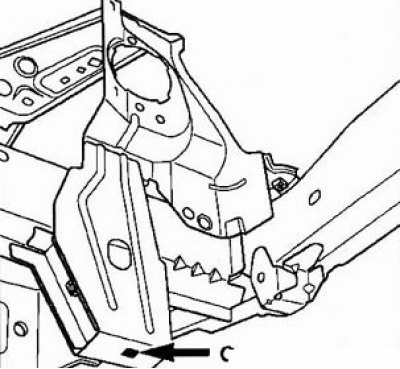
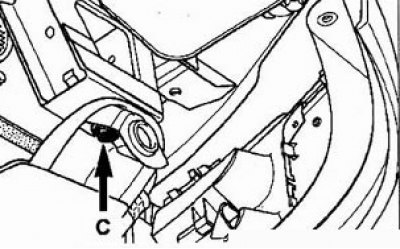
C - Front subframe front support
The point is used when replacing the front crossmember, part of the poncho and the pillar tunnel and assessing deformations due to a light frontal impact.
1. The power unit is removed.
[The text is available on this website www.RENAULTBOOK.ru]
2. The power unit is installed.
E - Upper support of the rear shock absorber
The point is used when replacing the wheel arch.
F - Upper support of the front shock absorber
The point is used when replacing the wheel arch and pillar tunnel and for control when straightening the body.
J2 - Rear section of the rear right side member
1. The beam is removed.
 |
 |
2. The beam is installed.
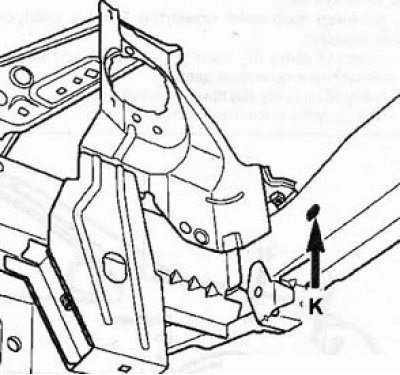
K - Front crossmember
The point is used when replacing the front cross member with the power unit removed or installed (the radiator must be removed).
Special tools for car body maintenance
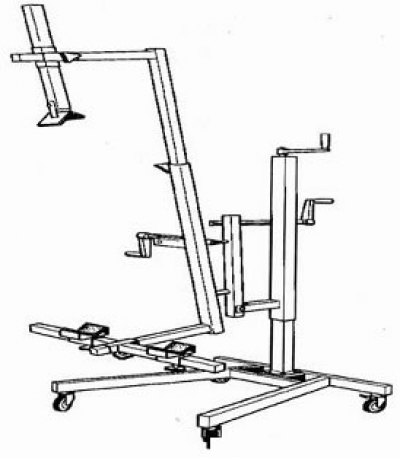
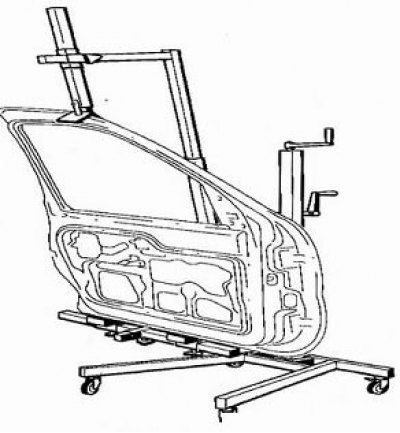
1. Device for removing/installing doors 661 000 with adapters.
 |
 |
2. Tools for removing/installing glued glass.
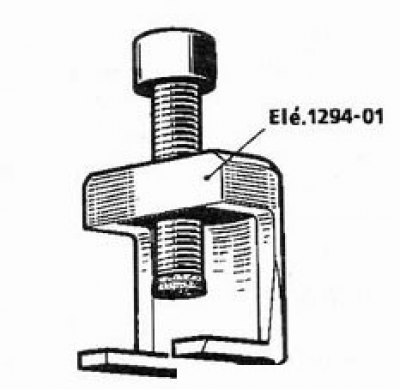
a) Wiper arm remover.
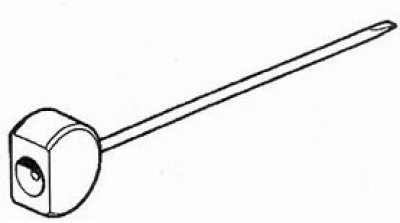
b) Wire for cutting the sealant.
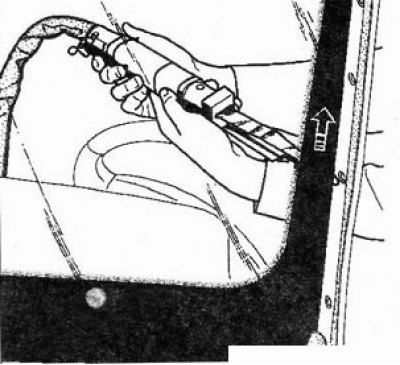
c) Pneumatic knife for cutting sealant.
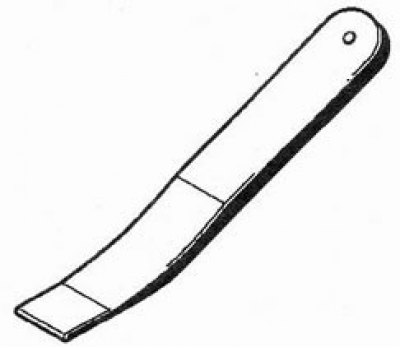
d) Remover of trim panels and seals.
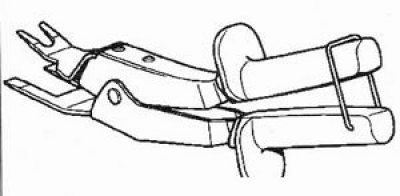
d) Clip remover for trim panels.
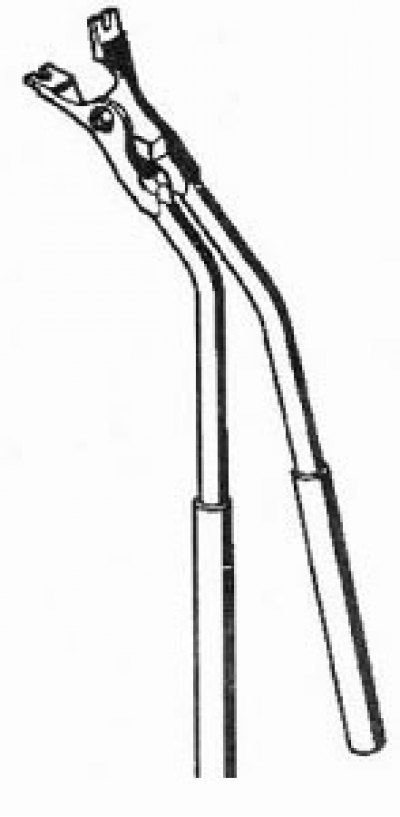
e) Door hinge pin remover.
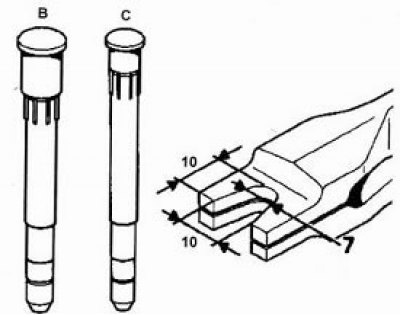
g) Modified door hinge pin puller (Clio (B) and Megane (C) models).
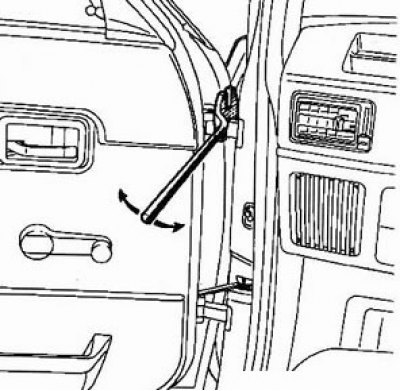
c) Lever for adjusting the gaps of the body trim elements.
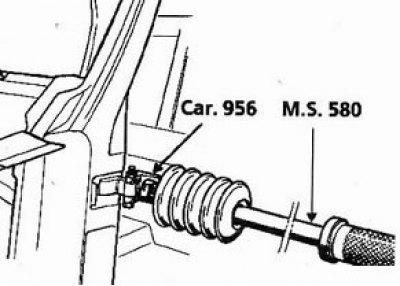
i) Door position adjustment device.