English Русский
Български
Беларускі
Український
Српски
Hrvatski
Română
Polski
Slovenský
Magyar
Bookmark Contacts Articles Sitemap
Company vehicles Peugeot Company vehicles Opel Company vehicles Skoda Company vehicles Land Rover Company vehicles Mitsubishi Company vehicles Volkswagen Company vehicles Honda
RenaultBook.ru


Duster   Fluence   Kangoo   Laguna   Logan   Megane   Sandero   Scenic   Symbol   Clio   Other
Megane 1 (1995-2002) Megan 2 (2002-2009, petrol)

Driver and front passenger airbag (Renault Megane 2)

  • Main
  • Megane
  • Megan 2 (2002-2009, petrol)
  • User manual
  • Salon equipment
  • Driver and front passenger airbag
0
Contents: Operating principle 🠛 Front airbag feature 🠛 Malfunctions 🠛 Additional safety devices for rear…🠛 Seat belt force limiter 🠛 Side airbags 🠛 Side curtains 🠛
The driver and front passenger seats are equipped with airbags.

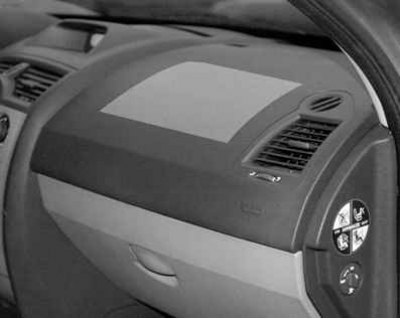
Fig. 1.58. Location of the front passenger airbag

Fig. 1.58. Location of the front passenger airbag


"Airbag" inscriptions on the steering wheel and on the instrument panel (airbag coverage area A), and the corresponding sticker on the lower part of the windshield indicate that this equipment is installed on the vehicle (Fig. 1.58).

Each airbag system includes:
  • airbag and gas generator mounted in the central panel of the steering wheel (for the driver) or in the dashboard (for the front passenger);
  • a common electronic unit consisting of a shock sensor and a tracking system for turning on the gas generator igniter;
  • a single control lamp located on the instrument panel;
  • additional forward-mounted frontal impact sensor.

Note: The airbag is powered by a gas generator system that emits smoke and some heat when the airbag inflates (don't be alarmed - this does not mean a fire has started) and a popping sound is also heard. When the airbag deploys, the driver may receive minor and quickly passing skin damage.


Operating principle


The system is activated only when the ignition is on.

In the event of a severe frontal impact, the airbags instantly inflate with gas, thus reducing the impact of the driver's head and chest on the steering wheel, and the head and chest of the front passenger on the dashboard; after the impact, the airbags immediately deflate, allowing you to freely leave the car.

Front airbag feature


Each cushion has two levels of deployment depending on the force of the impact and a ventilation system to prevent burns from the gases filling the cushion:
  • "small volume" is the first level of filling of the pillow;
  • "large volume" (second degree of filling of the pillow) - the safety seams of the airbag are torn and it becomes larger (under very strong blows).

Malfunctions


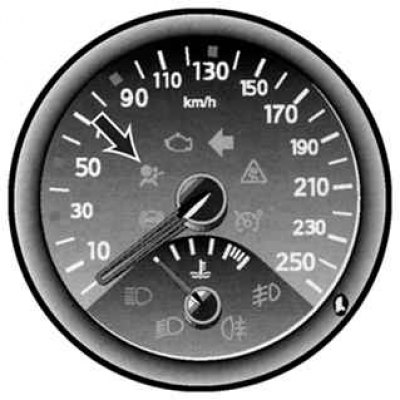
Fig. 1.59. Airbag malfunction indicator lamp

Fig. 1.59. Airbag malfunction indicator lamp


When the ignition is turned on, the control lamp located on the instrument panel lights up for a few seconds (Fig. 1.59).

If the indicator lamp does not light when the ignition is turned on, or lights up when the engine is running, this indicates a malfunction in the airbag system.


Contact a Renault service station as soon as possible. Untimely contact may lead to a decrease in safety.

Additional safety devices for rear seat passengers


Depending on the vehicle's configuration, additional safety devices include:
  • seat belt pretensioners built into inertia reels;
  • seat belt tension limiters.

In the event of a frontal impact, these devices can be activated either separately or simultaneously.

Depending on the force of the frontal impact, two options are possible:
  • protection is provided only by seat belts;
  • the pretensioner is activated, pressing the seat belt tightly against the body.

The rear seat belt pretensioners only operate when the ignition is on.

In the event of a strong frontal impact, the device instantly retracts the belt, pressing it against the body and thereby increasing the effectiveness of the belt.

Seat belt force limiter


This device is activated at a certain impact force and limits the force of the belt pressing on the torso.

Side airbags


Side airbags are installed in the front seats and, depending on the vehicle's equipment, in the rear side seats and deploy from the side of the seat (from the door side) in a severe side impact, protecting the driver and passengers.

Side curtains


These airbags are mounted on top of the vehicle and deploy along the front and rear side windows to protect the driver and passengers in severe side impacts.
This article is available on: russian, bulgarian, belarusian, ukrainian, serbian, croatian, romanian, polish, slovak, hungarian
Article has been reviewed by editor: Kupriyanov Sergey
Share with friends:
Previous
Megan 2: Salon equipment
Next

Airbags
Seat belts
Front seat headrests
Rear seat headrests
Front seats — adjustment
Installation of salon clocks
Outside air temperature indicator
Window lift control
Electric sunroof
Rear sun shade
Other articles on other Renault models

➽ Front passenger airbag cutoff switch Renault Fluence 1 (2009-2020, petrol)
➽ Front passenger airbag Renault Logan 2 (2012-2020)
➽ Front passenger airbag Renault Espace III (1996-2002)
➽ Passenger airbag module Renault Laguna 2 (2001-2007)
➽ Removal and installation the driver's airbag Renault Sandero 1 (2007-2012, petrol)
Link to this article in different formats
Reviews and comments of visitors
No comments yet


Add two numbers 34 + 45


Megan 2 (2002-2009, petrol) 
  • User manual
  • Introduction to manual
  • Controls and instruments
  • Salon equipment
  • Operation and driving
  • Maintenance and care
  • Power unit
  • Engine repair
  • Fuel system
  • Injection system
  • Intake and exhaust system
  • Starting and charging system
  • Cooling system
  • Decreased toxicity
  • Transmission
  • Clutch
  • Mechanical gearbox
  • Automatic gearbox
  • Wheel drive mechanism
  • Chassis, running gear
  • Suspension and wheels
  • Steering
  • Brake system
  • Body and interior
  • Exterior (external elements)
  • Interior (internal elements)
  • Doors, locks and windows
  • Heating and air conditioning
  • Electrical equipment
  • Equipment and devices
  • Headlights and lighting
  • Electrical circuits
Megane 1 (1995-2002) 
  • General information
  • User manual
  • Maintenance
  • Power unit
  • Petrol engines 1.4/1.6 l
  • Petrol engines 2.0 l
  • Diesel engines 1.9 l
  • Overhaul of engines
  • Cooling system
  • Fuel system (petrol)
  • Fuel system (diesel)
  • Decreased toxicity
  • Charge and launch systems
  • Ignition system (petrol)
  • Preheat system (diesel)
  • Transmission
  • Clutch
  • Mechanical gearbox
  • Automatic gearbox
  • Drive shafts
  • Chassis, running gear
  • Brake system
  • Car suspension
  • Steering
  • Body and interior
  • Exterior (external elements)
  • Interior (internal elements)
  • Doors, locks and windows
  • Electrical equipment
  • Equipment and devices
  • Electrical circuits
RenaultBook.ru © 2018–2026 | Mobile version | News and articles | Sitemap: EN BG BY UA RS HR RO PL SK HU | Administration | Site search | Bookmark
Duster 1 (2009-2017) | Fluence 1 (2009-2020, petrol) | Kangoo 1 (1997-2007) | Laguna 2 (2001-2007) | Logan 1 (2004-2012, petrol) | Logan 2 (2012-2020) | Megane 1 (1995-2002) | Megan 2 (2002-2009, petrol) | Sandero 1 (2007-2012, petrol) | Scenic 1 (1996-2003) | Symbol 1 (1999-2008, petrol) | Symbol 2 (2008-2013, petrol) | Renault 19 (1988-1996) | Espace I and II (1984-1996) | Espace III (1996-2002) | Clio 1 (1990-1998) |
We want your visit to be comfortable 😌 and use cookies 🍪 to do so.