



On all models except Scenic, the high current fuses are located in the power fuse box, mounted on the right side of the engine compartment, next to the battery, on Scenic models the main 60A fuse is mounted under the passenger seat, next to the battery (refer to the illustrations).
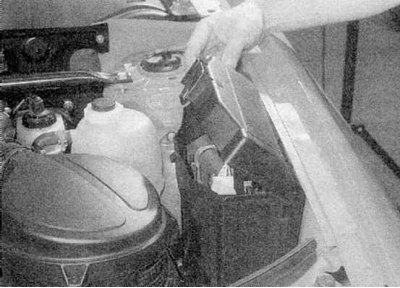
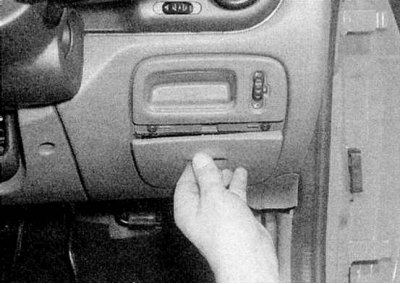
To access the main fuse box, open the cover. To access the fuses located in the engine compartment, simply remove the cover. To access the high-current fuses, remove the battery cover or remove the windshield panel and wiper arms.
Fuse Box Mounted Under Seat - Scenic
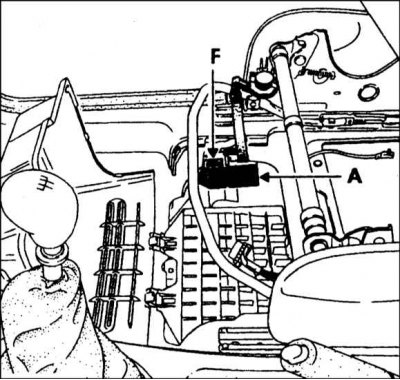
A - Power supply connector
F — 60A fuse
Power Fuse Box Location - Scenic
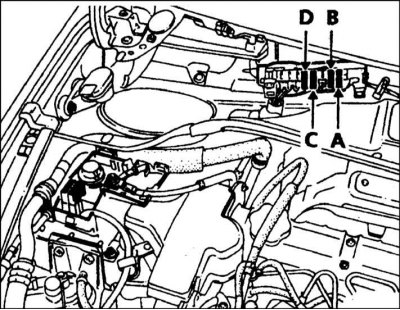
A - Orange, 60A - Power supply connector, combined light and wiper switches on the steering column
B - Orange, 60A - Ignition switch, combined light and windshield wiper switches on the steering column
C - Black, 40A - Air Conditioner
D — Red, 60A — heated windshield
Additional power supply fuse block:
- 30A - fuel injection system (petrol)
- 70A - preheating system (diesel)
- 40A - ABS
Power Fuse Box Location - Except Scenic
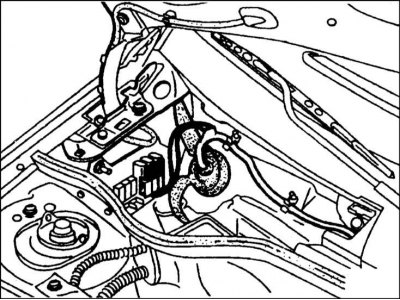
Brown, 30A - fuel injection system (petrol)
Brown, 70A - pre-heating system (diesel)
Black, 40A - Air Conditioner
Green, 60A - power supply connector
Orange, 60A - Power supply connector, combined light and wiper switches on the steering column
Orange, 60A - Ignition switch, combined light and windshield wiper switches on the steering column and windshield wiper motor
A list of the circuits that the fuse protects is located on the fuse box cover.
Before removing a fuse, first turn off the corresponding circuit (or ignition), then pull the fuse out of the clips. The fuse removal tool is attached to the back of the cover. A wire should be visible in the fuse; if the fuse is blown, the wire will be broken or melted.
When replacing, use a fuse with an identical characteristic. Never replace a fuse more than once without identifying and eliminating the cause of the fault. The characteristic of the fuses is printed on the back and they are additionally color coded.
Where a fuse protects more than one circuit, test each circuit. Always carry spare fuses of each rating on the vehicle.
Relay
Most relays are installed in the fuse box located in the passenger compartment on the driver's side of the vehicle. Additional relays are installed in the fuse/relay box on the left side of the engine compartment.
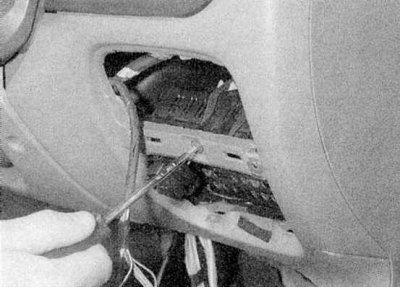
To access the relay box, remove the driver's side switch panel as described in Section Removal and installation switches.
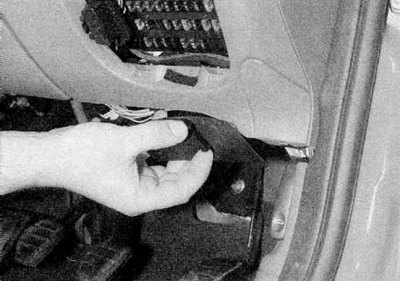
Loosen the mounting screw, then remove the plastic protective plate from the base on the fuse box.
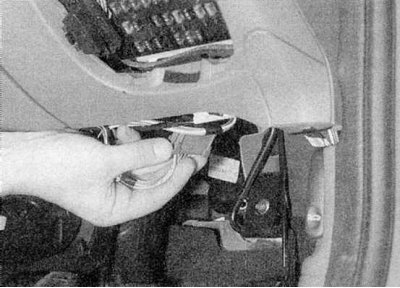
Release the retaining clips and disconnect the four wiring connectors from the base of the fuse box. Release the fuse box from the side retaining clips, then carefully lower the assembly downward.
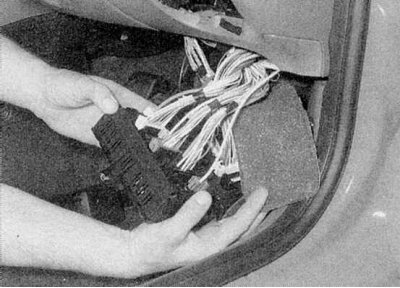
Release the retaining clips and remove the cover to gain access to the various relays (refer to the illustrations).
Perform installation in reverse order.
If a relay-controlled circuit or system does not work and you suspect a relay fault, turn on the system. If the relay is functioning, you should hear a click when you turn it on. In this case, the components or wiring of the system are faulty. If you do not hear the relay turn on, then there is no supply voltage to the relay, the switching voltage is not present, or the relay is faulty. Testing the relay comes down to replacing it with a known good one, but be careful - some relays may be similar in appearance and functionality, while others may look the same but perform different functions.
Before replacing the relay, turn off the ignition. Then simply pull the relay out of the clamps and insert a new one.