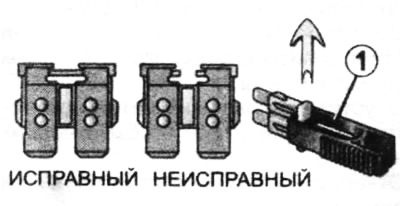
Note: Wiring may vary depending on engine variant. However, the same layout of components is maintained as described in the chapter.
All electrical functions and components are protected by fuses, which protect the vehicle's electrical system from damage due to short circuits or overloads. The fuse blocks are located in two places.
1. Engine compartment fuse/relay box (C).
2. Fuse box in the passenger compartment behind the soundproofing trim on the driver's side (A or B), depending on the equipment.
Replacing fuses
Failure of an electrical component or function may be caused by a temporary overload or blown fuse.
Read the fuse label to find its location.
Remove the fuse and see if the fuse link is blown. If it is, replace it with a new one of the same color and amperage.
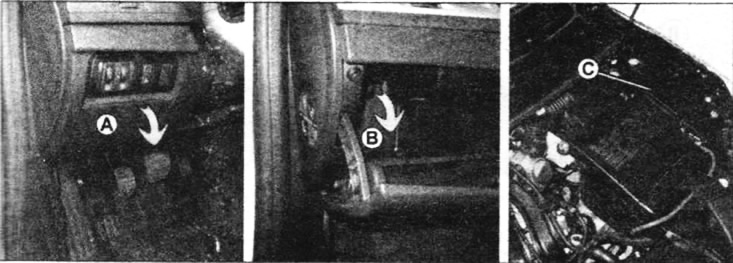
Under the cover in the engine compartment A are pliers B, with which you can remove and replace the fuse. If the same fuse blows several times, this means that the corresponding component is faulty.
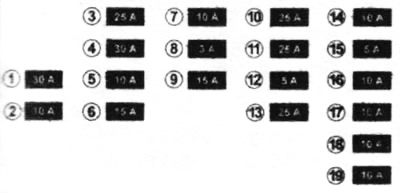
Purpose of fuses:
1 - Automatic parking brake;
2 - brake light;
3 - automatic door locking;
4 — driver's door window lift;
5 — Central Electronics Complex (central electronic switching unit of the passenger compartment);
6 - direction indicators;
7 - navigation system;
8 - interior rear view mirror;
9 - Rear window wiper;
10, 11 — rear window lifters;
12 — ABS / ESP;
13 — passenger door window lifter;
14 — windshield washer;
15 — heated exterior rearview mirrors;
16 - audio system;
17 — power socket for additional equipment in the luggage compartment;
18 — Rear seat auxiliary power socket;
19 — cigarette lighter.
When replacing, remove the fuse using pliers 3 located on the back of cover A or B.
To remove the fuse from the tweezers, slide it to the side (as shown in the picture).
It is not recommended to use empty fuse slots.