



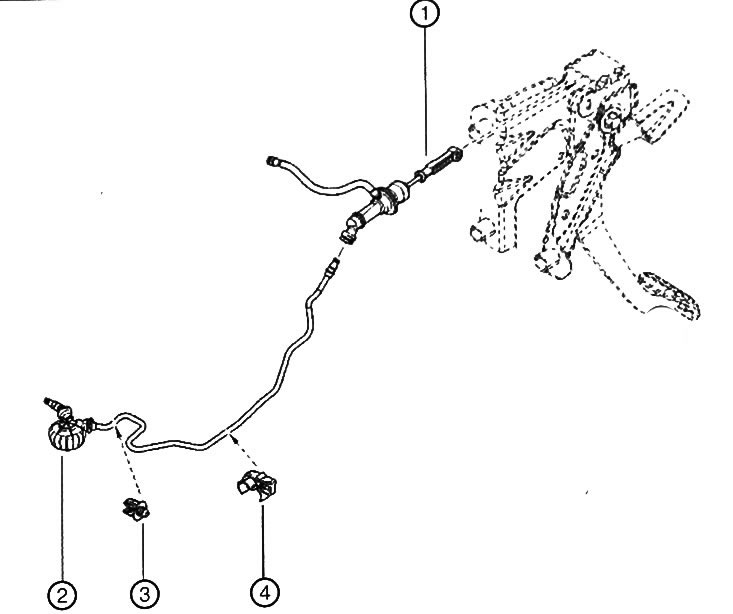
1. Clutch master cylinder. 2. Clutch slave cylinder. 3. Pipe holder. 4. Pipe bracket.
Bleeding the clutch hydraulic drive
The procedure for bleeding the clutch hydraulic drive is performed after any work on the clutch hydraulic drive has been performed:
- between the tank and the air bleed nipple;
- between the air bleed nipple and the clutch thrust bearing.
In addition, the following signs may indicate the presence of air in the clutch hydraulic system:
- clutch pedal failure;
- clutch pedal position at half travel or on the floor;
- poor gear shifting.
Preparatory procedures
The clutch hydraulic drive system is very sensitive to various contaminants. Contaminants entering the hydraulic circuit may result in:
- inability to shift gears;
- damage or destruction of the clutch mechanism;
- leaks from the hydraulic circuit.
All work on the hydraulic circuit of the clutch release drive must be carried out in conditions of perfect cleanliness. It must be ensured that no foreign particles enter the hydraulic system circuit.
The principle of cleanliness applies to all components of the hydraulic clutch drive.
Pollution can be caused by:
- metal or plastic filings;
- fibers;
- cardboard, brushes, paper, fabric, clothing, dust and foreign particles contained in the air, etc.
Lint-free cleaning wipes should be used. Each wipe should not be used more than once.
To remove air from the clutch hydraulic circuit, two types of special equipment can be used:
- ARC50 device via brake fluid reservoir.
- Syringe through the air bleed nipple located on the clutch release cylinder.
If the clutch hydraulic components have been removed, the system is bled using the ARC50 device via the brake fluid reservoir or using a new syringe via the bleed nipple located on the clutch release cylinder.
If the clutch hydraulic drive components have not been removed, bleeding can be performed by simply injecting brake fluid with a new syringe through the air bleed nipple located on the clutch release cylinder.
Note:
- Even the smallest air bubbles in the hydraulic circuit can cause malfunctions (the pedal does not return to its original position, there is a crackling sound when changing gears, etc.)
- Incorrect bleeding of the hydraulic circuit may result in incorrect determination of the cause of the malfunction and unnecessary replacement of parts.
When bleeding the clutch release circuit, use the recommended type of brake fluid.
Clutch Release Hydraulic Bleeding Procedure
1. Place the vehicle on a two-post lift.
2. Remove the engine protective pan.
3. Depending on the type of air bleed nipple:
- Bleed screw fitting: Hold the plastic part (1) with a ring spanner and unscrew the fitting (2).
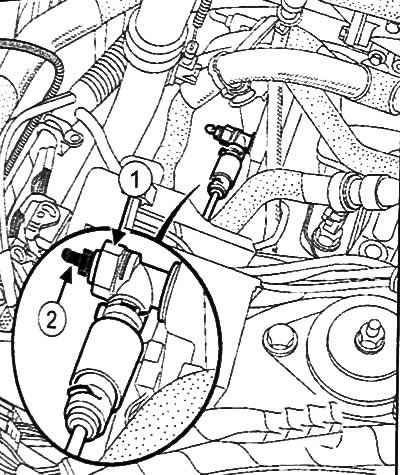
Screw-type air bleed nipple
- Half-turn air bleed nipple: To open the nipple (3), turn it manually until it stops.
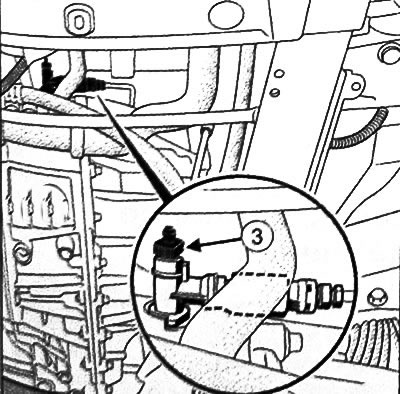
Half-turn air bleed nipple
- Bleed nipple with clamp: to open the nipple, pull it out one notch while pressing and holding the clamp (4 or 5).
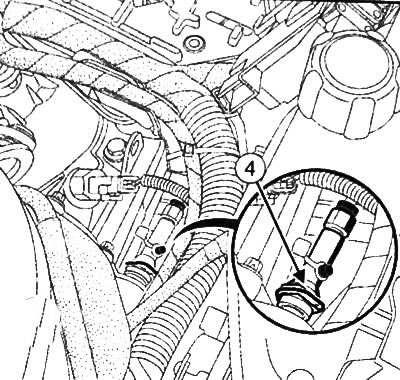
Air bleed nipple with clamp, type A
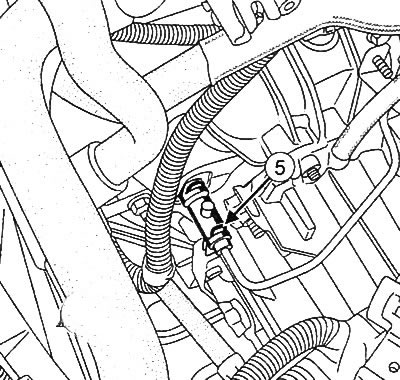
Air bleed nipple with clamp, type B
- Air bleed nipple with two clamps: to open the nipple, remove it one notch by pressing the clamp (6) and lifting the clamp (7).
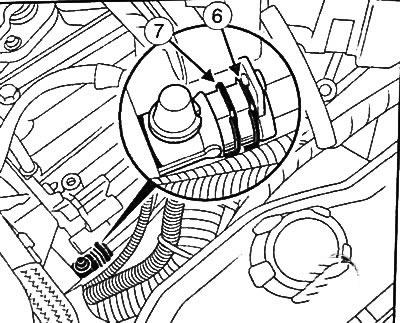
Air bleed nipple with two clamps
If the clutch release hydraulic drive components have not been removed:
A) Pumping using a special device
- Secure the clutch pedal in the up position with a strap or rope tied to the steering wheel to ensure continuity of the hydraulic circuit during bleeding.
Note: Be careful not to disturb the clutch pedal sensor adjustment.
- Connect the brake circuit bleeding device to the brake fluid reservoir (see the operating instructions supplied with the device).
- Remove the cap from the bleed nipple on the clutch release cylinder.
- Connect a transparent hose to the air bleed nipple and place the other end of the hose in an empty container located under the nipple.
- Open the bleed nipple.
- Open the valve between the bleeding device and the brake reservoir.
- Allow the brake fluid to drain until all air bubbles are gone.
- Stop the bleeding device to relieve pressure in the clutch hydraulic circuit.
- Close the air bleed nipple.
- Remove the transparent hose from the air bleed nipple.
- Install the cap on the air bleed nipple.
- After removing the bleeding device, add brake fluid to the reservoir to the required level.
- Quickly press and release the clutch pedal about twenty times.
- Make sure that the hydraulic clutch release drive is operating correctly.
- If necessary, repeat the bleeding procedure.
- Check the clutch pedal sensor adjustment.
B) Bleeding using a new syringe
- Secure the clutch pedal in the up position with a strap or rope tied to the steering wheel to ensure continuity of the hydraulic circuit during bleeding.
Note: Be careful not to disturb the clutch pedal sensor adjustment.
- Remove the cap from the bleed nipple on the clutch release cylinder.
- Connect a transparent hose of suitable length (not less than thirty centimeters) to the air bleed nipple and place it at the same height as the brake fluid reservoir.
- Open the bleed nipple.
- Pour brake fluid into the reservoir until it starts to flow out through the air bleed nipple.
Note: The clear hose must remain at the same height as the brake fluid reservoir to prevent air from entering the clutch hydraulic circuit.
- Attach a new syringe with 60 ml of brake fluid to the end of the transparent hose.
- Slowly inject the entire contents of the syringe into the clutch release hydraulic drive, preventing air from entering from the top of the syringe.
- Close the air bleed nipple.
- Remove the transparent hose from the air bleed nipple.
- Install the cap on the air bleed nipple.
- Add brake fluid to the reservoir to the required level.
- Quickly press and release the clutch pedal about twenty times.
- Make sure that the hydraulic clutch release drive is operating correctly.
- If necessary, repeat the bleeding procedure.
- Check the clutch pedal sensor adjustment.
If the clutch release hydraulic components have been removed
Caution: Brake fluid may leak when disconnecting clutch hydraulic components. Protect surrounding surfaces.
- The clutch master cylinder line must be disconnected from the port on the brake fluid reservoir to prevent foreign particles from entering the hydraulic circuit.
- Some hydraulic system lines are equipped with a filter. Place the filter head down to ensure it is filled.
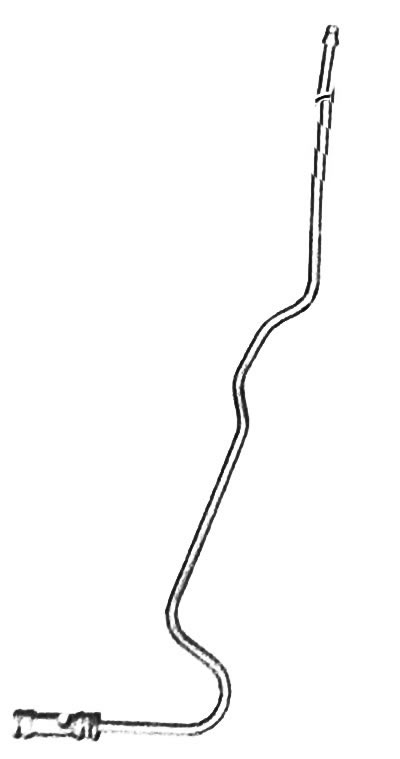
Filling position of the hydraulic drive pipeline without filter
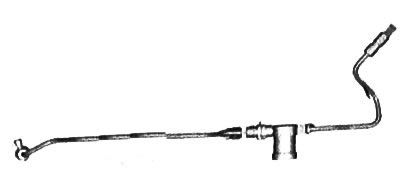
Filling position of the pipeline with filter
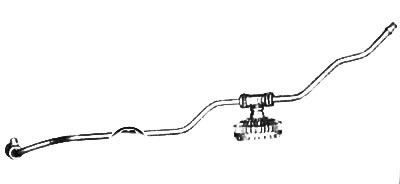
Filling position of the pipeline with filter
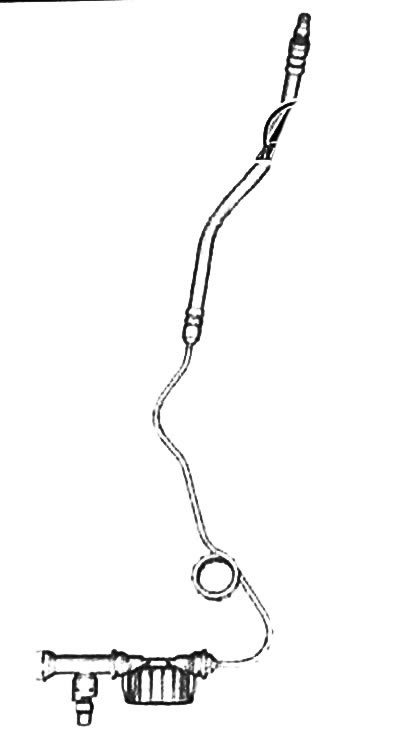
Filling position of the pipeline with filter
- Using a syringe, pre-fill the hydraulic drive line with brake fluid.
- Plug the pre-filled hydraulic line on the master cylinder side to prevent brake fluid from leaking out.
- Using a syringe, pre-fill the clutch release cylinder using gravity.
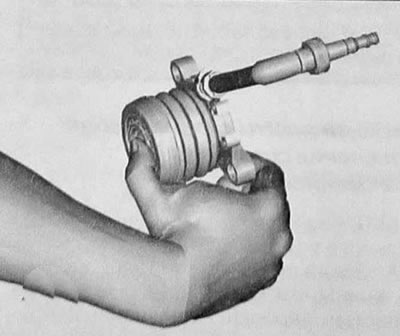
- Install the appropriate components.
- Secure the clutch pedal in the up position with a strap or rope tied to the steering wheel to ensure continuity of the hydraulic circuit during bleeding.
Note: Be careful not to disturb the clutch pedal sensor adjustment.
- Remove the cap from the bleed nipple on the clutch release cylinder.
- Connect a transparent hose of suitable length (not less than thirty centimeters) to the air bleed nipple and place it at the same height as the brake fluid reservoir.
- Open the bleed nipple.
- Pour brake fluid into the reservoir until it starts to flow out through the air bleed nipple.
Note: The clear hose must remain at the same height as the brake fluid reservoir to prevent air from entering the clutch hydraulic circuit.
- Attach a new syringe with 60 ml of brake fluid to the end of the transparent hose.
- Slowly inject the entire contents of the syringe into the clutch release hydraulic drive, preventing air from entering from the top of the syringe.
- Close the air bleed nipple.
- Remove the transparent hose from the air bleed nipple.
- Install the cap on the air bleed nipple.
- Add brake fluid to the reservoir to the required level.
- Quickly press and release the clutch pedal about twenty times.
- Make sure that the hydraulic clutch release drive is operating correctly.
- If necessary, repeat the bleeding procedure.
- Check the clutch pedal sensor adjustment.