



Contents: Operating principle 🠛 Loading the car 🠛 Unloading the car 🠛 Control lamp 🠛 Security measures 🠛
The electronically controlled body height control system is a system for maintaining a constant body height regardless of the load installed on vehicles with rear suspension with air springs.
The pneumatic part of the system consists of the following elements:
- compressor unit (8, Fig. 11.2);
- two air springs (7);
- tee (13) with valve;
- connecting pipelines.
The electrical part of the system consists of the following elements:
- control unit (4, Fig. 11.9);
- body position sensor (5);
- malfunction indicator lamp in the instrument cluster;
- three fuses;
- electrical wiring.
The compressor unit is located under the car on the right side of the spare wheel and is covered with a noise-insulating casing. The compressor unit does not require maintenance.
The node consists of the following elements:
- electric motor (1, Fig. 11.6);
- compressors (2);
- air filter with granular desiccant (3);
- exhaust solenoid valve (4). Pneumatic springs are installed instead of the coil springs of the classic rear suspension and provide a connection between the suspension beam and the suspension. They have a movable stop (1. Fig. 11.7), which is used when compressed air leaks.
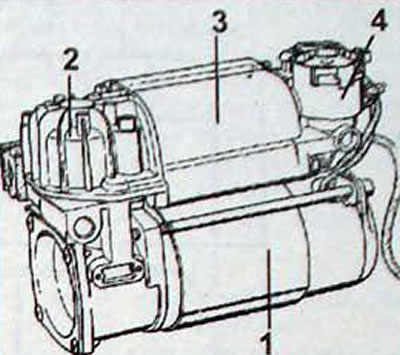
Fig. 11.6. Electronically controlled body height control system compressor unit: 1 - electric motor; 2 - compressor; 3 - Air intake filter with granular desiccant; 4 - exhaust solenoid valve
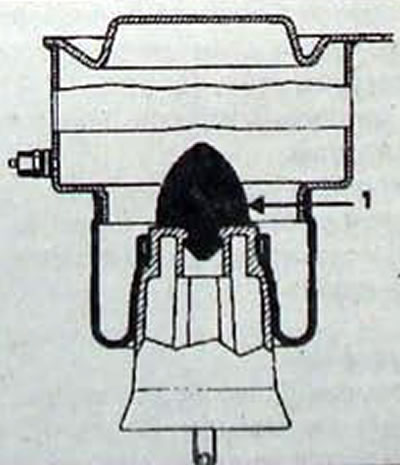
Fig. 11.7. Location of the movable stop (1) of the air spring
The control unit is located in the passenger compartment behind the right rear wheel arch next to the inertia reel of the third seat belt.
Operating principle
The body position sensor sends information about the height of the rear part of the vehicle body to the control unit.
Based on the information received, the control unit turns on the compressor or the exhaust solenoid valve to restore the vehicle's specified ground clearance
The control unit ensures the safety of the system by blocking it under certain conditions and warning the driver via a warning lamp in the instrument cluster, especially if there is a compressed air leak.
The sensor is attached to the suspension and is connected to the suspension beam via a rod and lever.
Note: The length of the rod is set at the factory and should not be changed during operation.
The sensor transmits information about the exact position of the car body to the control unit and detects the movement of the car, registering vibrations caused by the movement.
The system is programmed to maintain the height of the rear of the car at a given level, i.e. to maintain the size H5 (fig. 11.3) measured between the extreme rear cross member of the floor and the road surface:
- 412mm with 195mm tires;
- 422mm with 205mm tires.
This size corresponds to the constant ground clearance of the vehicle, regardless of the load (at normal air pressure in the tires).
The system does not take into account small fluctuations in the height of the vehicle body during movement, associated with suspension movements.
The system is activated when one of the doors is opened or when the ignition is turned on.
The compressor unit power supply circuit is broken within the first 10 seconds of vehicle movement.
Loading the car
If the clearance is reduced by less than 5 mm, no adjustment is made, as the system is within tolerance (this prevents the system from triggering spontaneously).
If the clearance decreases by more than 5 mm, the compressor starts working after 2 seconds, increasing the pressure in the circuit and returning the car to normal clearance.
The system can adjust the ground clearance while the vehicle is moving when the ground clearance has dropped by more than 5 mm after 45 seconds (due to the movement of passenger fats in the cabin).
Unloading the car
If the clearance has increased by less than 5 mm, no adjustment is made, since the system is within tolerance (this prevents the system from triggering spontaneously).
If the clearance has increased by 5 mm or more, after 2 seconds the exhaust solenoid valve opens and returns the vehicle to normal clearance.
Note: When performing any work on the pneumatic circuit, replace the O-rings of the pipelines (except for the pipeline connected to the compressor) and nuts, and tighten the pipe fittings by hand. Before working on the system, release the compressed air from it through the valve on the tee (Fig. 11.8).
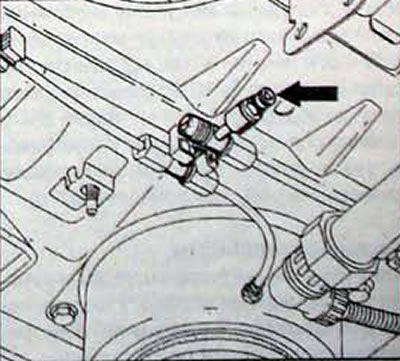
Fig. 11.8. Location of the valve on the tee for releasing air from the body height maintenance system
Control lamp
The indicator lamp lights up for approximately 3 seconds to check the functionality when the ignition is turned on.
The indicator lamp lights up together with the "Service" symbol if the discharge solenoid valve operates continuously for 80 seconds, the compressor operates more than 20% during the first hour, the compressor operates more than 6% during the following hours and an air leak is detected in the circuit (the compressor runs continuously for 180 s).
Security measures
The control unit automatically limits the continuous operation of the compressor to 180 seconds and the discharge solenoid valve to 80 seconds.
The control unit automatically limits the compressor's intermittent operation to 20% during the first hour and to 6% during the following hours if the ignition has not been switched off.
These restrictions are reactivated in the control unit when the ignition is switched on after the vehicle has stopped. In the event of a significant compressed air leak, the vehicle rests on the movable stops of the pneumatic springs. In this case, the vehicle speed should not exceed 40 km/h.
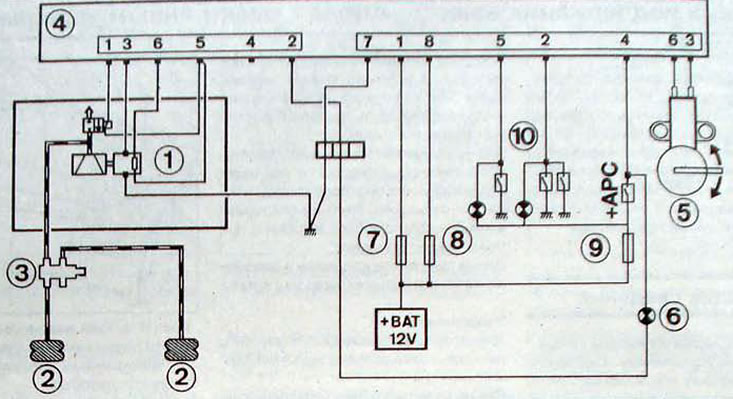
Fig. 11.9. Electrical diagram of the electronically controlled body height maintenance system:1 - compressor block; 2 - air springs; 3 - tee; 4 - control unit; 5 - body position sensor; 6 - Malfunction indicator lamp; 7 - fuse F38 (30 A); 8 - fuse F50 (5 A); 9 - fuse F40 (20 A), 10 - door and luggage compartment door limit switches