The Renault Logan belongs to the B-class. In Romania, it is produced under the name Dacia Logan. Currently, cars with a sedan body are manufactured, on its basis, modifications with station wagon and van bodies are developed.
Renault Logan was designed as an affordable family car, so to reduce its cost, units and assemblies from other models of the brand were actively used. The front suspension of the car of the MacPherson type with lower triangular levers was developed on the basis of the suspension of the Renault Clio II, at the rear there is a semi-independent H-shaped cross beam with longitudinal levers, like the Renault Modus. The entire heating system was taken from the new Modus model. The electronic control unit was borrowed from Twingo, and the car received the cooling system deflectors and gear shift handle from Espace. But it was the Clio model that gave Logan the most - engines, steering, rear brakes, instrument panel, door handles, steering wheel and steering column switches.
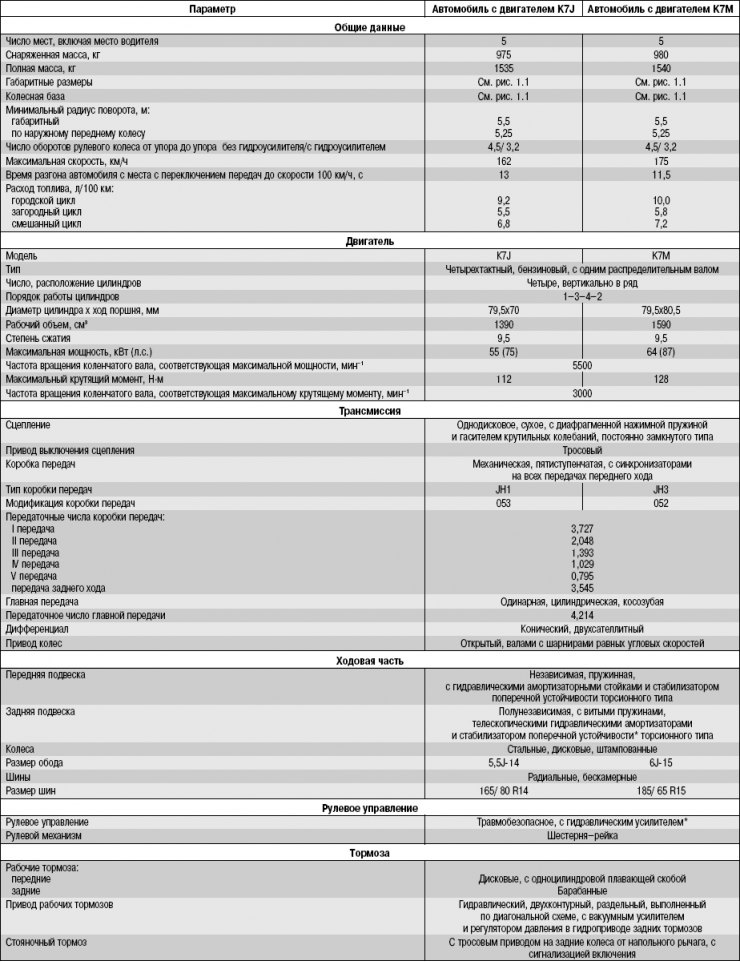
Renault Logan cars are equipped with engines with a working volume of 1.4 and 1.6 liters, with a power of 55 kW (75 hp) and 64 kW (87 hp), respectively. Externally, the engines are identical and differ only in the crankshaft crank radius and the height of the cylinder block.
The body is a sedan type, load-bearing, all-metal, welded construction, with hinged front fenders, doors, hood and trunk lid.
The transmission is front-wheel drive, the front wheel drives are equipped with constant velocity joints of the "Tripod" type. The gearbox is five-speed manual. The gearboxes installed on cars with engines with a working volume of 1.4 and 1.6 liters are almost identical in design, have the same gear ratios and differ only in the dimensions of the clutch housing, which is due to the use of clutches of different diameters on these engines.
Original publication on the website [renaultbook]
The front wheel brakes are disc brakes with a floating caliper. The rear wheel brakes are drum brakes with automatic adjustment of the gaps between the brake shoes and drums. The cars can be equipped with an anti-lock braking system (ABS) upon request.
The steering is trauma-safe, with a rack-and-pinion steering mechanism; a hydraulic booster is installed on request. The steering column is not adjustable in tilt. An airbag is installed in the steering wheel hub. A similar airbag can be installed for the front passenger on request.
All door window lifts can be equipped with electric drives upon request.
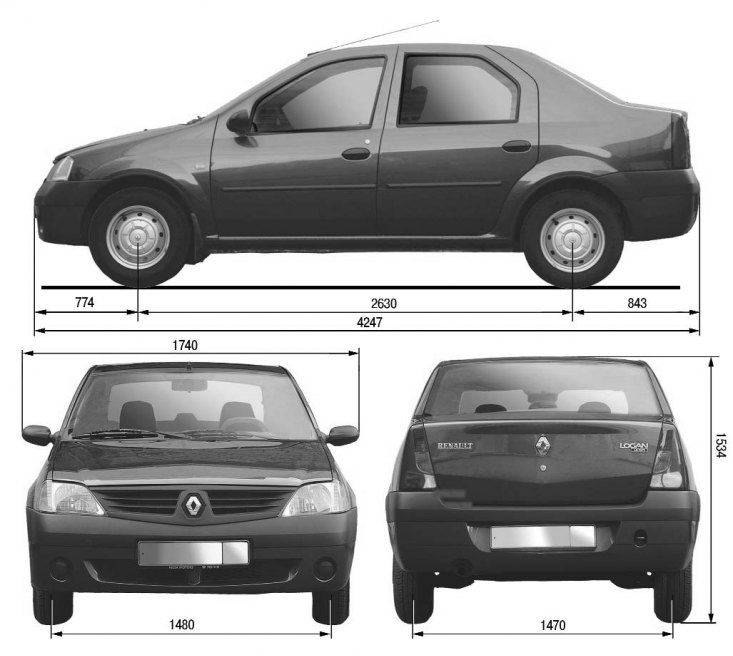
1.1. Overall dimensions of the vehicle
The technical characteristics of the vehicles are given in Table 1.1. The overall dimensions of the vehicle are shown in Figure 1.1, the vehicle elements located in the engine compartment and the main units are shown in Figures 1.2, 1.3, 1.4.
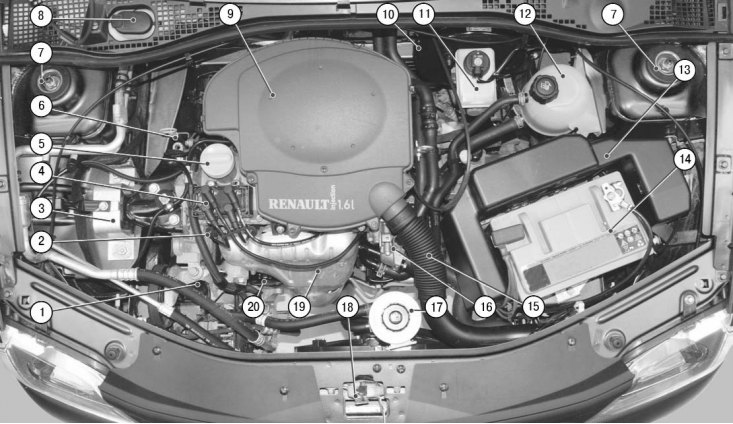
1.2. Underhood space (top view) car: 1 – Power steering pump; 2 – high voltage tip; 3 – right support of the power unit suspension; 4 – ignition module; 5 – oil filler cap; 6 – oil level indicator; 7 – upper supports of the front suspension struts; 8 – windshield washer reservoir; 9 – air filter; 10 – brake booster; 11 – master brake cylinder reservoir; 12 – expansion tank of the engine cooling system; 13 – cover of the relay and fuse mounting block, electronic engine control unit; 14 – battery; 15 – air supply hose; 16 – thermostat; 17 – Power steering fluid reservoir; 18 – bonnet lock safety hook; 19 – exhaust manifold heat shield; 20 – oil filter
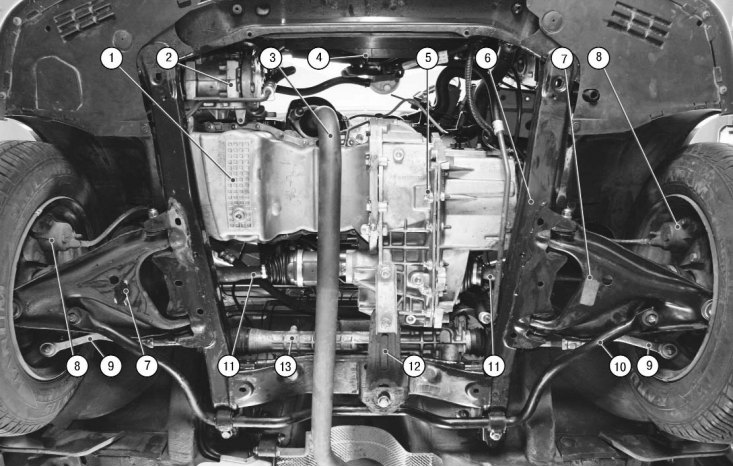
1.3. Underhood space (bottom view) and main units of the car (engine sump guard removed for clarity): 1 – engine; 2 – air conditioning compressor (if installed); 3 – intake pipe; 4 – electric fan of the engine cooling system; 5 – gearbox; 6 – subframe; 7 – front suspension arms; 8 – front wheel brake mechanisms; 9 – steering rods; 10 – anti-roll bar; 11 – front wheel drives; 12 – rear support of the power unit suspension; 13 – steering mechanism
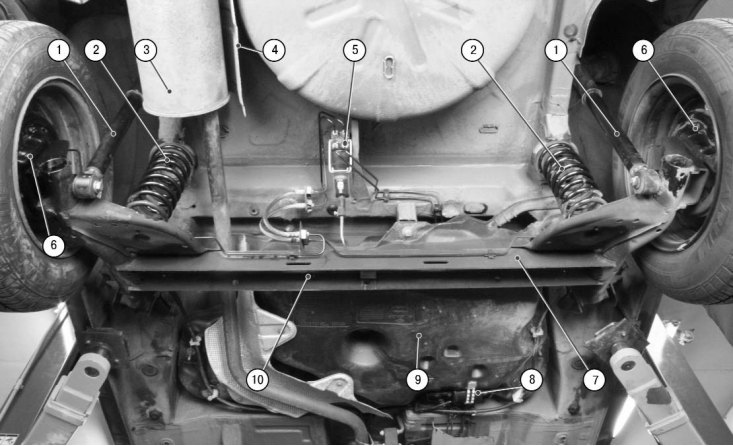
1.4. Main units of the car (bottom view from behind): 1 – shock absorbers; 2 – rear suspension springs; 3 – muffler; 4 – muffler heat shield; 5 – brake force regulator in the rear brake hydraulic drive; 6 – rear wheel brake mechanisms; 7 – rear suspension beam; 8 – fuel filter; 9 – fuel tank; 10 – rear suspension stabilizer bar (if installed)
Table 1.1. Technical characteristics of cars