
English Русский
Български
Беларускі
Український
Српски
Hrvatski
Română
Polski
Slovenský
Magyar
Bookmark Contacts Articles Sitemap
Company vehicles Peugeot Company vehicles Opel Company vehicles Skoda Company vehicles Land Rover Company vehicles Mitsubishi Company vehicles Volkswagen Company vehicles Honda
RenaultBook.ru


Duster   Fluence   Kangoo   Laguna   Logan   Megane   Sandero   Scenic   Symbol   Clio   Other
Logan 1 (2004-2012, petrol) Logan 2 (2012-2020)

Replacement and maintenance of spark plugs (Renault Logan 1)

  • Main
  • Logan
  • Logan 1 (2004-2012, petrol)
  • General information
  • First maintenance
  • Replacement and maintenance of spark plugs
0
You will need a special 21 mm wrench to remove the spark plugs (with a rubber sleeve to hold the spark plug to remove the spark plug from the well).

All Renault Logan engines use Champion RYCLC87 or Sagem RFN58LZ spark plugs, the gap between the spark plug electrodes is (0.95±0.05) mm.
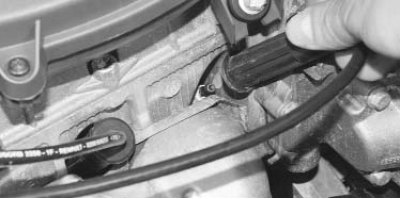
All Renault Logan engines use Champion RYCLC87 or Sagem RFN58LZ spark plugs, the gap between the…


1. Remove the high-voltage wire tip from the spark plug being replaced.
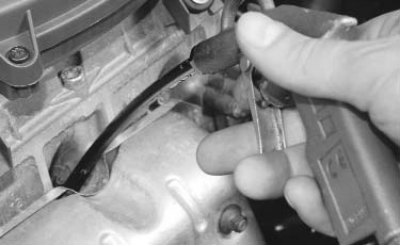
1. Remove the high-voltage wire tip from the spark plug being replaced.


2. Blow out the spark plug wells with compressed air to prevent dirt from getting into the engine cylinder when removing the spark plug.
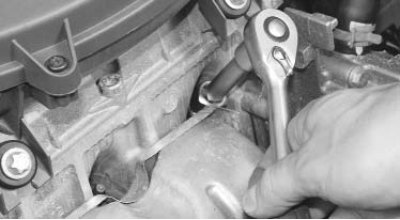
2. Blow out the spark plug wells with compressed air to prevent dirt from getting into the engine…


(Information is located on the website: RENAULTBOOK)


3. Remove the spark plug...
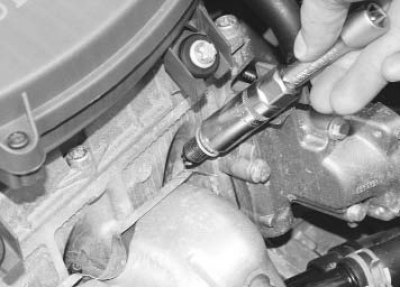
3. Remove the spark plug...


4. ...and remove it from the spark plug well.

Note: Inspect the spark plug and assess its condition by its appearance (see "Diagnostics of engine condition by the appearance of spark plugs").

Note: Inspect the spark plug and assess its condition by its appearance (see «Diagnostics of engine…


5. Check the gap between the spark plug electrodes with a round feeler gauge. The gap should be (0.95±0.05) mm.
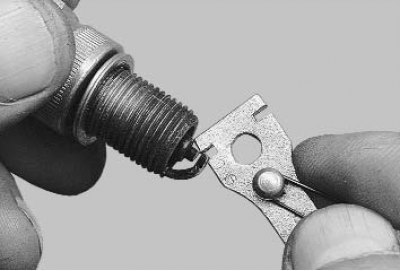
5. Check the gap between the spark plug electrodes with a round feeler gauge. The gap should be…


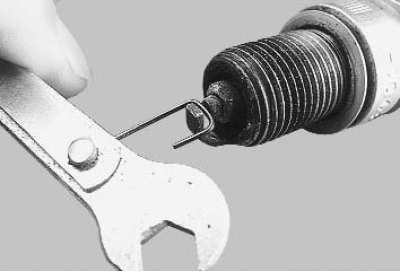
6. If the gap differs from the specified one, adjust it by bending the side electrode.


Caution! Adjust the gap only by bending the side electrode. Any bending of the central electrode will cause the spark plug insulator to break.


7. When installing spark plugs, screw them in by hand first (without a collar), and then tighten with a wrench to a torque of 25–30 N·m.
7. When installing spark plugs, screw them in by hand first (without a collar), and then tighten…


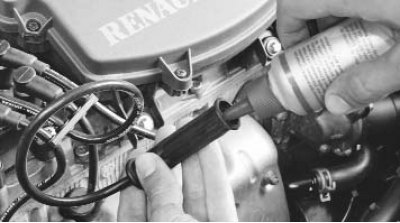
8. Before installation, lubricate the high-voltage wire tips with consistent grease. The manufacturer recommends FLUORINE GREASE (number 82 00 168 855 according to Renault catalogue), but you can also use technical petroleum jelly.

Note: When connecting high-voltage wires, please note that the engine cylinders on Renault vehicles are numbered from the flywheel side.
This article is available on: russian, bulgarian, belarusian, ukrainian, serbian, croatian, romanian, polish, slovak, hungarian
Article has been reviewed by editor: Podkrepilov Maxim
Share with friends:
Previous
Logan 1: First maintenance
Next

Checking the degree of wear of brake pads, discs and drums
Checking the efficiency of the braking system
Checking the parking brake
Checking the operation of the brake booster
Checking the tightness of the hydraulic brake drive
Headlight adjustment
Lubrication of body fittings
Cleaning the drainage holes of the body
Tightening torques for critical threaded connections
Other articles on other Renault models

➽ Replacement and maintenance of spark plugs Renault Sandero 1 (2007-2012, petrol)
➽ Spark plugs Renault Fluence 1 (2009-2020, petrol)
➽ Ignition system with static voltage distribution across spark… Renault Laguna 2 (2001-2007)
➽ Spark plugs (all engines) Renault Megan 2 (2002-2009, petrol)
➽ Spark plugs — replacement Renault Scenic 1 (1996-2003)
Link to this article in different formats
Reviews and comments of visitors
No comments yet


Add two numbers 31 + 42


Logan 2 (2012-2020) 
  • General information
  • Faults en route
  • Daily checks
  • Governing bodies
  • Maintenance
  • Power unit
  • Petrol engines 1.2 l
  • Petrol engines 1.6 l
  • Diesel engines 1.5 l
  • Cooling system
  • Lubrication system
  • Power and control system
  • Intake and exhaust system
  • Engine electrical equipment
  • Transmission
  • Clutch
  • Car gearbox
  • Drive shafts
  • Chassis, running gear
  • Suspension and wheels
  • Brake system
  • Steering
  • Body and interior
  • Exterior (external elements)
  • Interior (internal elements)
  • Safety system
  • Heating and air conditioning
  • Electrical equipment
  • Equipment and devices
  • Wiring diagrams (sedan)
  • Wiring diagrams (wagon)
Logan 1 (2004-2012, petrol) 
  • General information
  • Vehicle device
  • User manual
  • Faults en route
  • Daily maintenance
  • First maintenance
  • Second maintenance
  • Driver tips
  • Power unit
  • Engine repair
  • Lubrication system
  • Cooling system
  • Power and exhaust system
  • Transmission
  • Clutch
  • Car gearbox
  • Drive shafts
  • Chassis, running gear
  • Front suspension
  • Rear suspension
  • Steering
  • Brake system
  • Wheels and tires
  • Body and interior
  • Exterior (external elements)
  • Interior (internal elements)
  • Doors, locks and windows
  • Body Care
  • Electrical equipment
  • Equipment and devices
  • Headlights and lighting
  • Power devices
  • Electrical circuits
RenaultBook.ru © 2018–2026 | Mobile version | News and articles | Sitemap: EN BG BY UA RS HR RO PL SK HU | Administration | Site search | Bookmark
Duster 1 (2009-2017) | Fluence 1 (2009-2020, petrol) | Kangoo 1 (1997-2007) | Laguna 2 (2001-2007) | Logan 1 (2004-2012, petrol) | Logan 2 (2012-2020) | Megane 1 (1995-2002) | Megan 2 (2002-2009, petrol) | Sandero 1 (2007-2012, petrol) | Scenic 1 (1996-2003) | Symbol 1 (1999-2008, petrol) | Symbol 2 (2008-2013, petrol) | Renault 19 (1988-1996) | Espace I and II (1984-1996) | Espace III (1996-2002) | Clio 1 (1990-1998) |
We want your visit to be comfortable 😌 and use cookies 🍪 to do so.