
English Русский
Български
Беларускі
Український
Српски
Hrvatski
Română
Polski
Slovenský
Magyar
Bookmark Contacts Articles Sitemap
Company vehicles Peugeot Company vehicles Opel Company vehicles Skoda Company vehicles Land Rover Company vehicles Mitsubishi Company vehicles Volkswagen Company vehicles Honda
RenaultBook.ru


Duster   Fluence   Kangoo   Laguna   Logan   Megane   Sandero   Scenic   Symbol   Clio   Other
Logan 1 (2004-2012, petrol) Logan 2 (2012-2020)

Oil pressure dropped (Renault Logan 1)

  • Main
  • Logan
  • Logan 1 (2004-2012, petrol)
  • General information
  • Faults en route
  • Oil pressure dropped
0
Oil pressure dropped


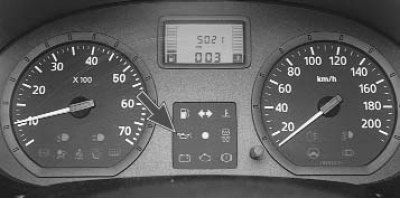
Your vehicle's instrument cluster has a low engine oil pressure warning light. To ensure reliable engine operation, the engine's lubrication system must be kept at a sufficiently high pressure at all times.

Warning! If the low oil pressure warning light comes on while the engine is running and continues to light at high speed, this is an alarming sign. You must immediately stop driving, stop the engine and find out the cause. Further operation of the engine with low oil pressure can lead to serious damage and large financial costs for repairs.


Checking the lubrication system


1. Open the hood. Do not rush to check the oil level in the engine right away, let it drain into the oil pan, this will take two to three minutes. During this time, carefully inspect the engine - are there any fresh oil leaks on it.
1. Open the hood. Do not rush to check the oil level in the engine right away, let it drain into…


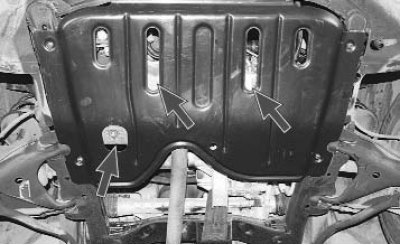
2. Look under the front of the car to see if the engine oil pan is punctured or if there is a leak.


Note: The car is equipped with an oil pan guard that protects it from impacts from relatively small stones flying out from under the wheels. However, if the car hits a curb or a large stone, the guard may bend and the pan will be damaged.


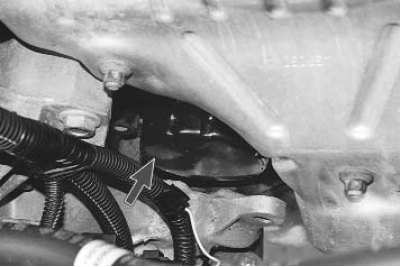
Note: If an oil leak is detected from a punctured oil pan, try to temporarily seal it on the spot. For this, you can use a car inner tube, a piece of rubber, a rag, a wooden plug, etc. A good result can be achieved by using modern repair materials such as "cold welding", which are available in auto stores.

Note: If an oil leak is detected from a punctured oil pan, try to temporarily seal it on the spot.…


3. Pay attention to the oil filter. Oil may leak from under the rubber filter gasket if it is damaged or the filter is not tightened properly. Sometimes it is enough to turn it a little clockwise.

Warning! Hot engine parts can cause burns, so wear gloves and long sleeves.

Warning! Hot engine parts can cause burns, so wear gloves and long sleeves.


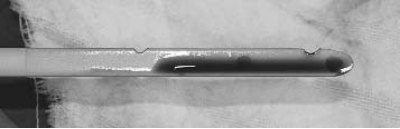
4. Remove the dipstick, wipe it with a clean rag and reinsert it. Remove the dipstick again and check the oil level. It should be between the upper and lower marks.


5. If the oil level is below the lower mark, add oil to the level.

Note: If you don't have a funnel to add oil, you can use the neck of a cut plastic bottle.

Note: If you don't have a funnel to add oil, you can use the neck of a cut plastic bottle.


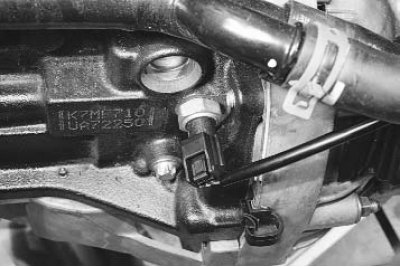
6. Start the engine. If the oil pressure light goes out when the level is normal, you can continue driving. If the light still lights up, check the oil pressure sensor. It is installed on the side of the cylinder block facing the radiator of the cooling system. Unscrew the standard oil pressure sensor and install a mechanical pressure gauge in its place. If the pressure at normal idle speed is more than 0.06 MPa (0.65 kgf/cm²) and increases with the increase in the number of revolutions, the sensor or its electrical circuit is faulty.

Note: If you do not have a pressure gauge, the only option left is to check the reliability of the contact in the block with the sensor wires or replace the sensor with a known good one.


If after eliminating all visible causes the oil pressure in the engine is insufficient (the oil pressure warning light is on), perform diagnostics and repair of the engine (see section. "Engine").

Warning! Do not attempt to drive to the garage - the engine will fail. Tow the car with the engine inoperative for repair.
This article is available on: russian, bulgarian, belarusian, ukrainian, serbian, croatian, romanian, polish, slovak, hungarian
Article has been reviewed by editor: Podkrepilov Maxim
Share with friends:
Previous
Logan 1: Faults en route
Next

The engine stalled while driving
The car accelerates poorly
The car moves in jerks
Engine diagnostics by the appearance of spark plugs
Engine misfires
Engine overheating
The battery is not recharging
Checking electrical equipment
Starting the engine from external power sources
Electrical equipment faults
Other articles on other Renault models

➽ Oil pressure dropped Renault Sandero 1 (2007-2012, petrol)
➽ Tire pressure Renault Duster 1 (2009-2017)
➽ Tire pressure Renault Fluence 1 (2009-2020, petrol)
➽ Engine oil pressure Renault Kangoo 1 (1997-2007)
➽ Tire pressure Renault Laguna 2 (2001-2007)
Link to this article in different formats
Reviews and comments of visitors
No comments yet


Add two numbers 11 + 43


Logan 2 (2012-2020) 
  • General information
  • Faults en route
  • Daily checks
  • Governing bodies
  • Maintenance
  • Power unit
  • Petrol engines 1.2 l
  • Petrol engines 1.6 l
  • Diesel engines 1.5 l
  • Cooling system
  • Lubrication system
  • Power and control system
  • Intake and exhaust system
  • Engine electrical equipment
  • Transmission
  • Clutch
  • Car gearbox
  • Drive shafts
  • Chassis, running gear
  • Suspension and wheels
  • Brake system
  • Steering
  • Body and interior
  • Exterior (external elements)
  • Interior (internal elements)
  • Safety system
  • Heating and air conditioning
  • Electrical equipment
  • Equipment and devices
  • Wiring diagrams (sedan)
  • Wiring diagrams (wagon)
Logan 1 (2004-2012, petrol) 
  • General information
  • Vehicle device
  • User manual
  • Faults en route
  • Daily maintenance
  • First maintenance
  • Second maintenance
  • Driver tips
  • Power unit
  • Engine repair
  • Lubrication system
  • Cooling system
  • Power and exhaust system
  • Transmission
  • Clutch
  • Car gearbox
  • Drive shafts
  • Chassis, running gear
  • Front suspension
  • Rear suspension
  • Steering
  • Brake system
  • Wheels and tires
  • Body and interior
  • Exterior (external elements)
  • Interior (internal elements)
  • Doors, locks and windows
  • Body Care
  • Electrical equipment
  • Equipment and devices
  • Headlights and lighting
  • Power devices
  • Electrical circuits
RenaultBook.ru © 2018–2026 | Mobile version | News and articles | Sitemap: EN BG BY UA RS HR RO PL SK HU | Administration | Site search | Bookmark
Duster 1 (2009-2017) | Fluence 1 (2009-2020, petrol) | Kangoo 1 (1997-2007) | Laguna 2 (2001-2007) | Logan 1 (2004-2012, petrol) | Logan 2 (2012-2020) | Megane 1 (1995-2002) | Megan 2 (2002-2009, petrol) | Sandero 1 (2007-2012, petrol) | Scenic 1 (1996-2003) | Symbol 1 (1999-2008, petrol) | Symbol 2 (2008-2013, petrol) | Renault 19 (1988-1996) | Espace I and II (1984-1996) | Espace III (1996-2002) | Clio 1 (1990-1998) |
We want your visit to be comfortable 😌 and use cookies 🍪 to do so.