



Contents: Removal 🠛 Installation 🠛
Tightening torques:
- Wheel bolt - 90 Nm
- Hub nut - 175 Nm
- Drain nipple - b - 8 Nm
- Brake pipe - 14 Nm
Removal
- remove the brake drum as described above;
- unhook the upper tension spring with pliers and remove it from the pads;
- move the pads apart and move their upper ends away from the brake cylinder pistons, being careful not to damage the rubber dust boots;
- to reduce the loss of working fluid, clamp it (with a clamp) hose coming from the expansion tank;
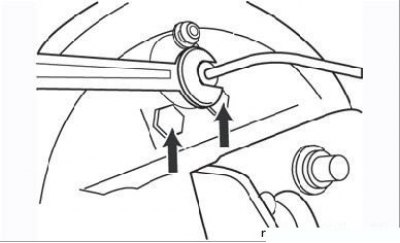
Figure 7.18. Unscrewing the union nut of the brake pipe of the rear brake cylinder (the arrows show the brake cylinder mounting bolts)
- clean the brake shield in the area where the brake cylinder is installed and unscrew the pipe fitting (Figure 7.18). Disconnect the line from the cylinder and take measures to prevent dirt from entering the brake system;
- unscrew the two bolts securing the brake cylinder and remove the cylinder, keeping brake fluid away from the brake pad linings.
There is no repair kit for the brake cylinder, so if the cylinder is damaged, it is replaced with a new one.
(Article reprinted from the website renaultbook.ru)
Installation
- clean the seat on the brake shield;
- install the cylinder on the shield and screw the pipeline nipple into the brake cylinder body two or three turns, making sure that the threads match;
- screw in the cylinder mounting bolts to the brake shield, then tighten the pipe fitting to the specified torque;
- carefully install the ends of the pads on the pistons of the brake cylinder;
- connect the pads with the upper brake spring;
- remove the clamp from the expansion tank hose;
- install the brake drum;
- remove air from the corresponding brake system circuit.