



Contents: Removal and installation the gear…🠛 Adjusting the gear shift mechanism 🠛 Checking, removing and installing…🠛 Replacing the primary shaft seal 🠛
Gearbox repair is a complex task for a car owner. In addition to disassembling and assembling this unit, which includes many small parts, exceptional measurement accuracy is required, which is available to specialists with the appropriate measuring tool.
The assembly and disassembly process requires special equipment – pullers, indicators, hydraulic press, etc.
Spare parts for the gearbox are often difficult to obtain, and many are unreasonably expensive.
Based on these considerations, if faults are detected in the gearbox - noise, jamming or difficulties when shifting gears, vibration, etc., it is advisable to entrust the repair of the gearbox to specialists or purchase a refurbished gearbox for replacement.
For the reasons stated, the operations available for independent performance by a car enthusiast will be described below.
Removal and installation the gear shift mechanism
Removal
- place the vehicle on a lift or raise the front of the vehicle and install safety supports under the body;
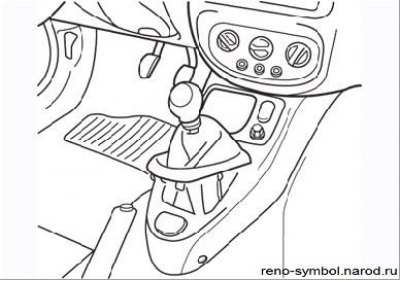
Figure 4.24. Removing the gear shift knob cover
- inside the car, carefully remove the gearshift boot from the console (Figure 4.24);
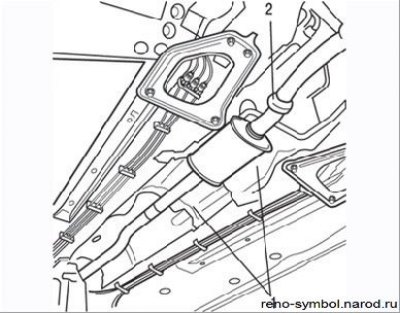
Figure 4.25. Removing the fastening of the heat-insulating shields (1) and the clamp (2) connecting the front and rear parts of the exhaust system
- remove the heat shields underneath the vehicle and disconnect the rear exhaust system from the front (Figure 4.25). Support the rear of the system with a stand;
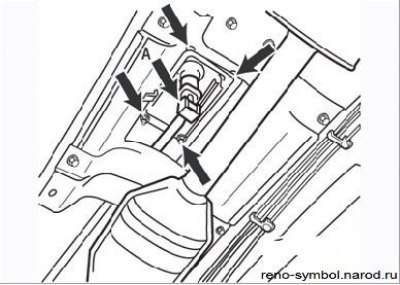
Figure 4.26. Removing the gear shift lever housing: A – shift rod nut; the arrows show the four nuts that secure the body to the floor of the car body
- unscrew the nut, remove the washer and disconnect the gearshift rod from the bottom of the gearshift lever. Unscrew the four nuts securing the gearshift lever housing to the floor and lower it down (Figure 4.26);
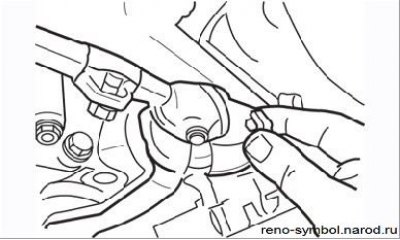
Figure 4.27. Gear shift rod mounting unit
- bend back the rubber boot, unscrew the bolt at the front of the rod, remove the washer and bushing (Figure 4.27). Remember the location of the parts (Figure 4.28). Remove the rod from the gearbox;
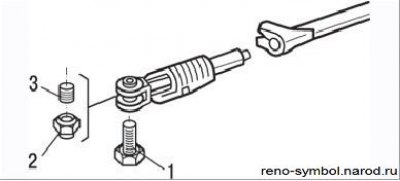
Figure 4.28. Gear shift rod mounting parts: 1 – bolt; 2 – nut; 3 – bushing
- before removing the mechanism fork, mark its position relative to the rod, loosen the clamp bolt and disconnect the fork;
- inspect the parts - replace any worn or damaged ones.
Installation
- lubricate the gear shift lever pivot joints and gear shift drive rod axle with 33 Medium grease;
- install the fork onto the stem as marked during removal and tighten the clamp securely;
- if you are installing new parts, when installing the fork on the stem, make sure that approximately 7–8 mm of the knurled part of the fork is visible; the fork should be facing the gearbox with its protruding part;
- attach the fork to the gear lever, install the bushing, bolt and nut;
- perform the remaining operations in the reverse order of removal;
- check and adjust the gear shift mechanism.
Attention! For precise adjustment of the mechanism, the B.Vi. 1133 device is required – the gearshift lever lock in the first gear position.
Adjusting the gear shift mechanism
Work order:
- place the vehicle on a lift or raise the front of the vehicle and install safety supports under the body;
- remove the protective cover of the power unit;
- remove heat shields to access gear shift lever;
- engage first gear in the gearbox;
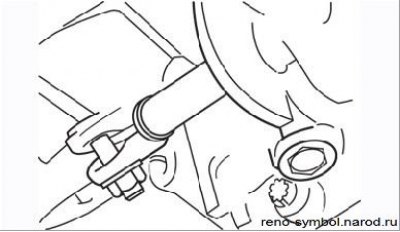
Figure 4.29. Adjusting clamp on the gearshift rod from the gearbox side
- loosen the clamp bolt on the gearshift rod on the transmission side so that the rod can move (Figure 4.29);
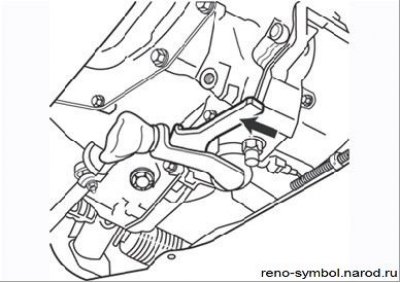
Figure 4.30. Installing the B.Vi. 1133 retainer (arrow)
- to hold the gearshift lever in the first gear position, install the lock B.Vi. 1133 (Figure 4.30). If you don't have such a tool, you can make a suitable replacement yourself from a metal strip or a piece of board;
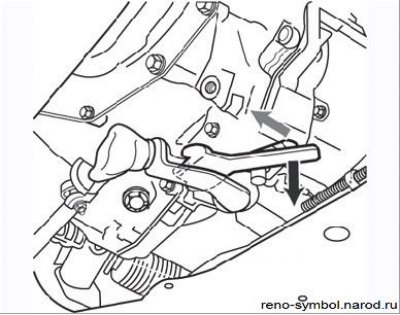
Figure 4.31. Pull the lock down and rotate it at a 45° angle (the arrow shows the clamp bolt)
- at the same time, pull the end of the template down and rotate it at an angle of approximately 45° until it touches the groove on the gearbox housing (Figure 4.31);
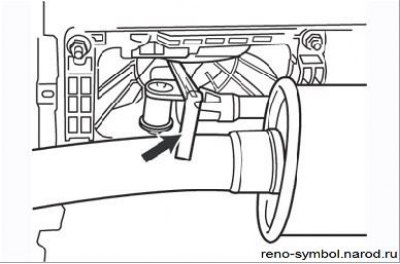
Figure 4.32. Adjusting the 9.0 mm gap in the gearshift drive (the arrow shows the probe)
- move the gearshift lever so that a 9 mm thick flat feeler gauge can be inserted between the thrust ring on the lever and the wedge-shaped plate on the housing (Figure 4.32). In this position, tighten the bolt (see Figure 4.31);
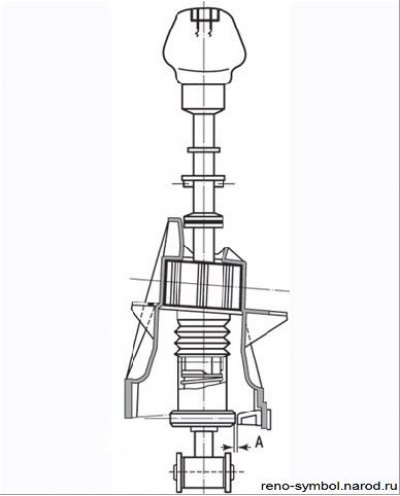
Figure 4.33. Gap (A) between the lever and the housing
- check the resulting gap A, which should be 7-10 mm (Figure 4.33);
- delete the B.Vi template. 1133;
- check that the gears are engaged correctly;
- install the powertrain protective tray;
- lower the car.
Checking, removing and installing the reverse light switch
The reversing light switch is screwed into the left side of the gearbox housing behind the front wheel drive shaft joint. Before removing the switch for replacement, check the integrity of fuse F3 on the block in the car's interior.
You can check the operation of the switch using a tester in the "continuity" mode, for which disconnect the contact connector from the switch and check the serviceability of the switch by setting the reverse gear.
If the switch is faulty, unscrew it and replace it with a working one, installing a new sealing washer. If some oil leaked from the box during replacement, bring its level to normal.
Replacing the primary shaft seal
It is impossible to replace the seal without disassembling the gearbox, since the guide sleeve of the clutch release bearing is pressed into the housing and is removed inside the gearbox. Due to these considerations, it is better to entrust the replacement of the seal to specialists.