



Removal the exhaust pipe and catalytic converter
Removal:
- trace the wiring to the oxygen sensor, disconnect the sensor connector and release the wiring from the fasteners;
- unscrew the bolts securing the inlet pipe to the bracket on the gearbox;
- unscrew the bolts and unscrew the nuts securing the flange of the inlet pipe to the manifold, remove the gasket;
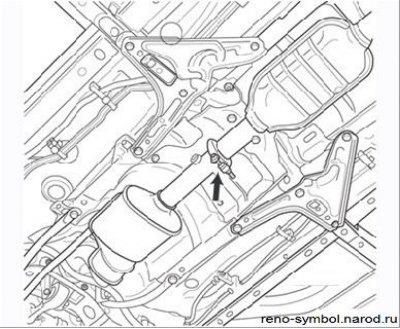
Figure 3.117. Connection of the inlet pipe and the rear part of the exhaust system (the arrow points to the connecting clamp)
- unscrew the nuts and remove the clamp (Figure 3.117);
- remove the exhaust pipe with the catalytic converter from under the vehicle.
Attention! Do not strike the catalytic converter body - this will cause it to fail.
Installation
Installation is carried out in the reverse order of removal. Replace the three-point flange gasket and the exhaust pipe clamp. Tighten the intake pipe mounting nuts to the required torque.
Note: A damaged heat shield must be replaced to prevent it from catching fire.
Replacing the resonator
The rear part of the system is non-separable, i.e. there are no pipe connections from the resonator to the exhaust pipe, so if it is necessary to replace any element, it should be cut out using a tool (for example, hacksaws).
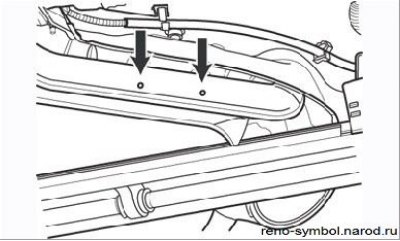
Figure 3.118. Marks on the exhaust pipe for cutting out the resonator
To cut out the resonator, locate the approximate middle of the pipe between the resonator and the muffler. The cutout location is marked with two round marks on the side of the pipe, spaced 90 mm apart (Figure 3.118). You need to cut exactly in the middle between the marks.
Note: The cut should be as straight as possible to ensure a good seal with the new pipe.
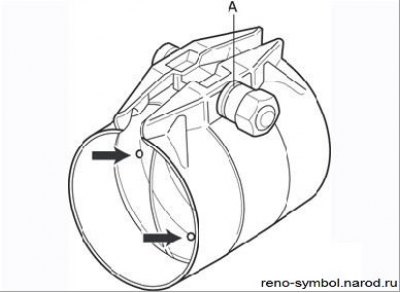
Figure 3.119. Coupling: A – groove for correct tightening of the nut; the arrows show the protrusions that limit the position of the pipes being connected
After cutting the pipe, remove the resonator from under the car. A coupling is used to subsequently connect the new resonator to the remaining part of the exhaust pipe (Figure 3.119).
To avoid exhaust leakage, it is necessary to correctly install the coupling on both parts of the exhaust pipe. This means that the pipe must reach the stop in the protrusions inside the coupling. The coupling should first be put on the already used part of the pipe, and then the diameter of the coupling should be adjusted by slightly tightening it. Then the resonator pipe should be inserted into the coupling.
Before installing the coupling on the pipe, you can apply mastic to the inner surface of the coupling to prevent leakage of exhaust gases.
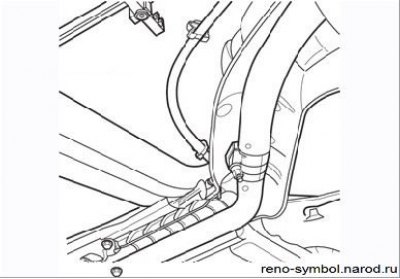
Figure 3.120. Location of the coupling on the pipe
The coupling must be installed in such a way that the tie bolt is positioned strictly vertically to avoid contact with the bottom of the body (Figure 3.120).
The coupling nut has a groove A (see Figure 3.120), which serves to determine the correct tightening torque. During tightening, when this groove disappears, a characteristic click is heard. This means that the nut is tightened with the required torque of 25 Nm.
When installing, do the following:
- make sure that the exhaust system pipe does not come into contact with the underbody anywhere;
- make sure that all heat reflecting shields of the system are present and securely fastened;
- make sure both cutout area marks are aligned exactly;
- make sure there are no tears or cracks in the rubber brackets, replace them if necessary.
Attention! The previously installed coupling cannot be reused.