



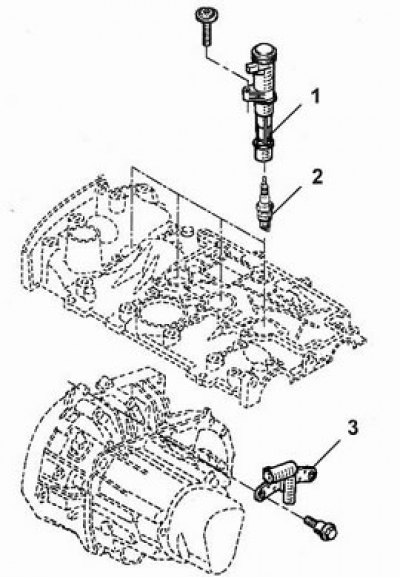
Ignition system (k4J engine). 1 - Ignition coil, 2 - Spark plug, 3 - Magnetic sensor (BMT and crankshaft speed).
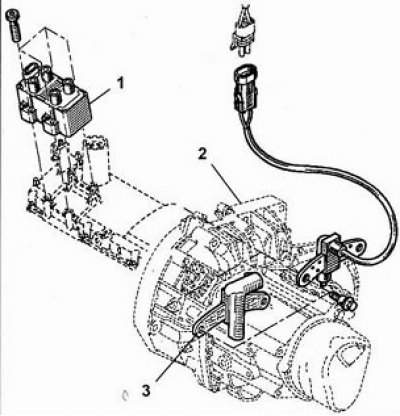
Ignition system (k7J engine). 1 - Ignition coil, 2 - Gearbox, 3 - Magnetic sensor (BMT and crankshaft speed).
The ignition system ensures reliable ignition of the mixture in the engine cylinders in all operating modes. The ignition advance angle is selected by the injection control unit based on signals from the mixture control system sensors.
Ignition system with static distribution of high-voltage voltage to spark plugs. The fuel injection system and ignition system work together, are controlled by one ECU and form a complex engine management system. The ignition system in question allows eliminating all moving elements in the ignition system.
Ignition coils (four, according to the number of cylinders) are fixed directly to the spark plug using a bolt on the cylinder head cover.
Ignition coil brand Nippondenso, primary winding resistance (0.5±0.02) Ohm, secondary winding (6.8±1) kOhm.
The applied technical solution allows to increase the amount of energy at the spark plug level by eliminating all intermediate links between the spark plug and the coil.
Spark plugs are equipped with three electrodes (two side and one "ground").
The crankshaft position sensor generates signals about the position and speed of rotation of the crankshaft. The electronic control unit, common with the fuel injection system, processes these signals and gives the command to the ignition coils installed on each spark plug to supply a spark according to the principle of dual-spark ignition, i.e. during one engine cycle the spark appears twice - in the compression and exhaust strokes. The ECU, processing signals from various sensors, controls the duration of the ignition pulse and the ignition advance angle, acting as necessary on the primary windings of the ignition coils.
The knock sensor installed on the cylinder block sends a corresponding signal to the ECU based on vibrations and knocks in the cylinders, which delays the control pulse of the ignition unit, reducing the advance until the detonation stops. This creates an optimal moment of fuel combustion, as close as possible to the detonation threshold and ensuring the best engine operation.
In the ignition system used, the ignition timing is determined by the ECU based on a set of engine operating parameters. It is impossible to change the ignition timing independently; diagnostic equipment can only determine whether it is set correctly.