



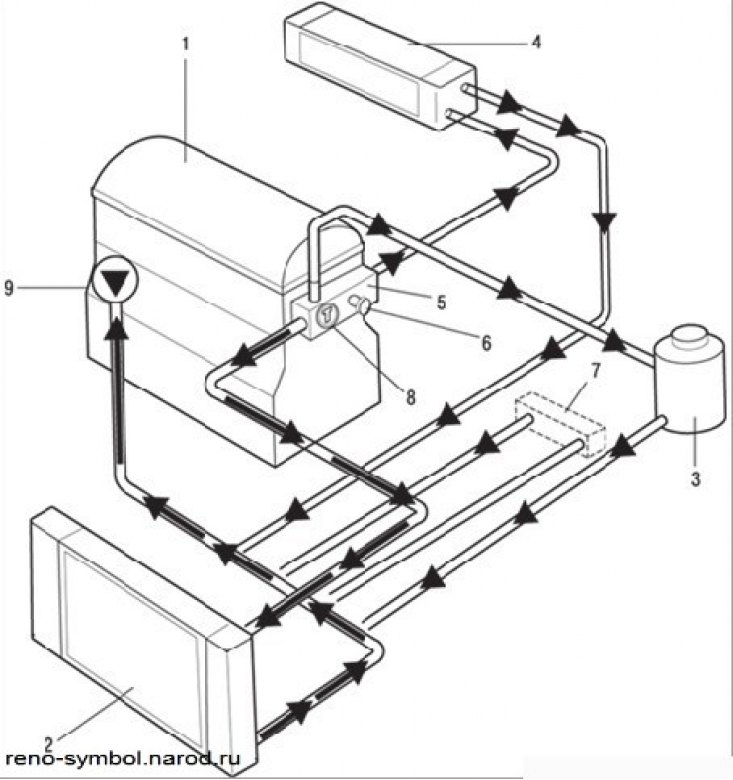
Figure 3.79. Engine cooling system diagram: 1 – engine; 2 – radiator; 3 – expansion tank; 4 – heater radiator; 5 – thermostat housing; 6 – air bleed nipple; 7 – water-oil cooler (for cars with automatic transmission); 8 – thermostat; 9 – water pump
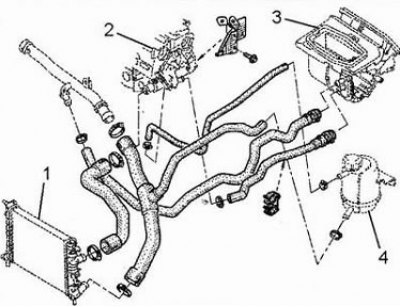
Cooling system hoses (k7J engine).
1 - Radiator, 2 - Cylinder head, 3 - Heater, 4 - Expansion tank.
The cooling system is of a closed type and consists of the following main elements: a radiator located in the front, an engine water jacket, a water pump driven by a timing belt, an electric fan, a thermostat and connecting hoses. A small additional radiator is installed on cars with an automatic transmission. A separate expansion tank is installed to compensate for thermal expansion and to top up the coolant.
The thermostat valve opening temperature is 89°C, the valve fully opens at 101°C. The thermostat valve stroke is 7.5 mm. The pressure in the cooling system is 1.2 bar. The cooling system uses one 3-pin sensor, two contacts of which are used to transmit information about the coolant temperature to the injection system ECU, and one for indication in the instrument cluster. Depending on the coolant temperature, the injection system ECU controls the operation of:
- injection systems;
- engine Cooling Fan Relay;
- coolant temperature warning light, which lights up when the temperature exceeds 118°C. The radiator electric fan is switched on at low speed by the fuel injection system ECU if the coolant temperature exceeds 99°C, and is switched off when it cools below 96°C. The high speed fan is switched on when the coolant temperature reaches 102°C, and the high speed is switched off when the temperature is below 98°C.
After the ignition is switched off, the injection system ECU enters the monitoring mode. If the coolant temperature exceeds 103°C for 5 minutes after the engine is stopped, the low-speed engine cooling fan relay is energized. If the coolant temperature drops below 100°C, the fan relay is switched off (the fan operating time cannot exceed 12 minutes).
Cold coolant flows through the lower radiator hose to the water pump, which directs it to the water jacket of the cylinder block, the channels in the cylinder head and the heater radiator. After the block, combustion chambers and valve seats have cooled, the heated liquid goes to the lower thermostat valve, which is closed until the liquid is warmed up, then to the heater radiator and back to the water pump. When the engine is cold, the coolant does not get into the main radiator, which helps the engine warm up to operating temperature faster.
When the coolant reaches 89°C, a valve opens in the thermostat and the liquid enters the radiator, installed under the oncoming air flow in front of the car. The cooled liquid repeats the above cycle. If necessary, (in hot weather, when driving at low speed) additionally, an electric fan is switched on, which provides enhanced cooling of the liquid.
The cooling system uses a fluid based on ethylene glycol - it is most suitable for systems with components made of different metals. The fluid should always be replaced at the prescribed mileage interval. This is necessary not only to maintain its anti-freeze properties, but also because over time, anti-corrosion additives lose their properties and metal oxidation products form in the cooling system, polluting it and impairing engine cooling.
Source link is located on renaultbook.ru