



Passive safety system for driver and front passenger
It includes:
- seat belt pretensioners;
- clamping force limiter;
- side airbags that deploy in severe side impacts;
- driver and front passenger airbags.
In the event of a frontal impact, these devices can be activated either separately or simultaneously.
Depending on the force of the impact, three response options are possible:
- protection is provided only by the seat belt;
- the pretensioner is activated, thereby adjusting the position and removing the slack from the belt;
- in the event of a very strong impact, the airbag and belt tension limiter are additionally activated.
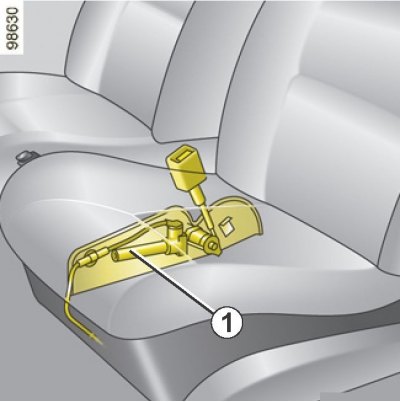
Front seat belt pretensioners
The security systems become operational a few seconds after the ignition is turned on.
In the event of a severe frontal impact, the electronic control unit activates the seat belt pretensioner igniter, thereby moving piston 1. This piston instantly tightens the seat belt, pressing it against the body and thus increasing the effectiveness of protection.
- After a traffic accident, check the entire passive safety system.
- Any work with the security system (seat belt pretensioners, airbags, electronic units, electrical wiring) or its use on another vehicle, even of the same model, is strictly prohibited.
- To avoid unintentional activation and possible injury, all work on seat belt pretensioners and airbags must be performed only by qualified personnel from the manufacturer's service station.
- Checking the electrical characteristics of the seat belt pretensioner ignition module should only be performed by qualified personnel with the necessary equipment.
- When disposing of your vehicle, contact the manufacturer's service station to dismantle the pyrotechnic gas generators of the seat belt pretensioners and airbags.
Seat belt force limiter
This device is activated at a certain impact force to limit the force of the belt pressing on the torso.
Driver and front passenger airbags
The driver and front passenger seats are equipped with airbags.
"Airbag" inscriptions on the steering wheel and on the dashboard (airbag coverage area L), and a sticker on the lower part of the windshield indicate that this equipment is installed on the vehicle.
Each airbag system includes:
- airbag and gas generator in the steering wheel (driver airbag) or in the dashboard (front passenger airbag);
- electronic unit controlling the electric igniter of the gas generator;

- system warning light on the instrument panel;
- remote sensors that complement this device.
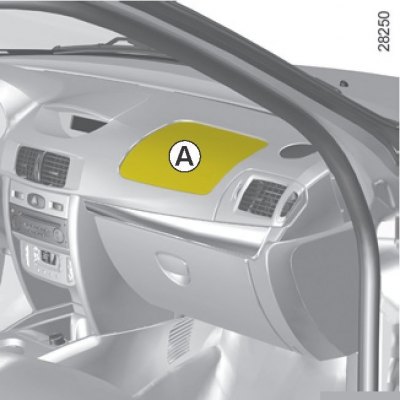
The airbag is triggered by a pyrotechnic system, which explains the popping sound and the heat and smoke that it produces when it deploys (which does not mean a fire has started). When an airbag deploys, which is designed to deploy immediately, a person may suffer skin damage or other minor injuries.
Operating principle
The system is activated only when the ignition is on.
In the event of a severe frontal impact, the airbags instantly inflate with gas, thus reducing the impact of the driver's head and chest on the steering wheel and the front passenger's head and chest on the instrument panel; after the impact, the airbags immediately deflate, allowing you to freely leave the car.
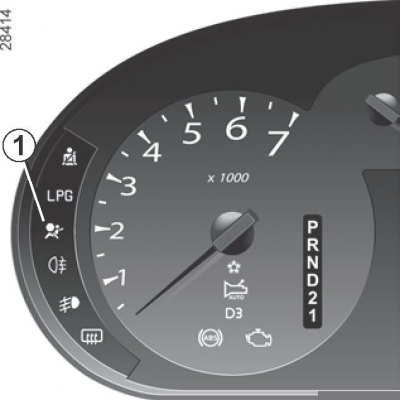
If the warning light does not go out when the ignition is turned on again, this indicates a malfunction in the airbag system.
It is not recommended to seat a passenger in this seat.
Contact the manufacturer's service station immediately.
Disruptions in work
When the ignition is turned on, the signal lamp 1 located on the instrument panel lights up for a few seconds.
If the warning light does not come on when the ignition is turned on, this indicates a malfunction in the airbag system.
If the lamp comes on while the vehicle is moving, stop the vehicle and turn off the ignition.
The airbag is triggered by a pyrotechnic system, which explains the popping sound and the heat and smoke that it produces when it deploys (which does not mean a fire has started). When an airbag deploys, which is designed to deploy immediately, a person may suffer skin damage or other minor injuries.
the following warnings tell you how to ensure that the air bag deploys smoothly and thus avoid serious injury if it deploys.
Warnings regarding the driver's airbag
- Do not modify the design of the steering wheel or its hub.
- Do not cover the steering wheel hub.
- Do not attach any foreign objects to the steering wheel center panel (badges, logos, watches, phone holders, etc.).
- It is prohibited to remove the steering wheel by yourself (this operation must be performed by qualified personnel of the manufacturer's service station).
- When driving a car, do not sit too close to the steering wheel; when seated correctly, your arms resting on the steering wheel are slightly bent at the elbows (see section "Adjusting the driver's seat position" in Chapter 1). This ensures sufficient space for the airbag to operate and fully implements its protective functions.
Passenger airbag warnings
- Do not attach or glue any foreign objects to the instrument panel in the area where the airbag is located (badges, logos, watches, phone holders, etc.).
- There should be no objects between the front passenger and the dashboard (umbrellas, walking sticks, bags, etc.) and animals.
- Do not place your feet on the dashboard or seat as this may cause serious injury. The passenger is advised to ensure that all parts of his body are protected at all times (knees, arms, head, etc.) were located at a sufficient distance from the dashboard.
DO NOT INSTALL A REAR-FACING CHILD SEAT ON A FRONT PASSENGER SEAT EQUIPPED WITH AN AIR BAG.
Side airbags
Side airbags are installed in the front seats and deploy in the event of a very severe side impact of the vehicle, protecting the driver and front passenger on the door side.
Warnings regarding side airbags
The marking on the windshield reminds you that the car's interior is equipped with a passive safety system (airbags, seat belt pretensioners, etc.).
- Fitting covers: Seats with airbags require special covers. Ask your manufacturer for availability. Using other covers (or covers intended for another car) may interfere with the normal operation of the airbags and negatively affect your safety.
- Do not place any accessories, objects or pets between the seatback, door and interior trim. Do not place objects or clothing on the seatback. This may prevent the airbag from working properly or cause injury if it deploys.
- It is prohibited to disassemble or modify the design of the seat and interior trim elements, except for such work performed by qualified personnel of the manufacturer's service station.
The following warnings tell you how to ensure that the air bag deploys smoothly and thus avoid serious injury if it deploys.
The airbag complements the action of the seat belt, they are elements of a single safety system. You should always wear seat belts; failure to wear seat belts increases the risk of serious injury in a crash and may increase the risk of minor skin injuries if an airbag deploys.
Seat belt pretensioners or air bags do not always deploy in the event of a rollover or rear impact (even strong). An impact to the lower part of the vehicle, such as when driving over a curb, hole, rock, etc., may trigger these systems.
- Any intervention or modification to the design of the airbag system (the airbags themselves, pretensioners, electronic unit, electrical wiring, etc.) is strictly prohibited (except for operations performed by qualified personnel of the manufacturer's service station).
- To maintain functionality and prevent spontaneous activation, work with airbags should only be performed by qualified personnel at the manufacturer's service station.
- For safety reasons, you should check the functionality of your vehicle's airbag system after an accident, theft, or attempted theft.
- When selling or transferring the vehicle for temporary use, please inform the new owner of all the listed conditions regarding airbags, as well as give them this operation and maintenance manual.
- When disposing of your vehicle, please contact the manufacturer's service station to carry out the procedure for destroying the gas generator(s).