
English Русский
Български
Беларускі
Український
Српски
Hrvatski
Română
Polski
Slovenský
Magyar
Bookmark Contacts Articles Sitemap
Company vehicles Peugeot Company vehicles Opel Company vehicles Skoda Company vehicles Land Rover Company vehicles Mitsubishi Company vehicles Volkswagen Company vehicles Honda
RenaultBook.ru


Duster   Fluence   Kangoo   Laguna   Logan   Megane   Sandero   Scenic   Symbol   Clio   Other
Symbol 1 (1999-2008, petrol) Symbol 2 (2008-2013, petrol)

Replacing the resonator (Renault Symbol 1)

  • Main
  • Symbol
  • Symbol 1 (1999-2008, petrol)
  • Power unit
  • Exhaust system
  • Replacing the resonator
0
The rear part of the system is non-separable, i.e. there are no pipe connections from the resonator to the exhaust pipe, so if it is necessary to replace any element, it should be cut out using a tool (for example, hacksaws).

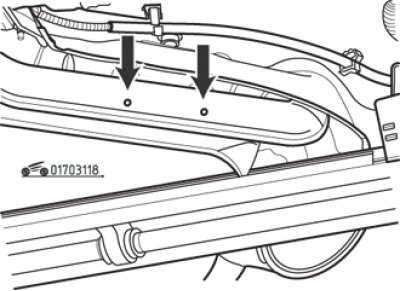
Fig. 3.118. Marks on the exhaust pipe for cutting out the resonator

Fig. 3.118. Marks on the exhaust pipe for cutting out the resonator


To cut out the resonator, locate the approximate middle of the pipe between the resonator and the muffler. The cutout location is marked with two round marks on the side of the pipe, spaced 90 mm apart (fig. 3.118). You need to cut exactly in the middle between the marks.

Note: The cut should be as straight as possible to ensure a good seal with the new pipe.
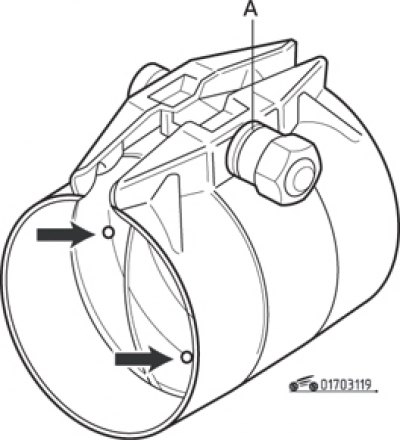

Fig. 3.119. Coupling: A – groove for correct tightening of the nut; the arrows show the protrusions…

Fig. 3.119. Coupling: A – groove for correct tightening of the nut; the arrows show the protrusions that limit the position of the pipes being connected


After cutting the pipe, remove the resonator from under the car. A coupling is used to subsequently connect the new resonator to the remaining part of the exhaust pipe (fig. 3.119).

To avoid exhaust leakage, it is necessary to correctly install the coupling on both parts of the exhaust pipe. This means that the pipe must reach the stop in the protrusions inside the coupling. The coupling should first be put on the already used part of the pipe, and then the diameter of the coupling should be adjusted by slightly tightening it. Then the resonator pipe should be inserted into the coupling.

Before installing the coupling on the pipe, you can apply mastic to the inner surface of the coupling to prevent leakage of exhaust gases.
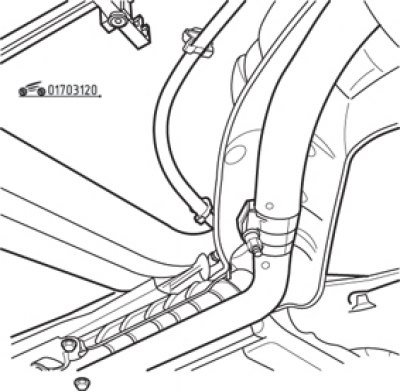
Fig. 3.120. Location of the coupling on the pipe

Fig. 3.120. Location of the coupling on the pipe


The coupling must be installed in such a way that the tie bolt is positioned strictly vertically to avoid contact with the bottom of the body (fig. 3.120).

The coupling nut has a groove A (see fig. 3.120), which serves to determine the correct tightening torque. During tightening, when this groove disappears, a characteristic click is heard. This means that the nut is tightened with the required torque of 25 Nm.


When installing, do the following:
  • make sure that the exhaust system pipe does not come into contact with the underbody anywhere;
  • make sure that all heat reflecting shields of the system are present and securely fastened;
  • make sure both cutout area marks are aligned exactly;
  • make sure there are no tears or cracks in the rubber brackets, replace them if necessary.

Attention! The previously installed coupling cannot be reused.
This article is available on: russian, bulgarian, belarusian, ukrainian, serbian, croatian, romanian, polish, slovak, hungarian
Article has been reviewed by editor: Podkrepilov Maxim
Share with friends:
Previous
Symbol 1: Exhaust system
Next

Removal the exhaust pipe and catalytic converter
General information about the exhaust system
Checking and replacing emission control system components
General information about the toxicity reduction system
Catalytic converter
Ground clearance of the car
Other articles on other Renault models

➽ Replacing filter elements Renault Duster 1 (2009-2017)
➽ Replacing the air filter Renault Fluence 1 (2009-2020, petrol)
➽ Replacing incandescent lamps Renault Kangoo 1 (1997-2007)
➽ Replacing the remote control battery Renault Laguna 2 (2001-2007)
➽ Replacing a punctured tire Renault Logan 1 (2004-2012, petrol)
Link to this article in different formats
Reviews and comments of visitors
No comments yet


Add two numbers 14 + 47


Symbol 2 (2008-2013, petrol) 
  • General information
  • User manual
  • Maintenance
  • Power unit
  • Engine repair
  • Cooling system
  • Fuel system
  • Exhaust system
  • Ignition system
  • Transmission
  • Clutch
  • Mechanical gearbox
  • Automatic gearbox
  • Drive shafts
  • Chassis, running gear
  • Front suspension
  • Rear suspension
  • Steering
  • Brake system
  • Body and interior
  • Exterior (external elements)
  • Interior (internal elements)
  • Doors, locks and windows
  • Heating and ventilation
  • Electrical equipment
  • Equipment and devices
  • Headlights and lighting
  • Power devices
  • Electrical circuits
Symbol 1 (1999-2008, petrol) 
  • General information
  • User manual
  • Car care
  • Maintenance
  • Power unit
  • Engine repair
  • Cooling and lubrication system
  • Supply system
  • Exhaust system
  • Ignition system
  • Transmission
  • Clutch
  • Mechanical gearbox
  • Automatic gearbox
  • Drive shafts
  • Chassis, running gear
  • Car suspension
  • Steering
  • Brake system
  • Body and interior
  • Exterior (external elements)
  • Interior (internal elements)
  • Doors, locks and windows
  • Restoration and repair
  • Electrical equipment
  • Equipment and devices
  • Headlights and lighting
  • Power devices
  • Heating and ventilation
  • Electrical circuits
RenaultBook.ru © 2018–2026 | Mobile version | News and articles | Sitemap: EN BG BY UA RS HR RO PL SK HU | Administration | Site search | Bookmark
Duster 1 (2009-2017) | Fluence 1 (2009-2020, petrol) | Kangoo 1 (1997-2007) | Laguna 2 (2001-2007) | Logan 1 (2004-2012, petrol) | Logan 2 (2012-2020) | Megane 1 (1995-2002) | Megan 2 (2002-2009, petrol) | Sandero 1 (2007-2012, petrol) | Scenic 1 (1996-2003) | Symbol 1 (1999-2008, petrol) | Symbol 2 (2008-2013, petrol) | Renault 19 (1988-1996) | Espace I and II (1984-1996) | Espace III (1996-2002) | Clio 1 (1990-1998) |
We want your visit to be comfortable 😌 and use cookies 🍪 to do so.