



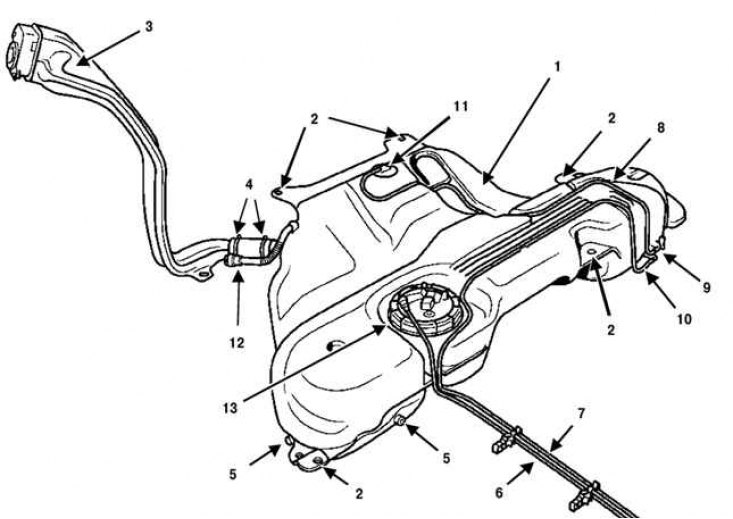
Fig. 2.215. Fuel tank: 1 – fuel tank; 2 – mounting holes; 3 – filler neck; 4 – Filler neck fastening clamp; 5 – Brake pipe mounting brackets; 6 – fuel supply pipeline; 7 – gasoline vapor supply pipeline; 8 – pipeline for removing gasoline vapors to the adsorber (coming from the fuel tank); 9 – communication with the atmosphere; 10 – adsorber; 11 – valve to prevent tank overflow and valve to prevent fuel leakage when the vehicle overturns; 12 – anti-pressure tube (degassing during filling); 13 – fuel pump with level sensor assembly
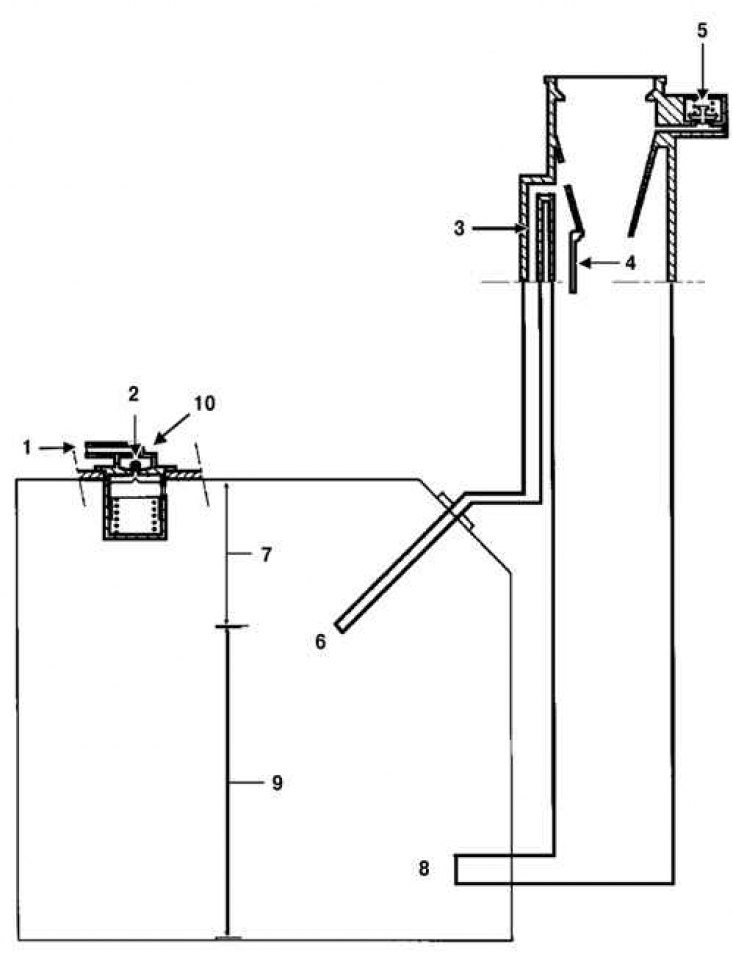
Fig. 2.216. Fuel system operation diagram: 1 – branch pipe for the pipeline going to the adsorber; 2 – Ball valve to prevent overflow; 3 – anti-pressure tube during filling; 4 – limiting valve; 5 – excess pressure-vacuum safety valve; 6 – hole for releasing air during refueling; 7 – cavity for fuel expansion; 8 – filling hole; 9 – useful volume of fuel; 10 – valve to prevent tank overflow and valve to prevent fuel leakage when the vehicle overturns
Purpose of valves and filler neck
Overpressure-vacuum relief valve
In case of blocking of the petrol vapour recirculation circuit, this valve prevents the creation of excess pressure in the tank (tank swelling) or rarefaction (due to fuel consumption the tank is crushed).
Limiting valve
This valve prevents the nozzle of the filler nozzle for leaded petrol or diesel fuel from being inserted into the filler neck.
Overfill prevention valve and fuel leak prevention valve when the vehicle overturns.
The working element of the overflow prevention valve is a ball.
When the car is stationary during refueling, the ball rests on the seat, thereby blocking a certain volume of air in the tank.
When the car is moving, the ball moves away from the seat, opening communication between the tank and the adsorber.
A tank filled with fuel must contain a certain amount of air. This allows the fuel to expand without causing the tank to bulge.
The valve preventing fuel leakage when the vehicle overturns prevents the tank from emptying through the channel leading to the adsorber.
Filler neck
The filler neck for unleaded petrol has:
- the filling hole is smaller in diameter than a conventional filling nozzle (limiting valve). The use of leaded gasoline leads to damage to the exhaust gas toxicity reduction system - the oxygen sensor and the catalytic converter;
- a valve that closes the filling hole to prevent the escape of gasoline vapors or the leakage of gasoline;
- hermetic plug.