



If the engine does not start on the first attempt, turn off the ignition and try again no earlier than 30 seconds later.
When starting a very hot engine, you can lightly press the gas pedal.
Starting a cold engine may be accompanied by increased noise for a short time due to the start of operation of the hydraulic valve lifters; after 15–20 seconds the noise will disappear. At temperatures below –20°C, it is recommended to turn on the ignition for a few seconds and only then start the engine with the starter.
There is no need to warm up the engine, you should start driving immediately, but do not drive at high engine speed until it is fully warmed up.
Recommendations for difficult engine starting
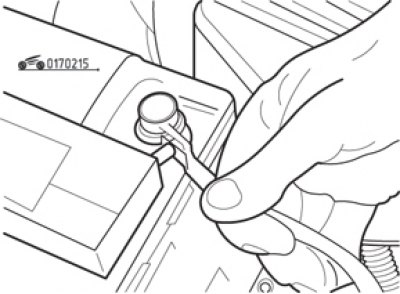
Fig. 2.15. Checking the condition and reliability of the contact with the wires of the battery terminals
If the car is equipped with an automatic transmission, make sure that the selector lever is in the "P" or "N" position. If the starter does not turn the engine, check that the battery terminals are tight and clean (Fig. 2.15). You can assess the battery charge level by the brightness of the headlights - when the battery is discharged, their light is significantly weakened.
If the starter turns the engine over but it does not start, check for gasoline in the fuel tank.
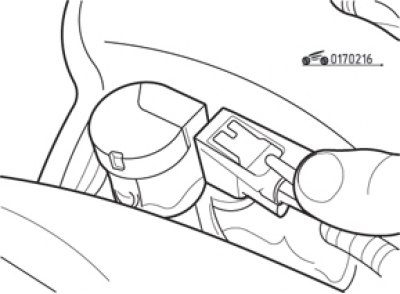
Fig. 2.16. Checking the reliability of the coil and spark plug connections
Turn off the ignition and check the reliability of the high-voltage wires connection to the spark plugs and ignition coils (Fig. 2.16). Check the reliability of the connections of the electrical wires and cylinder injectors.
In damp weather, wipe the high-voltage wires leading to the spark plugs with a dry cloth and treat them with WD-40 water-repellent spray.
Starting the engine using an auxiliary battery
Before connecting the wires from the auxiliary battery, make sure that the ignition on the car and the power consumers are turned off, the voltage of the battery being connected is the same as the voltage of your car. The cars should not touch each other. The gearshift lever should be in neutral.
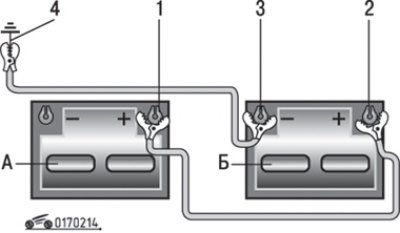
Fig. 2.17. Connecting an auxiliary battery to start the engine: 1, 2, 3, 4 – order of connecting terminals; A – rechargeable battery; B – auxiliary battery
The order of connecting wires (Fig. 2.17):
- connect the "+" terminal of the discharged battery to the corresponding terminal of the charged battery;
- connect the "–" terminal of the charged battery to a metal (non-insulated) part of the engine being started.
Make sure that the connecting wires do not touch the fan, drive belts or other rotating parts of the engine. Start the engine with the starter and after it runs steadily at idle speed, disconnect the wires in the reverse order of connection.