English Русский
Български
Беларускі
Український
Српски
Hrvatski
Română
Polski
Slovenský
Magyar
Bookmark Contacts Articles Sitemap
Company vehicles Peugeot Company vehicles Opel Company vehicles Skoda Company vehicles Land Rover Company vehicles Mitsubishi Company vehicles Volkswagen Company vehicles Honda
RenaultBook.ru


Duster   Fluence   Kangoo   Laguna   Logan   Megane   Sandero   Scenic   Symbol   Clio   Other
Megane 1 (1995-2002) Megan 2 (2002-2009, petrol)

Removal, inspection and installation of glow plugs (Renault Megane 1)

  • Main
  • Megane
  • Megane 1 (1995-2002)
  • Power unit
  • Preheat system (diesel)
  • Removal, inspection and installation of glow plugs
0
Contents: Removal 🠛 Inspection 🠛 Installation 🠛

Removal


1. Disconnect the ground cable from the battery.

Warning: If the car radio in your car is coded, make sure you know the code before disconnecting the battery.


2. When working on the F9Q engine, remove the plastic cover from the right engine mount, then disconnect the high-pressure fuel lines from the fuel pump and injectors as described in Chapter Power and exhaust systems.
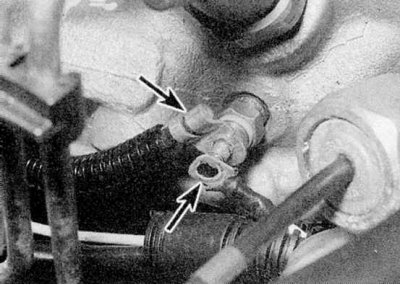
2. When working on the F9Q engine, remove the plastic cover from the right engine mount, then…


3. Unscrew the nuts from the glow plug terminals and remove the washers. Disconnect the wiring (refer to the accompanying illustration). Note that the main supply wire is connected to two spark plugs.

4. Carefully move the tubes or wires to the side to improve access to the glow plugs.
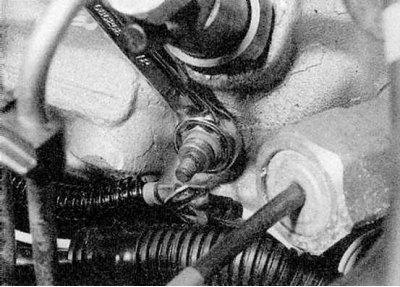
4. Carefully move the tubes or wires to the side to improve access to the glow plugs.


5a. Remove the glow plugs.
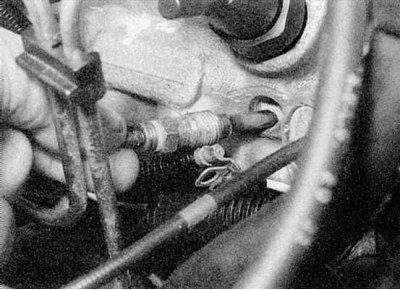


5a. Remove the glow plugs.


5b. Remove them from the cylinder head (refer to the illustrations).

Inspection


1. Inspect each glow plug for physical damage. A burnt or broken glow plug tip can be caused by poor fuel atomization by the injector. Check the injectors if you find this type of damage.

2. If the glow plugs are in good physical condition, check them as described in the previous Section.

3. Glow plugs can be powered by applying 12V to them. Observe the following precautions when working with glow plugs.
  • a) Hold the glow plug in a vice or self-locking pliers. Remember that it gets very hot.
  • b) The power supply or test lead shall contain a fuse or overload indicator to protect against short circuit.
  • c) After checking the serviceability, allow time for the glow plug to cool down.

4. A glow plug tip in good condition will glow red hot within 5 seconds. If the plug glows more slowly or if the middle glows rather than the tip, it should be replaced.

Installation


1. Install in reverse order. Apply a small amount of copper anti-seize compound to the spark plug threads and tighten the glow plugs to the torque specified in the Specifications. Do not overtighten, this may damage the glow plug heating element.

Source is located on the website www.RenaultBook.ru
This article is available on: russian, bulgarian, belarusian, ukrainian, serbian, croatian, romanian, polish, slovak, hungarian
Article has been reviewed by editor: Fedoseev Denis
Share with friends:
Previous
Megane 1: Preheat system (diesel)
 

Fuel filter heating system with glow plug system
Checking, removing and installing the coolant temperature sensor
Adjustment, inspection, removal and installation of the air…
Adjustment, testing, removal and installation of the glow microswitch
Removal and installation the glow plug control unit
 
Other articles on other Renault models

➽ Diesel Engine Glow Plugs Renault Logan 2 (2012-2020)
➽ Glow Plugs — Checking Renault Scenic 1 (1996-2003)
➽ Glow plugs Renault Espace III (1996-2002)
➽ Glow Plugs — removal, inspection, and installation Renault Clio 1 (1990-1998)
➽ Pre-heating plugs Renault Duster 1 (2009-2017)
Link to this article in different formats
Reviews and comments of visitors
No comments yet


Add two numbers 48 + 47


Megan 2 (2002-2009, petrol) 
  • User manual
  • Introduction to manual
  • Controls and instruments
  • Salon equipment
  • Operation and driving
  • Maintenance and care
  • Power unit
  • Engine repair
  • Fuel system
  • Injection system
  • Intake and exhaust system
  • Starting and charging system
  • Cooling system
  • Decreased toxicity
  • Transmission
  • Clutch
  • Mechanical gearbox
  • Automatic gearbox
  • Wheel drive mechanism
  • Chassis, running gear
  • Suspension and wheels
  • Steering
  • Brake system
  • Body and interior
  • Exterior (external elements)
  • Interior (internal elements)
  • Doors, locks and windows
  • Heating and air conditioning
  • Electrical equipment
  • Equipment and devices
  • Headlights and lighting
  • Electrical circuits
Megane 1 (1995-2002) 
  • General information
  • User manual
  • Maintenance
  • Power unit
  • Petrol engines 1.4/1.6 l
  • Petrol engines 2.0 l
  • Diesel engines 1.9 l
  • Overhaul of engines
  • Cooling system
  • Fuel system (petrol)
  • Fuel system (diesel)
  • Decreased toxicity
  • Charge and launch systems
  • Ignition system (petrol)
  • Preheat system (diesel)
  • Transmission
  • Clutch
  • Mechanical gearbox
  • Automatic gearbox
  • Drive shafts
  • Chassis, running gear
  • Brake system
  • Car suspension
  • Steering
  • Body and interior
  • Exterior (external elements)
  • Interior (internal elements)
  • Doors, locks and windows
  • Electrical equipment
  • Equipment and devices
  • Electrical circuits
RenaultBook.ru © 2018–2026 | Mobile version | News and articles | Sitemap: EN BG BY UA RS HR RO PL SK HU | Administration | Site search | Bookmark
Duster 1 (2009-2017) | Fluence 1 (2009-2020, petrol) | Kangoo 1 (1997-2007) | Laguna 2 (2001-2007) | Logan 1 (2004-2012, petrol) | Logan 2 (2012-2020) | Megane 1 (1995-2002) | Megan 2 (2002-2009, petrol) | Sandero 1 (2007-2012, petrol) | Scenic 1 (1996-2003) | Symbol 1 (1999-2008, petrol) | Symbol 2 (2008-2013, petrol) | Renault 19 (1988-1996) | Espace I and II (1984-1996) | Espace III (1996-2002) | Clio 1 (1990-1998) |
We want your visit to be comfortable 😌 and use cookies 🍪 to do so.