- ABS (anti-lock braking system)the main function of ABS is electronic brake force distribution (Electronic brake force distributor) between the front and rear wheels by regulating the slip of the rear wheels and preventing wheel locking by regulating the slip of all four wheels;
- SKMD (MSR) (Engine Torque Control System). Preventing slippage of the drive wheels when the accelerator pedal is released by limiting the engine braking torque.
On this vehicle, the ESP trajectory stabilization system performs the following functions:
- ABS (anti-lock braking system)the main function of ABS is electronic brake force distribution (Electronic brake force distributor) between the front and rear wheels by regulating the slip of the rear wheels and preventing wheel locking by regulating the slip of all four wheels;
- SKMD (MSR) (Engine Torque Control System). Preventing slippage of the drive wheels when the accelerator pedal is released by limiting the engine braking torque;
- PPS (ASR) (traction control system). Limiting slippage of the drive wheels when starting off and accelerating by limiting engine torque and braking the wheel or wheels that have begun to slip;
- ESP (trajectory stabilization system). Trajectory stabilization system limits oversteer or understeer by braking some wheels and managing engine torque;
- SKNU (CSV) understeerability monitoring system. A special vehicle control system for severe understeerability when turning, providing abrupt braking of the vehicle when a special contour of the trajectory stabilization system is activated;
- SET (AFU) (emergency braking system). This system is not connected with the electronic ABS and ESP. It is implemented mechanically in the brake servo system;
- GUTM (IVA) (hydraulic brake force booster system). This function compensates for insufficient vacuum in the brake booster. Usually, the vacuum is removed when the engine is running. The trajectory stabilization system detects using a pressure sensor and a wheel speed sensor (decrease in rotation speed) insufficient efficiency of the braking system. In this case, the hydraulic brake force amplification system supplements the driver's actions by sending a control signal to the hydraulic unit pump and thus compensating for the insufficient braking efficiency (emergency braking system);
- ASTM (Automatic Chassis Aging Compensation System). This function allows the ECU to take into account dynamic changes in the chassis during vehicle operation (chassis Aging Compensation). ESP may return to its original configuration when this function is disabled;
- automatic activation of the brake light. If there is a control system for understeerability (only if there is a SKNU) The ESP control unit switches on the brake lights via a relay to warn of a sharp decrease in speed caused by the system (depending on the legislation of the countries).
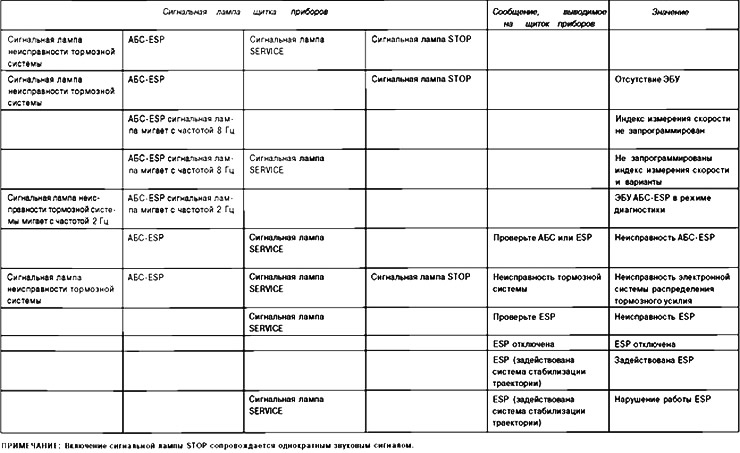
The system also provides information on the vehicle speed via a wired connection to the audio system and the sunroof ECU, and via a multiplex network to the other ECUs. The ABS/ESP ECU transmits vehicle speed data via a multiplex network to the instrument cluster and navigation system.
Methodology for troubleshooting hydraulic system with electronic control ABS/ESP
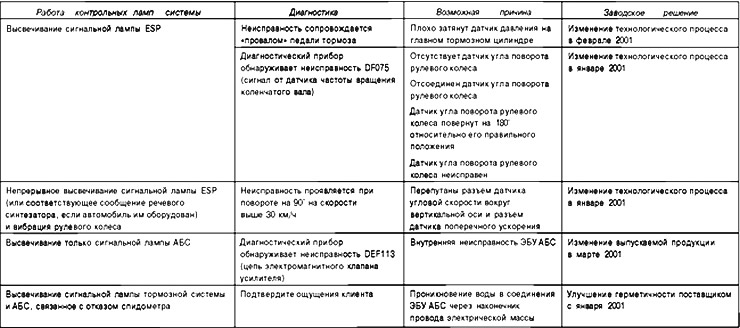
Diagnostic System Warning Light Switching Strategy