



The operation of the brakes is also affected by the condition of the tires, the vehicle load and the alignment angles of the front wheels.
Checking the operation of the vacuum booster
Release any vacuum with the engine off by depressing the brake pedal several times at 5-second intervals. With the brake pedal fully depressed, start the engine. Make sure that the gap between the brake pedal and the floor panel decreases as the engine vacuum stabilizes.
Connect the vacuum pump directly to the brake booster.
Operate the vacuum pump several times.
Make sure that the vacuum does not decrease by more than 33 mbar in 15 seconds.
If this is the case, then there is a leak either:
- through the check valve gasket, in this case replace the gasket;
- through the pusher diaphragm, in this case replace the amplifier.
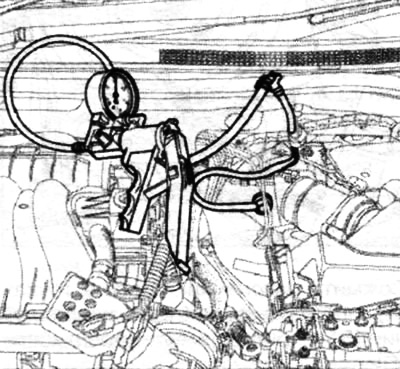
Checking for leaks
Start the engine and let it idle for about 1 minute. Shut it off by applying vacuum to the booster. Press the brake pedal several times with normal force and release the existing vacuum. Make sure that when you press the brake pedal, the gap between the brake pedal and the floor panel gradually increases. Start the engine. Press the brake pedal and hold it down, then shut off the engine. Keep the pedal depressed for about 30 seconds or more and make sure that the pedal travel does not change.
Material taken from an online portal [renaultbook.ru]