



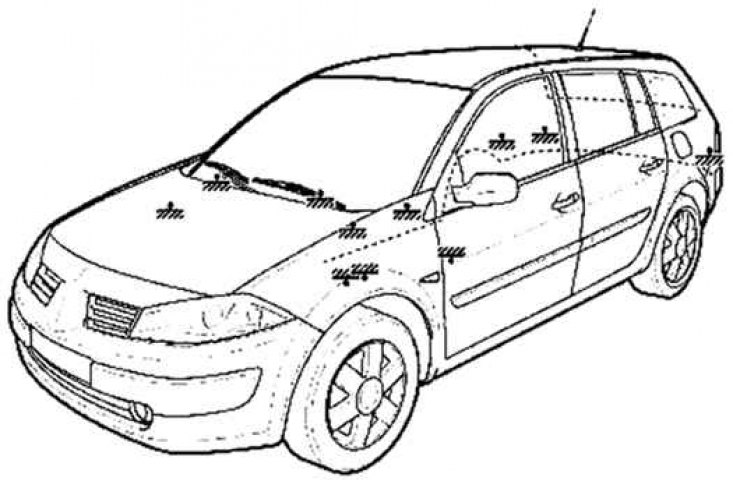
Figure 7.1. Location of connection points on the "mass" of the Megane II car with the "station wagon" body
Consumers are connected to the positive power source via a wire, and to the negative power source via the car body (ground) (Fig. 7.1).
This method allows to reduce the number of wires and simplify installation.
The electrical system consists of a battery, generator, starter, electrical consumers and electrical circuits.
Lighting devices include headlights, taillights, fog lights, turn signals, license plate lights and interior lights.
The battery is charged by a generator, which is driven by a belt from the crankshaft pulley.
The starter is a DC motor with compound excitation and an electromagnetic traction relay. When starting, the traction relay engages the pinion with the flywheel ring gear before the starter is supplied with power from the battery. After the engine starts, the freewheel clutch disconnects the starter armature from the flywheel ring gear.
It should be noted that to prevent short circuits and burns when working with any electrical component of the vehicle, always disconnect the wire from the negative terminal of the battery.
(Article reprinted from the website: RENAULTBOOK)