If abnormal: Replace the defective part or parts and/or route the gear selector and shift cables correctly.
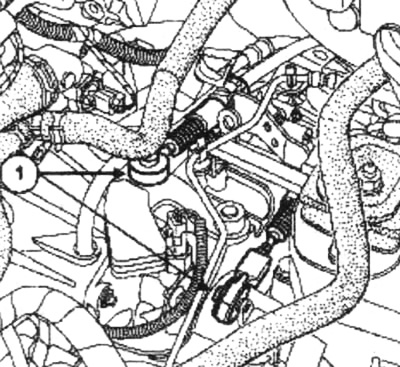
Make sure the cables are positioned properly in the area of the levers on the gearbox (are there any foreign objects, etc.).
Check the position of the gear shift lever housing boot.
If there is a deviation from the norm: correct the malfunction of the initial adjustment device (see the corresponding operation).
Check the condition of the adjustment device.
If the gearshift drive is in good condition: check the gearbox oil level.
If more than a liter of oil is missing (0.5 l for J-type gearboxes), replace the gearbox and check for leaks after a road test.
If less than a liter of oil is missing (0.5 l for J-type gearboxes), bring the oil level back to normal. If the problem persists, proceed to the next step.
Check the appearance of the oil:
- dark color of oil is not a defect;
- the smell of burnt oil is a consequence of overheating of the gearbox (due to low oil level or heavy use);
- the presence of bronze-colored streaks is not a defect;
- the presence of aluminum-colored particles indicates serious internal damage to the gearbox.
If there are aluminum colored particles in the oil, replace the transmission.
Disconnect the cables from the gearbox and check for normal cable movement.
If there are any deviations from the norm, replace the gear shift lever housing assembly.
If the cables are in good condition, check the clutch for proper operation.
Make sure the clutch is not dragging by checking the release point. If the clutch is working properly, remove and open the gearbox.
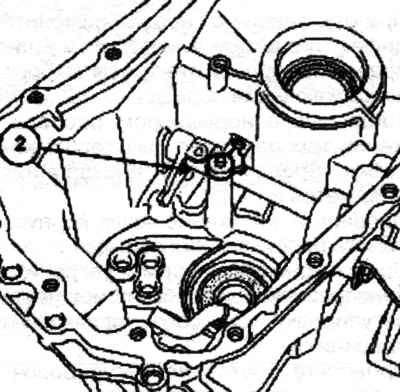
If there is binding when shifting from 5th to 4th gear on a cable operated J-type transmission, replace the reverse lock assembly (2).
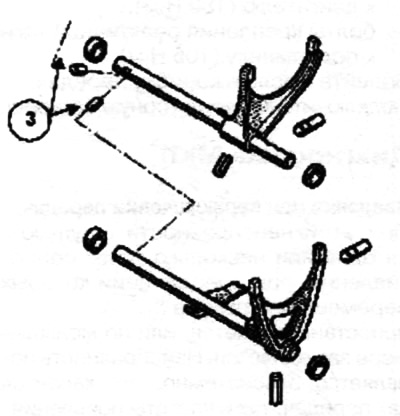
Check the free movement of the clamps (3) and their serviceability.
If there are any deviations from the norm, replace the fasteners.
If the clamps are in good condition, replace the transmission or transmission parts (gear, hub, clutch, synchronizer locking ring and retaining ring).