



Contents: Removal 🠛 Installation 🠛
Note: Before you begin, please refer to the Warnings given at the beginning of the Chapters 6 and 14.
Removal
1. Remove the brake drum as described in Chapter 13.
2. Using pliers, carefully unhook the upper tension spring and remove it from the pads. Remove the upper ends of the pads from the working cylinder.
3. Minimize fluid loss by placing a piece of plastic under the master cylinder reservoir cap and tightening it securely again to create a tight seal (do not damage the sensor), or by pinching the hose with a special clamp or clamp as close as possible to the working brake cylinder (see illustration).
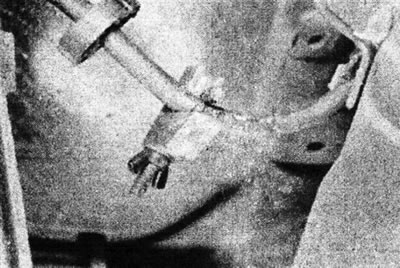
15.3. Clamp the rear brake hose with a special clamp.
4. Clean the area around the brake pipe connector at the rear of the wheel cylinder and remove the connector nut (see illustration).
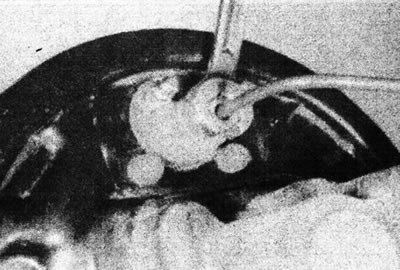
15.4. Unscrew the union nut.
Carefully remove the tube from the working cylinder and plug its end to prevent dirt from entering. Wipe up any spilled liquid immediately.
5. Unscrew the two bolts securing the working cylinder on the back of the brake support shield. Remove the cylinder, being careful not to let any brake fluid come into contact with the brake pads.
6. It is impossible to disassemble the cylinder, since its components are not sold separately. If the cylinder is faulty, replace it entirely.
Installation
7. Make sure that the contact surfaces of the backing plate and the brake cylinder are clean, then move the brake shoes apart and set the working cylinder to the working position.
8. Insert the brake pipe and tighten the union nut two or three turns.
9. Insert the two slave cylinder mounting bolts and tighten them securely. Then fully tighten the brake pipe union nut.
10. Remove the clamp from the brake hose or the plastic from under the master cylinder reservoir cap.
11. Make sure that the brake pads are properly connected to the cylinder pistons. Carefully install the upper tension spring by stretching it with a screwdriver.
12. Install the brake drum as described in Chapter 13.
13. Bleed the brake system (see Chapter 6). If proper precautions have been taken to minimize fluid loss, only the rear brake in question needs to be bled.