



- two electric motors (for adjusting vertical and horizontal planes);
- outside temperature sensor (from the passenger side);
- folding motor (depending on the configuration);
- heating system (depending on the configuration);
- dimming system depending on the brightness of the lighting (electrochromic technology), connected to the interior rearview mirror (depending on the configuration);
- multiplex communication (depending on the configuration).
Note: It is not necessary to remove the door trim to remove the outside rearview mirrors.
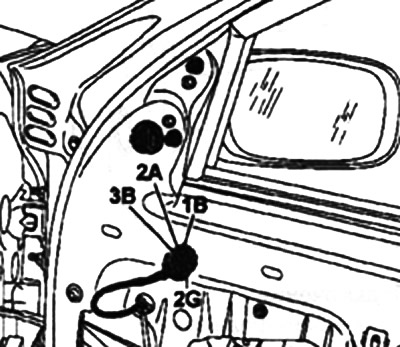
Attention! On vehicles where the optional memory system is installed. The driver's seat adjustment memory system, the electric drive of the right outside rear-view mirror is equipped with a multiplex communication, which allows the use of information stored in the memory of the electric drive of the passenger door window (see section "Driver's seat adjustment memory system").
Connection (models in full configuration)
- 1B. Heated outside rearview mirror.
- 1C. Heated outside rearview mirror.
- 1D. Outside temperature sensor (from the passenger side).
- 1E. Outside temperature sensor (from the passenger side).
- 1F. Not used.
- 1G. Not used.
- 2A. Electric motor for horizontal adjustment.
- 2B. Electric motor for vertical adjustment.
- 2C. Common wire of electric motors.
- 2D. Potentiometer for adjustment in the horizontal plane.
- 2E. Potentiometer for adjustment in the vertical plane.
- 2F. Nutrition.
- 2G. "Mass".
- 2H. Not used.
- 3. Folding electric motor.
- ZS. Folding electric motor.
- 3D. Lighting Brightness Signal (interior rear view mirror).
- ZE. Light brightness signal (interior rear view mirror).
- 3F. Not used.
- 3G. Not used.
The resistance of the heating system is about 13 ohms.
The resistance of the outside temperature sensor should be approximately 2500 ohms at 20°C.
The resistance of the dimming system is about 4000 ohms.
Note: The heated outside rearview mirrors are switched on using the rear window heating switch.