
English Русский
Български
Беларускі
Український
Српски
Hrvatski
Română
Polski
Slovenský
Magyar
Bookmark Contacts Articles Sitemap
Company vehicles Peugeot Company vehicles Opel Company vehicles Skoda Company vehicles Land Rover Company vehicles Mitsubishi Company vehicles Volkswagen Company vehicles Honda
RenaultBook.ru


Duster   Fluence   Kangoo   Laguna   Logan   Megane   Sandero   Scenic   Symbol   Clio   Other
Clio 1 (1990-1998)

Every 10,000 km or 6 months — check for fluid leaks (Renault Clio 1)

  • Main
  • Clio
  • Clio 1 (1990-1998)
  • General information
  • Maintenance
  • Every 10,000 km or 6 months — check for fluid leaks
0
1. Visually inspect the connection points of various engine components, gaskets and seals for signs of leaks. Pay special attention to the areas surrounding the camshaft cover, cylinder head, oil filter and oil pan. Over time, minor leaks are bound to occur in these areas, and this is perfectly normal - only pay attention to major leaks. If such a leak is detected, replace the appropriate gasket or seal according to the appropriate Section of this manual.

2. Also check the reliability and condition of all tubes and hoses connected to the engine (see illustration).
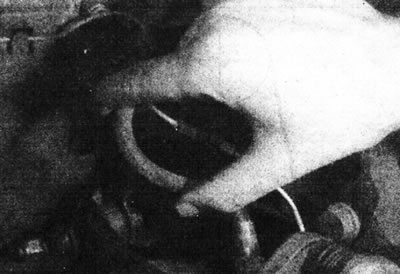
5.2 Checking the condition of the flexible brake hose.

5.2 Checking the condition of the flexible brake hose.


Make sure all brackets and fasteners are in good condition. Faulty clamps can cause frayed hoses, pipes, or wiring, which can cause more serious problems.

3. Carefully inspect the radiator and heater hoses. Replace any hoses if they are cracked, swollen or worn. Pay special attention to the clamps that secure the hoses to the cooling system components. Clamps can pinch or puncture hoses, causing leaks in the cooling system.

4. Inspect all components of the cooling system (hoses, mating surfaces, etc.) for signs of leaks and replace the appropriate component or gasket, following Section 3.


5. After jacking up the vehicle, inspect the fuel tank and filler pipe for cracks and other damage. Pay special attention to the connection of the filler pipe to the tank (see illustration).
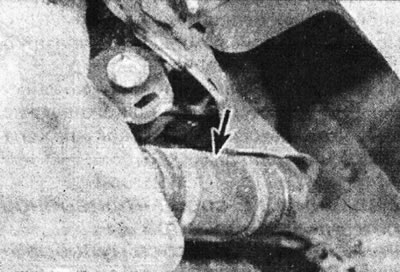
5.5 Check the condition of the rubber hose (marked with an arrow).

5.5 Check the condition of the rubber hose (marked with an arrow).


Sometimes a rubber filler pipe or connecting hose leaks due to loose fastening clamps or worn rubber.

6. Carefully inspect all rubber hoses and metal fuel lines coming from the tank. Replace damaged parts as necessary.

7. Inside the engine compartment, check that all fuel hoses and pipes are securely fastened and inspect the fuel and vacuum hoses for damage or wear.

8. Where applicable, check the condition of the power steering hoses and pipes.
This article is available on: russian, bulgarian, belarusian, ukrainian, serbian, croatian, romanian, polish, slovak, hungarian
Article has been reviewed by editor: Fedoseev Denis
Share with friends:
Previous
Clio 1: Maintenance
Next

Every 10,000 km or 6 months — check the transmission fluid level
Every 10,000 km or 6 months — Change engine oil and filter
Intensive service
General description of maintenance
Maintenance — frequency
Every 10,000 km or 6 months — check the auxiliary drive belt
Every 10,000 km or 6 months — check idle speed and mixture
Every 10,000 km or 6 months — Check spark plugs
Every 10,000 km or 6 months — check the contact plates of the breaker…
Every 10,000 km or 6 months — check ignition timing (c-series engine)
Other articles on other Renault models

➽ Checking hoses for fluid leaks Renault Megane 1 (1995-2002)
➽ Automatic transmission fluid — level check, replacement Renault Symbol 2 (2008-2013, petrol)
➽ Brake fluid Renault Duster 1 (2009-2017)
➽ Brake fluid Renault Fluence 1 (2009-2020, petrol)
➽ Brake fluid Renault Kangoo 1 (1997-2007)
Link to this article in different formats
Reviews and comments of visitors
No comments yet


Add two numbers 21 + 11


Clio 1 (1990-1998) 
  • General information
  • Maintenance
  • Troubleshooting
  • Power unit
  • Petrol engines 1.1 l (C)
  • Petrol engines 1.2 l (D)
  • Petrol engines 1.2/1.4 l (E)
  • Petrol engines 1.8 l (F)
  • Diesel engines
  • Overhaul of engines
  • Cooling and heating
  • Fuel system (carburetor)
  • Central fuel injection
  • Distributed fuel injection
  • Fuel system (diesel)
  • Starting and charging system
  • Ignition system (transistor)
  • Ignition system (electronic)
  • Pre-heating of diesel engines
  • Transmission
  • Clutch
  • Manual gearbox
  • Automatic gearbox
  • Drive shafts
  • Chassis, running gear
  • Brake system
  • Car suspension
  • Steering system
  • Body and interior
  • Exterior (external elements)
  • Doors, locks and windows
  • Electrical equipment
  • Equipment and devices
  • Electrical circuits
RenaultBook.ru © 2018–2026 | Mobile version | News and articles | Sitemap: EN BG BY UA RS HR RO PL SK HU | Administration | Site search | Bookmark
Duster 1 (2009-2017) | Fluence 1 (2009-2020, petrol) | Kangoo 1 (1997-2007) | Laguna 2 (2001-2007) | Logan 1 (2004-2012, petrol) | Logan 2 (2012-2020) | Megane 1 (1995-2002) | Megan 2 (2002-2009, petrol) | Sandero 1 (2007-2012, petrol) | Scenic 1 (1996-2003) | Symbol 1 (1999-2008, petrol) | Symbol 2 (2008-2013, petrol) | Renault 19 (1988-1996) | Espace I and II (1984-1996) | Espace III (1996-2002) | Clio 1 (1990-1998) |
We want your visit to be comfortable 😌 and use cookies 🍪 to do so.