



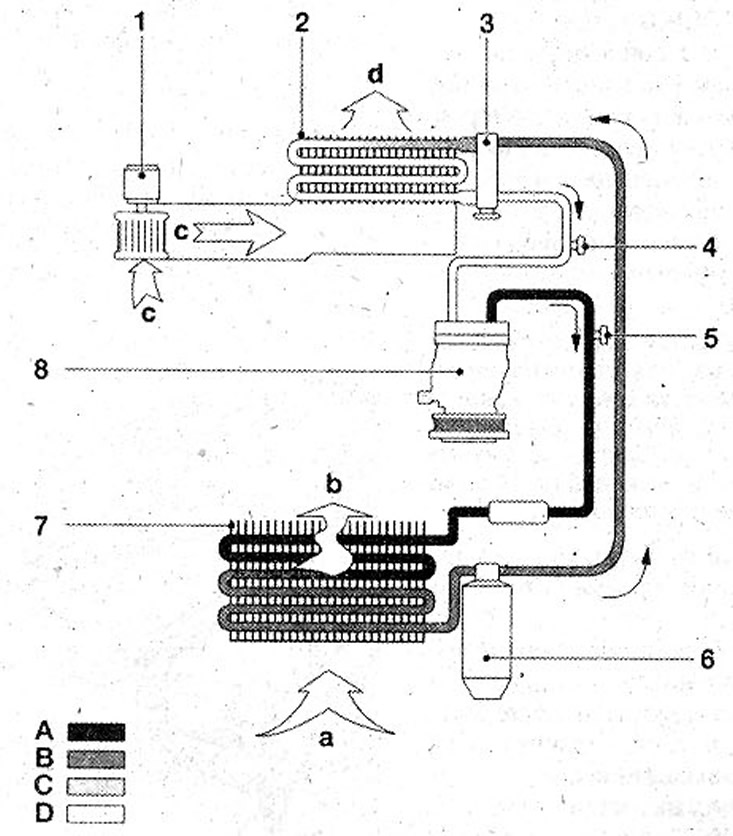
15.0 Schematic diagram of air conditioning installation: 1 - fan; 2 - evaporator; 3 - throttle valve; 4 - connecting pipe for low pressure supply during service work; 5 - connecting pipe for high pressure supply during service work; 6 - dehumidifier; 7 - radiator; 8 - compressor
a - air flow when the car is moving, cooling the radiator; b - hot air.; c - uncooled air supplied by the fan; d - cooled air supplied to the cabin
A - high pressure (refrigerant in gaseous state); B - high pressure (refrigerant in liquid state); C - low pressure (refrigerant in liquid state); D - low pressure (refrigerant in gaseous state)
Air conditioner
With the help of the air conditioner, the temperature in the cabin can be maintained below the temperature of the outside air. Due to the dehumidification of the air supplied to the cabin, the windows do not fog up, for example, in rainy weather. The air conditioner cools and dries the air, which is subsequently heated by the heater.
When the air recirculation mode is turned on, the air conditioner recirculates the air in the cabin. This ensures rapid cooling. Since the air is not refreshed in this mode, it is recommended to turn this mode on for a short time.
How an air conditioner works
The air conditioning compressor is driven by a V-belt from the engine crankshaft. The compressor pressurizes the refrigerant circuit to a maximum of 30 bar, which causes the refrigerant to heat up and the ion to become gaseous. The radiator takes heat from the hot air passing by (the cold air remains outside), which results in the cooling of the heated refrigerant, the ion returns to a liquid state (condenses). Flowing further along the circulation circuit under the influence of pressure, the refrigerant passes through a throttle valve, which reduces the pressure. Having passed through the throttle, the refrigerant enters the evaporator and is re-cooled there. The cold refrigerant takes heat from the hot air washing the evaporator, thereby cooling it. This cooled air is supplied to the cabin. From the heat received, the refrigerant again becomes gaseous and under the influence of low pressure is supplied to the compressor and the circulation of the refrigerant is repeated.
Attention! The procedure for repairing the air conditioner is not provided in this manual. Air conditioner repairs must be performed by a specialized workshop. It should be noted that the refrigerant circulation circuit in the air conditioner must not be opened. If the refrigerant gets on your skin, it may cause frostbite.