



Removal the lever
1. Release the parking brake.
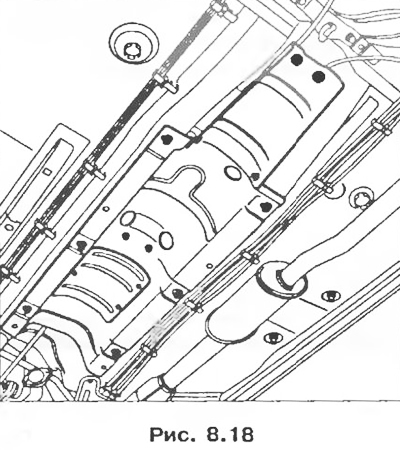
2. Unscrew the bolts securing the flanges of the inlet pipe to the flange of the muffler pipe.
3. Remove the rubber hangers from the exhaust pipe and attach the exhaust pipe to the body.
4. Remove the heat shields.
5. Mark the distance between the ends of nut 1 and the parking brake drive rod in the adjustment unit.
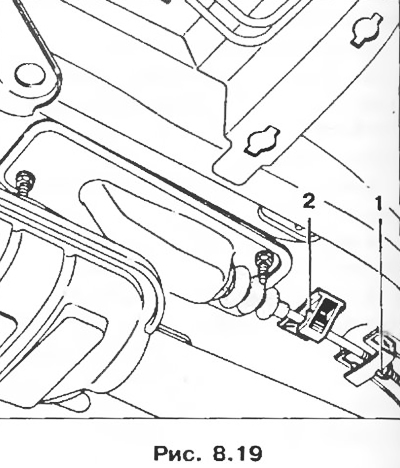
6. Loosen nut 1 to release both brake cables.
7. Remove the parking brake drive rod from the holder 2.
8. Unscrew the two nuts securing the parking brake lever bracket.
9. Remove the parking brake lever and disconnect the brake warning light switch connector.
Installing the lever
Installation is carried out in the reverse order of removal.
1. Install heat shields.
2. Be sure to connect the brake warning light switch connector.
3. Set the parking brake drive rod to the position noted when removing the lever.
4. Adjust the lever stroke if necessary.
Adjustment
Incorrect parking brake adjustment, where the cable is too tight, prevents the automatic brake pad wear compensation device from working properly and causes the pedal stroke to be extended.
The cables should not be tightened to correct this fault as it will quickly reoccur.
The parking brake should not be used to eliminate play and should only be adjusted when replacing brake shoes, cables or lever.
1. Raise the car on a lift with the support on the body.
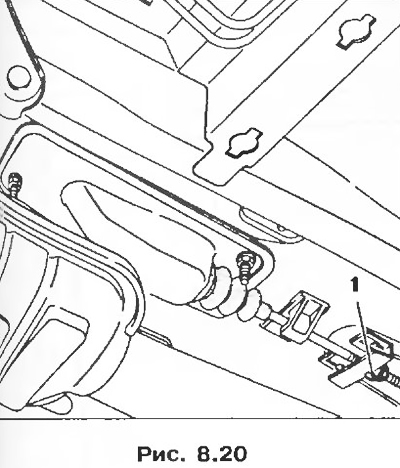
2. Loosen nut 1 so that the adjusting unit comes to a completely free state.
3. Remove the two rear wheels.
4. Remove the two brake drums.
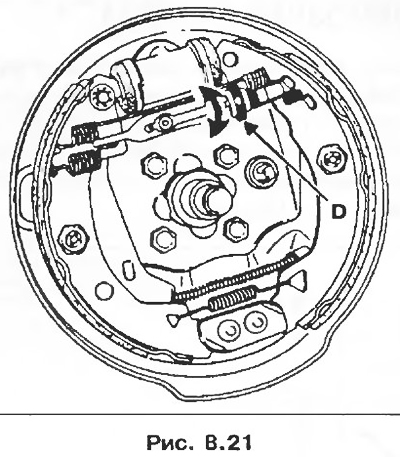
5. Check the operation of the automatic wear compensation device by rotating the ratchet wheel D (make sure it can rotate in both directions), then turn it back 5-6 teeth.
6. Ensure that the brake cables slide freely.
7. Ensure that the release levers B contact the brake shoes correctly.
8. Gradually tighten the cables in the adjusting unit so that the release levers B begin to move between the first and second clicks of the parking brake actuator lever stroke and remain pressed from the second click.
9. Secure the adjusting unit lock nut.
10. Install the brake drums.
11. Lower the car onto its wheels.
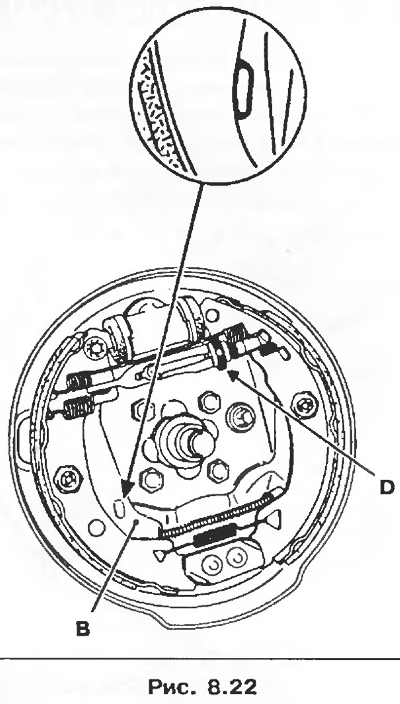
12. With the vehicle parked, bring the brake pads into working condition by pressing the pedal firmly several times and listening to hear the click of the automatic wear compensation device.