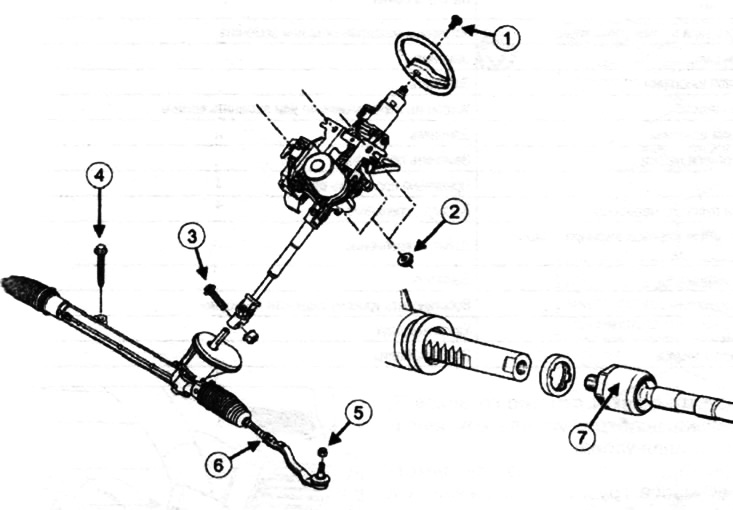
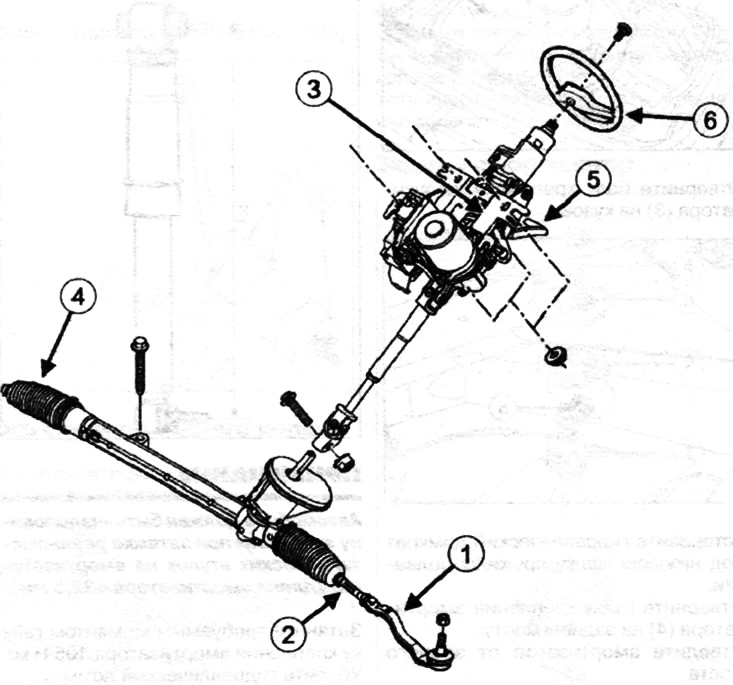
Steering gear:
1 - steering rod;
2 - traction with internal ball joint;
3 - steering column;
4 - Steering gear protective cover;
5 — steering column adjustment lever;
6 - steering wheel
To reduce the force applied to the steering wheel to turn it, cars are equipped with a hydraulic power steering. High-pressure fluid is used as additional force, which is supplied to the working cylinders located on the steering mechanism. The distribution valve serves to pump fluid into the power cylinder under pressure, which corresponds to the angle of rotation of the steering wheel. Distribution valves operate in accordance with the so-called open center principle, i.e. when the distribution valve does not act, the fluid supplied by the pump is bypassed back into the reservoir at zero pressure. The pressure in the hydraulic system is created by a pump driven by a belt from the engine crankshaft pulley.
The steering gear is connected to the steering shaft via an intermediate shaft.
Caution: If the electric power steering malfunctions, the following warning messages will appear on the trip computer display:
- "Direction a controler" ("Check steering"), accompanied by the constant light of the "Service" warning lamp,
- "Direction defaillanbe" ("Steering malfunction"), accompanied by the constant light of the warning lamp "Stop",
- flashing light (with a frequency of 8 Hz) the "Service" indicator light indicates that the steering wheel angle is not calibrated (The ECU is not programmed).
Note: During diagnostics, the "Service" indicator lamp flashes at a frequency of 2 Hz.
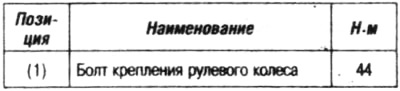
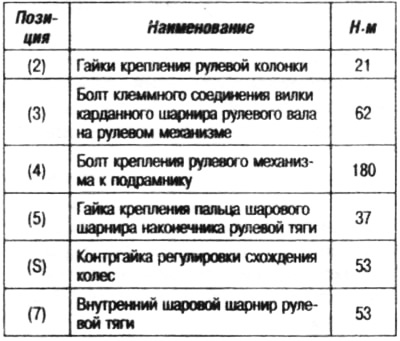
Tightening torques
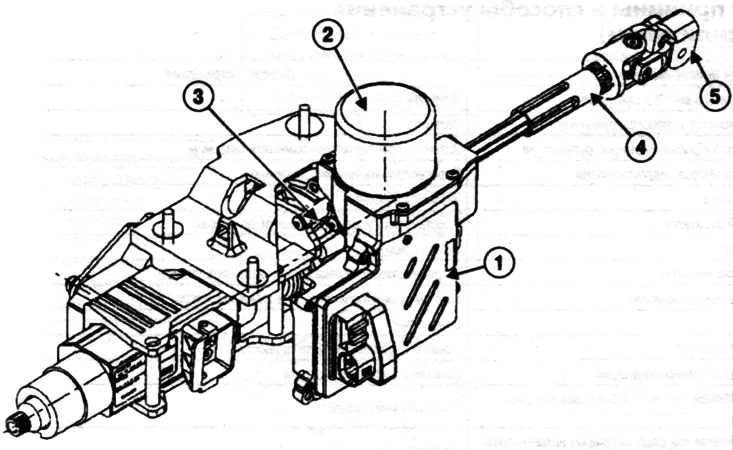
Power steering mechanism:
1 — Electric power steering control unit with torque and steering angle sensor;
2 - stepper motor with worm gear;
3 — gear reducer;
4 — intermediate shaft of the steering system;
5 — fork of the cardan joint of the steering shaft in the passenger compartment.