



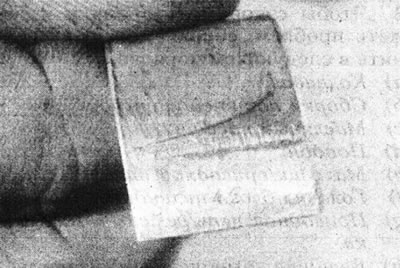
17.1. Marking on the reverse side of the insert backing.
2. Damage to the bearings can be caused by insufficient lubrication, foreign particles getting on them, engine overload or corrosion (see illustration).
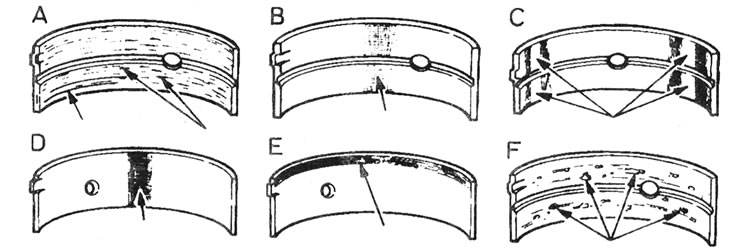
17.2. Typical damage to bearings: A - Scratched by foreign particles - grains are visible, embedded in the working layer of the liner; B - Lack of oil - the top layer is worn off; C - The inserts are not positioned correctly during installation - there are shiny spots (polished) plots; D - The neck is tapered - the top layer is removed from the entire surface; E - Wear of the liner edge; F - Fatigue fault - craters or pockets have formed.
Regardless of the cause, it must be corrected before reassembling the engine.
3. To inspect the bearing shells, remove them from the cylinder block/caps/connecting rods. Lay them out on a clean work surface in the same order as they were in the engine. This will allow you to determine which bearing is causing the problem.
4. Dirt and foreign particles enter the engine in various ways. They may be left in the engine after rebuilding or pass through filters or the crankcase ventilation system. Often you come across metal grains left over from regrinding or formed during normal engine wear. Foreign particles that get into the bearings become embedded in the soft working layer of the liners, where they are easy to detect. Large particles do not sink into the liner material, but scratch the liner and neck. The best way to prevent bearing failure from this cause is to thoroughly clean all components and maintain the engine in a spotlessly clean condition during assembly. In addition, it is recommended to change the engine oil and filter frequently and regularly.
5. Lack of lubrication has many interrelated causes. These could be: overheating (makes the oil less viscous, which causes its layer on the bearings to become thinner), overload (squeezes oil from the bearing surface) or leaks (bearing clearances are excessive, the oil pump is worn out, or the engine speed is high). Blocked lubrication passages, which are usually the result of misalignment of the lubrication holes in the bearing shells, also result in a lack of lubrication and cause bearing failure. When the cause of bearing failure is lack of lubrication, the working layer of the bearing shell is worn away or peeled away from its steel backing. The temperature can rise to such a level that the base steel turns blue from overheating.
6. Driving style also affects the service life of the bearing. Full throttle and continuous operation at low revs (engine overload) puts a very high load on the bearings, which results in the oil film being pushed away from the liners. As a result, the bearing shells bend and develop a network of small cracks (a "fatigue" problem). Ultimately, the bearing shell's working layer breaks apart and separates from the steel base. Short trips lead to bearing corrosion because the engine does not heat up enough to repel compressed water vapor and corrosive gases. The vapors are adsorbed by the engine oil, forming acid and sludge. When such oil gets into the engine bearings, the working layer of the bearing liners oxidizes.
7. Incorrect selection of the bearing insert will also lead to bearing failure. Bearing liners that are too large and fit tightly into the bearing leave insufficient operating clearance, resulting in insufficient lubrication.