



2. Drain the cooling system as described in Section 1, collecting it in a clean container if it is suitable for reuse. Spray some special penetrating oil under the clamps if they are rusty.
3. Loosen the hose clamps. There are three types of clamps: worm gear, spring and continuous. To loosen a worm-type clamp, turn its screw counterclockwise. The spring clamp is released by squeezing its ends together with pliers, while it is necessary to pull the clamp off the pipe (see illustration).
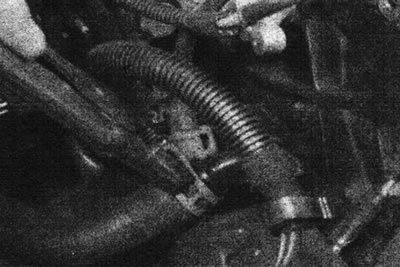
2.3. Loosen the spring clamp on the hose using self-locking pliers.
The continuous clamp is disposable and must be cut with nippers.
4. Disconnect any wires, cables, or other hoses that are attached to the hose you are removing. Label the components to make reassembly easier.
5. Remove the hose from the fittings using a twisting motion. Avoid damaging hoses on fragile components such as the radiator. If the hose does not come off, cut it with a sharp knife.
6. To make installation of the new hose easier, lubricate the fittings with soapy water or a special lubricant for rubber components. Do not use lubricants that may corrode rubber.
7. Install the clamps on the ends of the hose, then push the hose onto the fittings. Move to working position and tighten the clamps.
8. Fill the cooling system (see Section 1). Start the engine and make sure the system joints are tight.
9. Recheck the tightness of the clamps on the new hose after several hundred kilometers.
(This article is taken from the website: «www.RENAULTBOOK.ru»)