



The check can only be carried out on cars without ABS. If your car is equipped with an anti-lock system, it is better to contact a service station.
Get out of the car and inspect the brake marks left by the car's wheels. If the brake marks of the front wheels are slightly longer than the rear ones, and the length of the marks on the left and right are the same, then the brake system is in good working order. Otherwise, repair the system.
Notes:
The following relationships must be observed (Fig. 9.7):
- L lion lane = L right. lane.
- L lion rear = L right. rear.
- L front = L back.
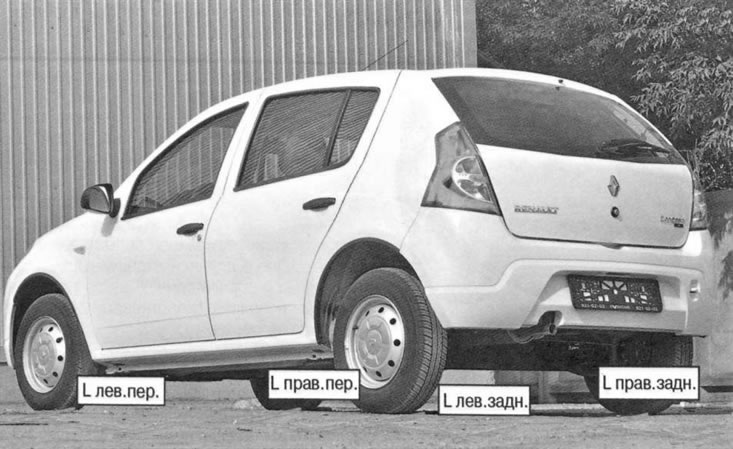
Fig. 9.7. Checking the efficiency of the braking system
Possible malfunctions of the brake system, their causes and methods of elimination
| Cause of malfunction | Method of elimination |
| Increased brake pedal travel | |
| Brake fluid leaking from the wheel cylinders | Replace failed brake cylinders, wash and dry pads, discs and drums |
| Air in the brake system | Remove air by bleeding the system |
| The rubber seals in the brake master cylinder are damaged | Replace the cylinder assembly |
| The rubber hoses of the brake hydraulic drive are damaged | Replace the hoses and bleed the system |
| Increased brake disc runout (more than 0.04 mm) | Grind or replace the disc if the thickness of the front brake discs of cars with K7J and K7M engines is less than 10.6 mm, cars with K4M engines less than 17.7 mm |
| Insufficient braking efficiency | |
| Oiling of brake pad linings | Wash and dry the pads |
| Seizure of pistons in working cylinders | Eliminate the causes of jamming, replace damaged parts |
| Complete wear of brake shoe linings | Replace the brake pads |
| Overheating of brake mechanisms | Stop immediately and allow the brakes to cool down |
| Use of low quality pads | Use original pads or products from companies specializing in the production of brake system parts |
| Breach of tightness of one of the circuits (accompanied by a failure of the brake pedal) | Replace damaged parts, bleed the system |
| Brake pedal adjustment failure (the distance from the pedal pad to the floor is less than the norm) | Adjust the position of the brake pedal |
| Malfunction of the brake booster rod adjustment | Contact the service to adjust the amplifier |
| Malfunction of the anti-lock braking system | Contact a service center to check the anti-lock brake system |
| Incomplete release of braking of all wheels | |
| There is no free travel of the brake pedal | Adjust the position of the brake pedal |
| Increased brake booster rod protrusion | Contact the service to adjust the amplifier |
| Swelling of the rubber seals of the master cylinder due to gasoline, mineral oils, etc. getting into the liquid. | Flush and bleed the entire hydraulic system, replace rubber parts |
| Seizure of master cylinder pistons | Check and replace master cylinder if necessary |
| Braking one wheel with the pedal released | |
| Incorrect adjustment of the parking brake system | Adjust the parking brake system |
| Fracture or weakening of the rear wheel brake shoe tension spring | Replace the spring |
| Piston seizing in the working cylinder due to contamination or corrosion of the housing | Replace the slave cylinder and bleed the brake hydraulic system |
| Swelling of the sealing rings of the working cylinder due to foreign impurities entering the fluid | Replace the slave cylinder and bleed the brake hydraulic system |
| Violation of the position of the front wheel brake caliper relative to the brake disc when loosening the mounting bolts | Tighten the mounting bolts, replace damaged parts if necessary |
| Malfunction of the anti-lock braking system | Contact a service center to check the anti-lock brake system |
| Skidding or pulling the car to the side when braking | |
| Jamming of the working cylinder piston | Check and eliminate piston sticking in the cylinder |
| A blockage in any tube due to a dent or clog | Replace or clean the tube |
| Contamination or oiling of discs, drums and brake shoe linings | Clean the brake components |
| Wheel alignment angles are incorrect | Adjust the wheel alignment angles |
| Different tire pressures | Set the required tire pressure |
| One of the brake system circuits is not working (accompanied by a decrease in braking efficiency) | Replace damaged parts and bleed the system. If this does not produce the desired result, contact the service to check the anti-lock brake system |
| Increased brake pedal effort when braking | |
| The vacuum booster is faulty | Replace the amplifier |
| The hose connecting the vacuum booster and the engine intake pipe is damaged or loose | Replace the hose |
| Swelling of rubber cylinder seals due to gasoline, mineral oils, etc. getting into the liquid. | Replace cylinders, flush and bleed the system |
| Squeaking or vibration in brakes | |
| Oiling of friction linings | Clean the pads with a wire brush and warm water with detergent. Eliminate the causes of liquid or grease getting on the brake pads |
| Wear of linings or foreign inclusions in them | Replace the pads |
| Excessive runout or uneven wear (can be felt by vibration of the brake pedal) brake disc | Grind or replace the disc if the thickness of the front brake discs of cars with K7J and K7M engines is less than 10.6 mm, cars with K4M engines less than 17.7 mm |
Warnings:
- If, during a similar check of a car equipped with ABS, the brake marks are visible as clearly as during a check of a car without ABS, then the anti-lock braking system is faulty. In this case, urgently contact a car service for its repair.
- Do not overuse this assessment, as it is associated with increased one-sided tire wear.