Contents: Armrest bar (on fully equipped…🠛 Removal switches 🠛 Front window switches on the…🠛 Rear window switch on driver's door 🠛 Passenger door window switch on the…🠛 Rear window switch on rear doors 🠛
Armrest bar (on fully equipped models)
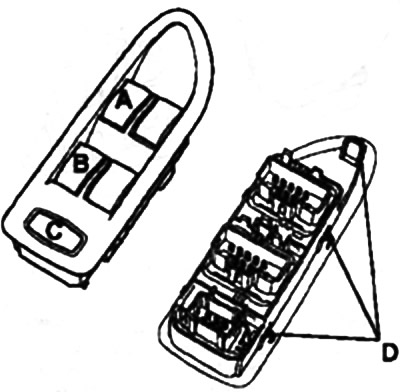
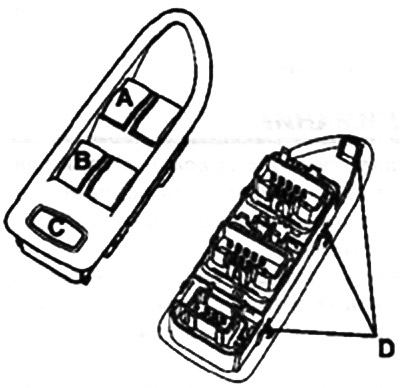
A - Driver's and front passenger's door window switch.
B - Left and right rear door window lift switch.
C - Rear door window lock and rear door lock switch (depending on the configuration).
Removal switches
The window control panel is held to the door panel by clips (D).
There are two ways to remove it.
Using pliers to remove trim and panel holders.
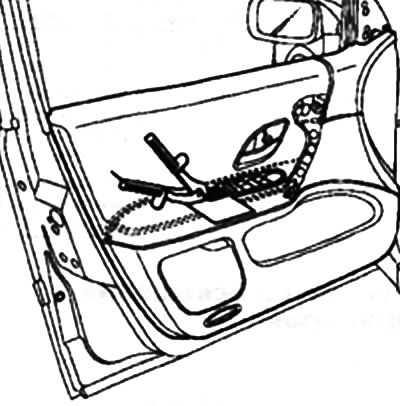
Using a wire loop to push the clamps out.
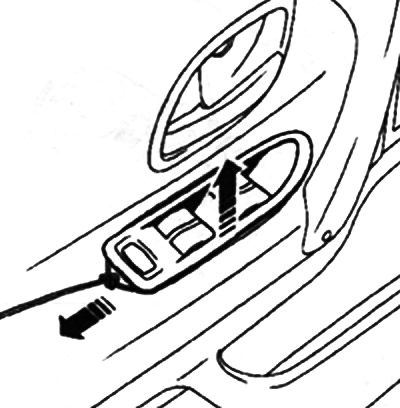
Disconnect the connectors.
Release the switches by pressing the tabs D.
Front window switches on the driver's door
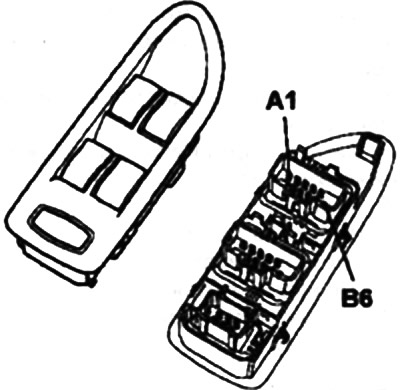
The vehicle can be equipped with three types of front window switches:
- driver's door power window/passenger door power window. Driver's door power window switch with two positions (normal and impulse control) and the passenger door window switch:
- pulse non-multiplexed driver and passenger door window lifters. Two-position driver and passenger door window lifter switches (normal and impulse control);
- pulse multiplex window lifter. The switches for multiplex and non-multiplex window lifters are identical in design, but are connected differently.
Note: The backlight of these switches is turned on when "+" is supplied after the ignition switch (there is no special night lighting).
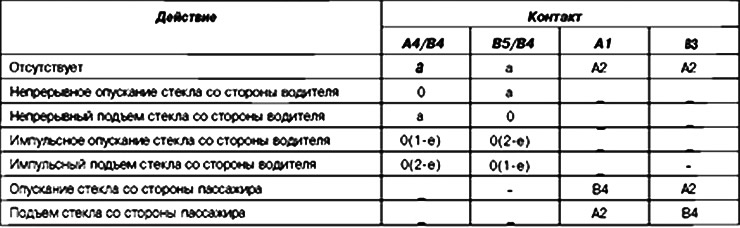
Driver's door power window/passenger door power window with black connector (left hand drive vehicles) (table 7.1)
Connection:
- A1. Passenger side window lift motor.
- A2. "+" to the ignition switch.
- AZ. "+" after ignition switch.
- A4. Driver's side window lift motor.
- A5. Not used.
- A6. Not used.
- 81. Not used.
- 82. Not used.
- 83. Passenger side window lift motor.
- 84. "Mass".
- 85. Driver's side window lift motor.
- 86. Not used.
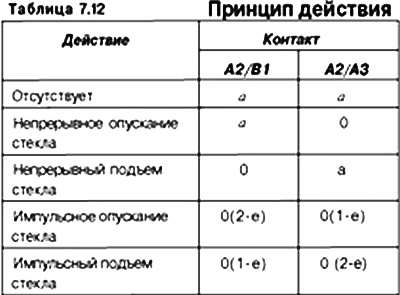
Table 7.1. Operating principle (checking resistance with a multimeter)
(You can find the original at this link: RENAULTBOOK)
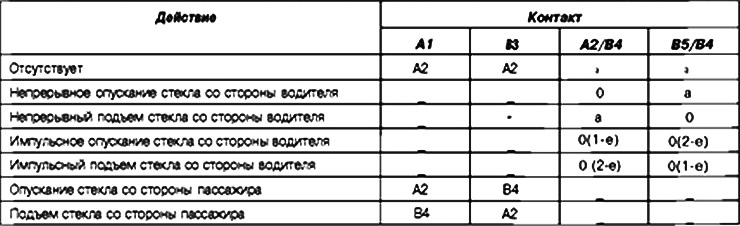
Driver's door power window/passenger door power window with black connector (right hand drive vehicles) (table 7.2)
- A1. Passenger side window lift motor.
- A2. "+" to the ignition switch.
- AZ. "+" after ignition switch.
- A4. Driver's side window lift motor.
- A5. Not used.
- A6. Not used.
- 81. Not used.
- 82. Not used.
- 83. Passenger side window lift motor.
- 84. "Mass".
- 85. Driver's side window lift motor.
- 86. Not used.
Table 7.2. Operating principle (checking resistance with a multimeter)
Impulse non-multiplexed window lifts for driver and passenger doors, grey connector (left hand drive cars) (table 7.3)
- A1. Passenger side window lift motor.
- A2. "Mass".
- AZ. "+" after ignition switch.
- A4. Driver's side window lift motor.
- A5. Not used.
- A6. Not used.
- 81. Not used.
- 82. Passenger side window lift motor.
- 83. "Mass".
- 84. "Mass".
- 85. Driver's side window lift motor.
- 86. Not used.
Table 7.3. Operating principle (checking resistance with a multimeter)
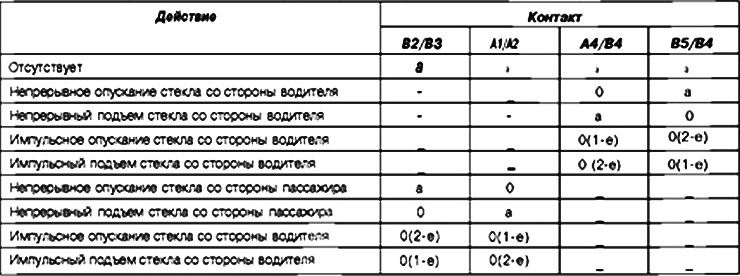
Impulse non-multiplexed window lifts for driver and passenger doors, grey connector (right hand drive vehicles) (table 7.4)
- A1. Driver's side window lift motor.
- A2. Not used.
- AZ. "+" after ignition switch.
- A4. Passenger side window lift motor.
- A5. "Mass".
- A6. "+" to the ignition switch.
- 81. Not used.
- 82. Not used.
- 83. Driver's side window lift motor.
- 84. "Mass".
- 85. Passenger side window lift motor.
- B6. "+" to the ignition switch.
Table 7.4 Operating principle (checking resistance with a multimeter)
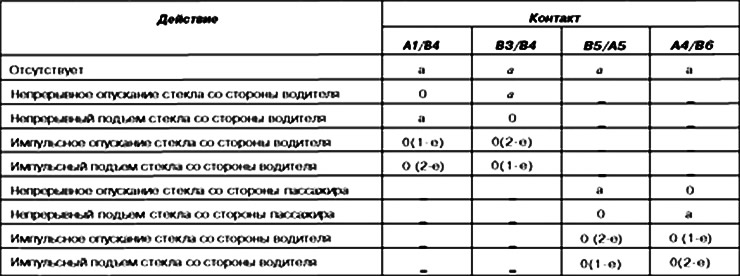
Pulse multiplex window lifter with black connector (all types) (table 7.5)
- A1. Not used.
- A2. Right window lift motor.
- AZ. "+" after ignition switch.
- A4. Left window lifter motor.
- A5. Not used.
- A6. Not used.
- 81. Not used.
- 82. Not used.
- 83. Right window lift motor.
- 84. "Mass".
- 85. Left window lifter motor.
- 86. Not used.
Table 7.5. Operating principle (checking resistance with a multimeter)
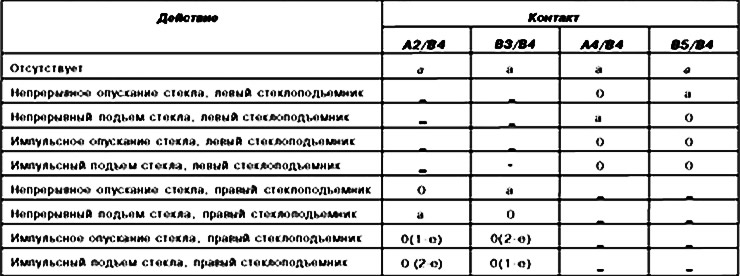
Rear window switch on driver's door
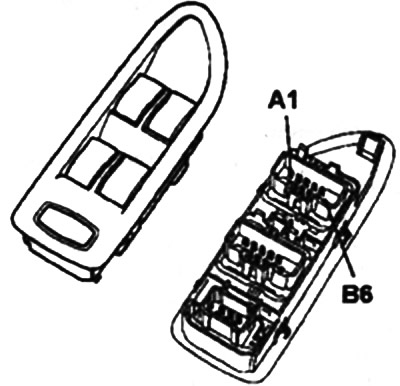
The vehicle can be equipped with two types of dual switches:
- electric window lifter. Single-position switches for left and right rear door window lifters;
- pulse window lifter. Two-position switches for window lifters on the left and right rear doors (simple and impulse control of rear windows).
Note: The illumination of these switches is turned on when + after ignition switch is applied (there is no special night lighting).
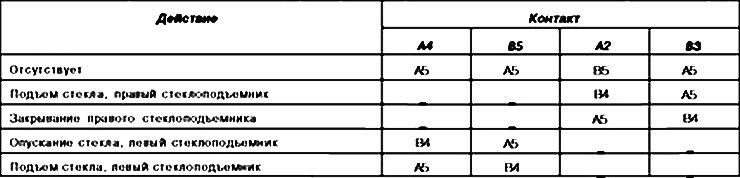
Electric window lift with continuous operation of rear doors (white connector) (table 7.6)
- A1. Not used.
- A2. Right window lift motor.
- AZ. "+" after ignition switch.
- A4. Left window lifter motor.
- A5. "+" after ignition switch.
- A6. "+" to the ignition switch.
- 81. Not used.
- 82. Not used.
- 83. Right window lift motor.
- 84. Mass.
- 85. Turning on the left window lift.
- 86. Not used.
Table 7.6. Operating principle (checking resistance with a multimeter)
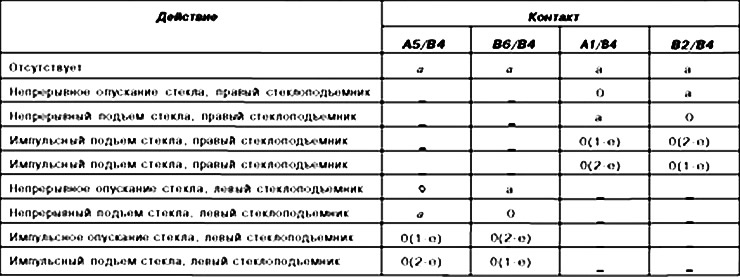
Pulse window lift for rear doors (brown connector) (table 7.7)
- A1. Right window lift motor.
- A2. "+" to the ignition switch.
- AZ. "+" after ignition switch.
- A4. "+" to the ignition switch.
- A5. Left window lifter motor.
- A6. Not used.
- 81. Not used.
- 82. Right window lift motor.
- 83. "+" to the ignition switch.
- 84. "Mass".
- 85. "+" to the ignition switch.
- 86. Left window lifter motor.
Table 7.7 Operating principle (checking resistance with a multimeter)
Passenger door window switch on the passenger door
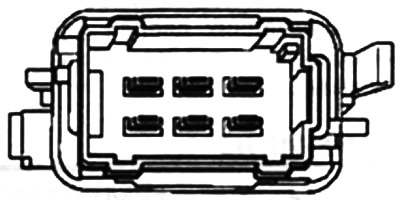
The vehicle can be equipped with three types of front window switches:
- electric window lift with continuous operation mode;
- pulse non-multiplexed window lifter;
- pulse multiplex window lifter.
Electric window lift with continuous operation mode (brown connector)
- A1. Connect to the driver's door (BZ).
- A2. "Mass".
- AZ. Glass lifting mode.
- 81. Window lowering mode.
- 82. Connection to the driver's door (A1).
- 83. "+" after ignition switch.
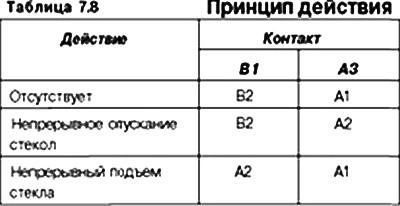
Multiplex electric window lifter (gray connector)
- A1. Window lifter motor.
- A2. Window lifter motor.
- AZ. Switched "mass".
- 81. Switched "mass".
- 82. "Mass".
- 83. "+" after ignition switch, switch illumination.
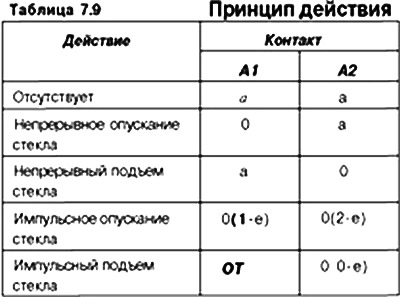
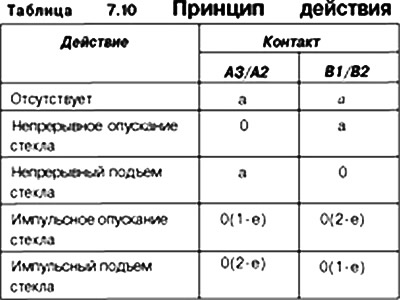
Note: The resistance of the switch illumination lamp is approximately 30 ohms.
Rear window switch on rear doors
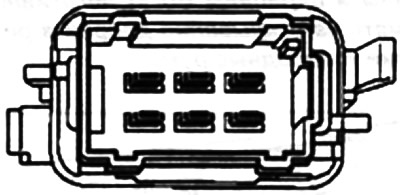
Continuous duty window switch
- A1. "+" after ignition switch.
- A2. "Mass".
- AZ. "+" after ignition switch.
- B1. Power supply voltage of the window lifter motor.
- B2. "+" after ignition switch.
- VZ. "+" after ignition switch.
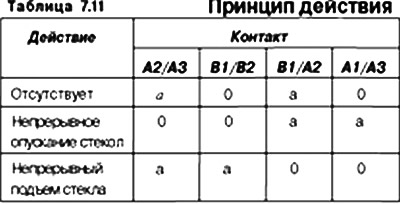
Rear window lift switch with anti-tear function (white connector)
- A1. Window lifter motor.
- A2. Switched "mass" (window lifter lock).
- A3. "+" to the ignition switch.
- 81. "+" to the ignition switch.
- 82. Window lifter motor.
- 83. "+" after ignition switch, switch illumination.