



Note: Air pressure should only be checked on cold tires. Tires can be considered cold if at least three hours have passed since the car was stopped or if you have driven no more than 1 km after a long parking period. After the car has run for several kilometers, the tires have time to warm up and the air pressure in them increases by 20-30 kPa (0.2-0.3 kgf/cm²) compared to the cold state. This is not a sign of malfunction. Do not reduce the air pressure in warm tires to bring it to the nominal value that is set for cold tires. Otherwise, the tires will be used with reduced air pressure.
Helpful Hints: Check your tire pressure regularly (Table 4.2). High or low pressure causes premature tire wear, and vehicle handling and stability deteriorate.
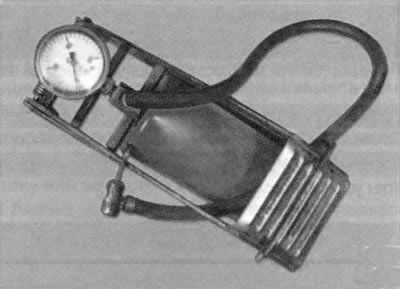
We recommend using a foot pump with a built-in pressure gauge or compressor.
To ensure that the tires wear evenly, rotate the wheels every 15,000 km in accordance with the diagram in Fig. 4.1.
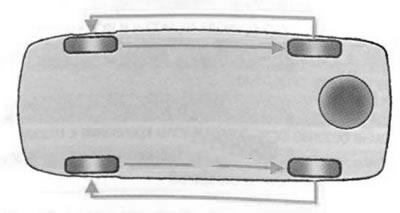
Fig. 4.1. Wheel rotation diagram.
Tire pressure*, kP
aTable 4.2.
| Tire size | Front wheels | Rear wheels | ||
| up to three people in the cabin | full load | up to three people in the cabin | full load | |
| T65/80 R14 | 200 | 220 | 200 | 220 |
| 185/65 R15 | 190 | 210 | 210 | 230 |
| 175 / 70 R14 | 200 | 220 | 210 | 230 |
* The pressure indicated is for cold tires.
In addition, balance the wheels and check the front wheel alignment angles every 15,000 km. To do this, contact a specialized workshop.
Warnings:
- All wheel repair work should be carried out in specialized workshops.
- Check that the wheel is balanced after repair.
- Operating tires with worn treads can lead to an accident.
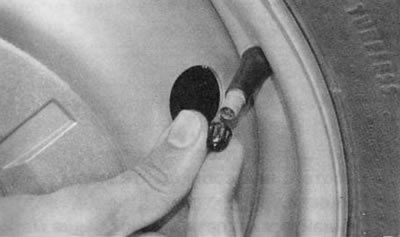
1. Unscrew the cap from the valve.
2. Connect the pressure gauge to the valve and check the air pressure in the tire.
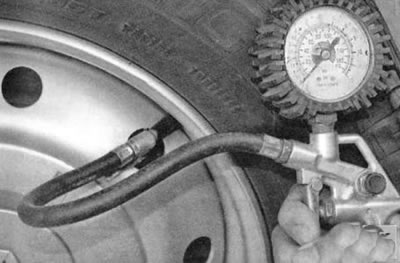
3. If the pressure is less than required, connect the hose tip to the valve and pump air, monitoring the pressure on the pressure gauge.
4. If the pressure is higher than required, release some air from the tire. Measure the pressure with a pressure gauge. Repeat these operations until the pressure reaches the norm.
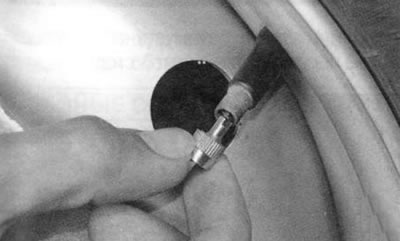
5. If you notice that the air pressure in your tires is constantly dropping, try tightening the valve core more tightly using the cap and key.
Note: This is what the protective cap looks like with the key for tightening the valve core.
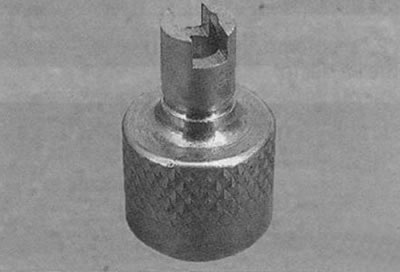
Warning: To avoid contamination of the valve stems, do not operate the vehicle without the protective caps. If the caps have been lost, be sure to install new ones.
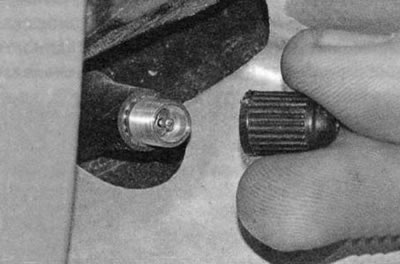
6. To check the valve for leaks, wet the valve opening. If bubbles of escaping air appear...
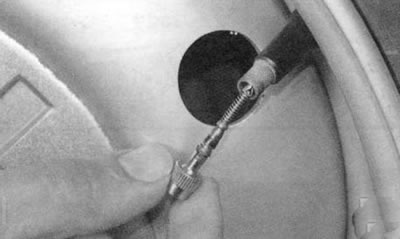
7. ...replace the valve core by unscrewing the faulty one using a cap with a key.
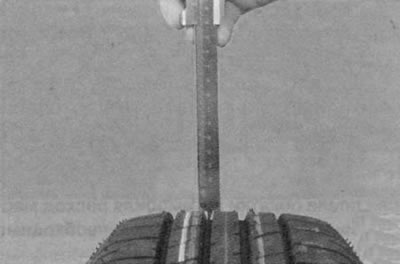
8. Measure the remaining tread depth with a caliper. If the tread depth is 1.6 mm or less, replace the tire.
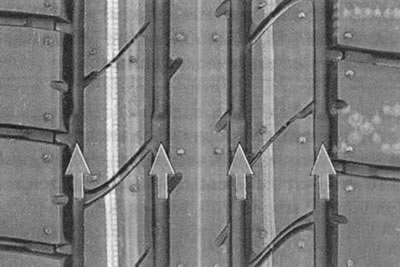
9. If you don't have a caliper at hand, you can check the tread depth visually using the tire wear indicators in the form of solid transverse stripes on the tread.
Note.
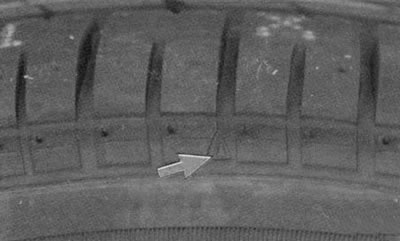
- The locations of the indicators are marked on the sidewall of the tire with a triangle...
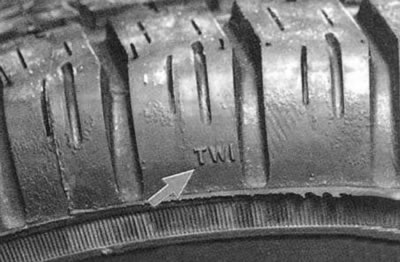
- ...or the letters "TWI" (depending on which designation system the tire manufacturer uses).
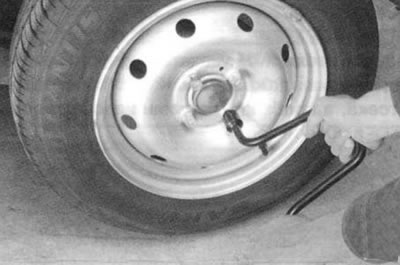
10. Check the tightness of the wheel mounting bolts and, if necessary, tighten them to a torque of 105 N·m.