



Check your tires regularly for damage such as cuts or bulges, especially in the sidewalls. Remove the wheels periodically and clean the inside and outside surfaces from dirt. Inspect the inside sidewalls of the wheel rim for signs of rust, corrosion, or other damage. Lightweight alloy wheels are easily damaged when hitting a curb; steel wheels can also bend. Installing a new wheel is very often the only way to fix serious damage. New tires should be balanced in the installed position, but may need to be rebalanced as they wear. Unbalanced tires will wear out faster, as will steering and suspension components. Wheel imbalance usually manifests itself as vibration, especially at a certain speed (usually about 80 km/h). If this vibration is felt only through the steering, then it is likely that only the front wheels need to be balanced. However, if the vibration is felt throughout the entire vehicle, the rear wheels may also be unbalanced. Wheel balancing must be performed at a service station.
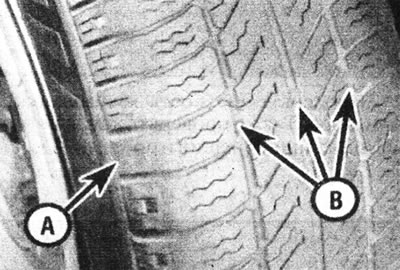
Tread depth - visual inspection
1. New tires have tread wear bars (B) that will appear when the tread depth reaches approximately 1.6 mm. The bar's position is indicated by a triangular mark on the sidewall of the tire (A).
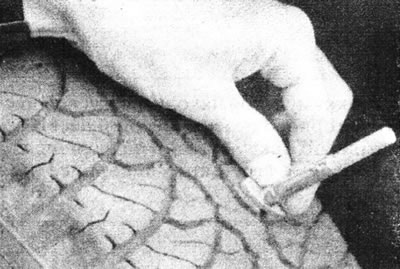
Tread depth - manual control
2. Tread wear can be monitored with a simple, inexpensive device known as a tread depth gauge.
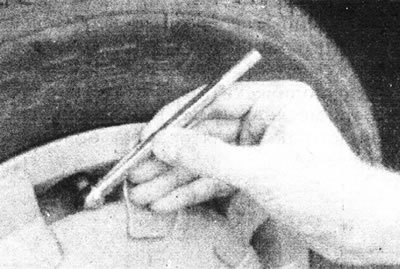
Checking tire pressure
3. Check tire pressures regularly when tires are cold. Do not adjust tire pressure immediately after using the vehicle.