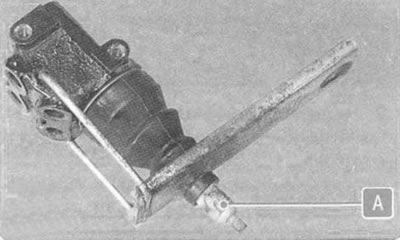
You will need: a special 11 mm wrench for brake pipes, a 13 mm wrench, and a flat-blade screwdriver.
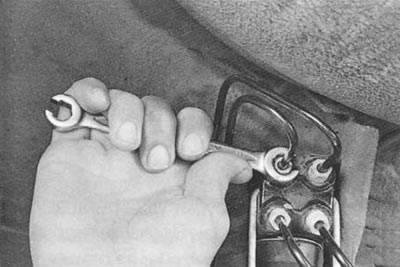
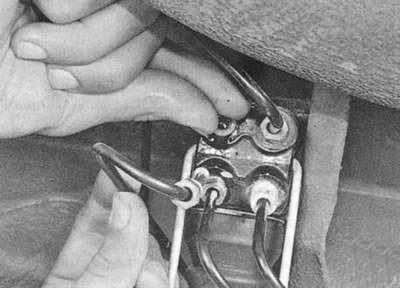
1. Loosen the nuts securing the four pipelines to the regulator and move the pipelines to the side.
Helpful advice.
- Plug the openings in the regulator body and the pipes in any way possible to prevent brake fluid from leaking.
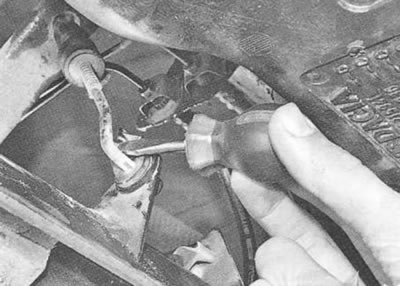
2. Using a screwdriver, unfasten the regulator load rod retainer...
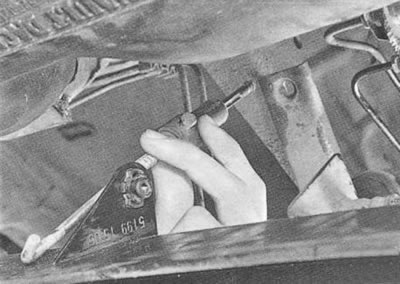
3. ...and remove the load rod, removing its ends from the holes in the bracket on the rear suspension beam and in the rear brake hydraulic pressure regulator lever.
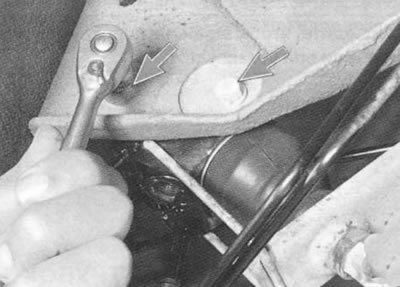
4. Unscrew the two bolts securing the regulator to the body...
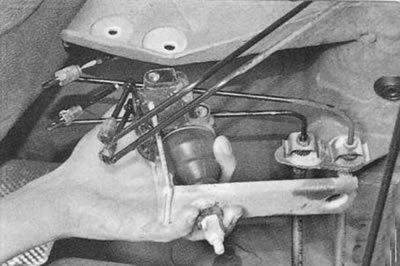
5. ...and remove the regulator.
6. Install the brake force regulator in the rear brake hydraulic drive in the reverse order of removal.
7. Fill the brake fluid and bleed the system (see "Bleeding the hydraulic brake system").
8. Pre-check the efficiency of the regulator by braking sharply on a site with a dry, uniform surface (see "Checking the efficiency of the braking system"). The rear wheels should lock with a significant delay relative to the front wheels. If the rear wheels lock before the front (or simultaneously with them) or the brake marks from the rear wheels are of different lengths, the pressure regulator needs to be adjusted.
Warning.
- The force in the rear brake hydraulic drive is changed by adjusting nut A on the regulator lever. However, this requires monitoring the pressure in the hydraulic drive circuits with special devices, which is only possible in a car service center. In addition, the brake force regulator in the rear brake hydraulic drive is a device that directly affects traffic safety. Adjusting it by eye can lead to serious consequences. Therefore, if the regulator does not work properly, be sure to contact the service center.