



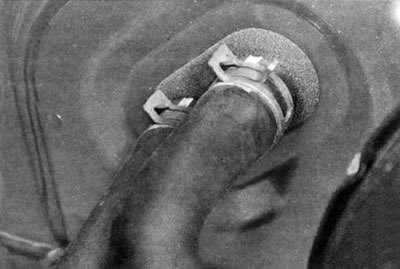
The heater radiator is connected to the engine cooling system by two hoses running in the engine compartment. The radiator is placed in a plastic casing of the climate control unit, installed under the central part of the instrument panel.
Main components of the heater (Fig. 12.1):
- heat exchanger (radiator) 6 of the heater, designed to heat the air entering the passenger compartment with the heat of the engine cooling liquid;
- fan (air blower) 10. Electric motor 11 of the fan with excitation from permanent magnets, providing regulated supply of outside air to the heater and air conditioner flaps;
- flap 14 of the air temperature regulator coming from the heater into the passenger compartment. The amount of air passing through the heater heat exchanger and outside air passing bypassing the heat exchanger depends on the change in its position;
- 2 flaps distribute air coming from the heater through air ducts into the passenger compartment or for blowing the windshield.
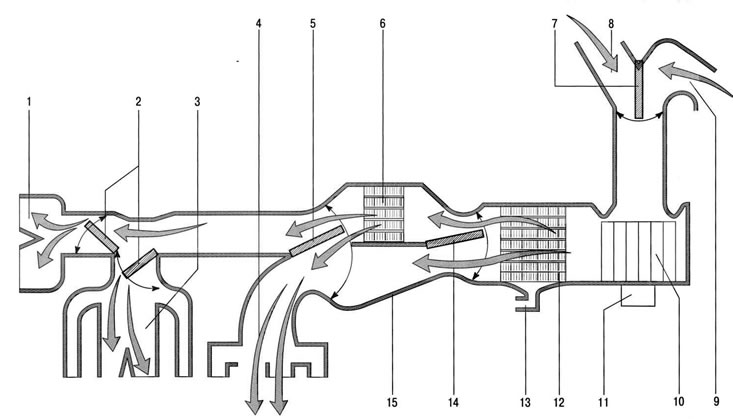
Fig. 12.1. Schematic diagram of air flow in the heating, air conditioning and ventilation system: 1 - windshield blower deflectors; 2 - air flow distribution flaps to the windshield deflectors and to the instrument panel deflectors; 3 - instrument panel deflectors; 4 - air ducts for heating the driver's and passengers' footwells; 5 - air flow distribution flap to the instrument panel deflectors and to the heating air ducts for the driver and passenger footwells; 6 - heater radiator; 7 - recirculation system flap; 8 - air intake box; 9 - air intake in the car interior; 10 - fan (air blower); 11 - Fan motor; 12 - air conditioner evaporator; 13 - drainage hole for condensate draining; 14 - temperature regulator flap; 15 - heating and air conditioning system unit housing
(Original of this article on the website: www.RenaultBook.ru)