



The identification plate is riveted to the top of the front panel, or glued to the pillar behind the driver's door, depending on the model. The plate contains the vehicle identification number, chassis number, vehicle weight and other information (see illustrations).
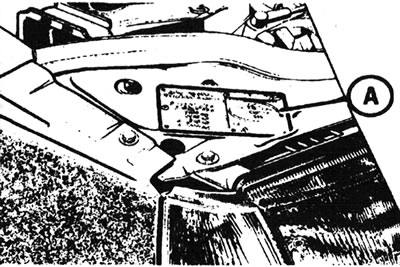
VIN plate (A) on the front panel of the body
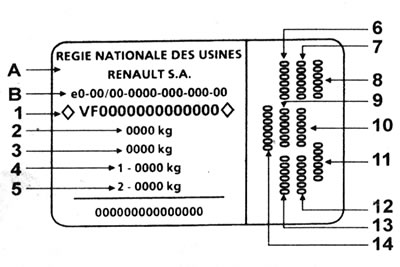
Late modification VIN plate marking
- A Manufacturer
- In the EU Registration Number
- 1 Chassis number
- 2 Vehicle weight (gross)
- 3 Road train weight (gross)
- 4 Maximum front axle load
- 5 Maximum rear axle load
- 6 Upholstery/Trim Code
- 7 Features of the car
- 8 Vehicle type
- 9 Original paint number
- 10 Equipment number
- 11 Manufacturer's number
- Option 12
- 13 Versions
- 14 Manufacturer's number (alternative location)
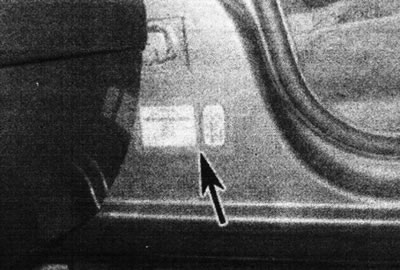
VIN plate (marked with an arrow) on the body pillar
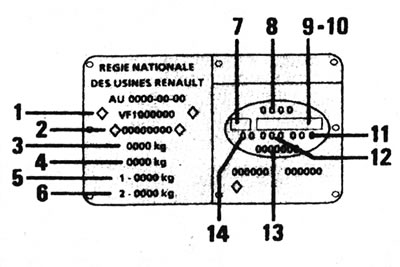
VIN plate marking of early modification
- 1 Vehicle type
- 2 Chassis number
- 3 Vehicle weight (gross)
- 4 Road train weight (gross)
- 5 Maximum front axle load
- 6 Maximum rear axle load
- 7 Features of the car
- 8 Vehicle type
- 9 Equipment number
- 10 Option
- 11 Equipment Level
- 12 Original paint number
- 13 Manufacturer's number
- 14 Upholstery/Trim Code
The engine number can be found on a metal plate attached to the engine. The location of the plate may vary depending on the engine type (see illustrations).
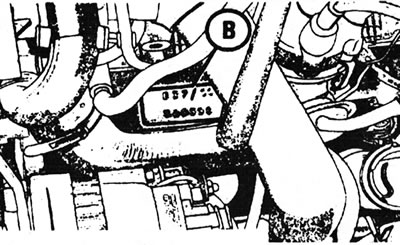
Engine Number Plate Location (B) - C-Series (1108 cc)
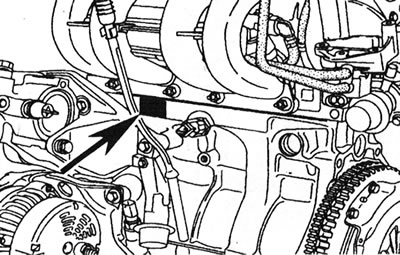
Location of the engine number plate (marked with an arrow) - D-series (1149 cm³)
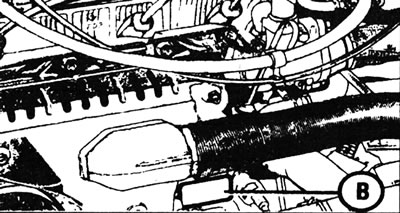
Engine Number Plate Location (B) - E Series (1171 cm³ and 1390 cm³)
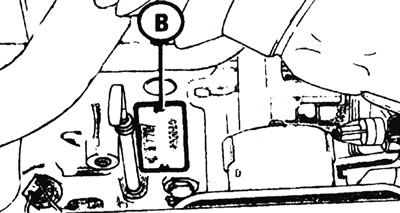
Location of the engine number plate (B) - RZR (1783 cm³ and 1794 cm³)
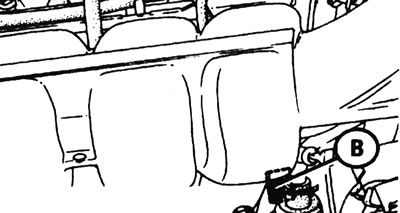
Location of engine number plate (B) - F7P (with 16 valves)
(Information is located on the website: «www.RenaultBook.ru»)